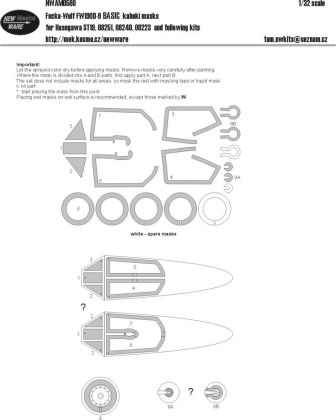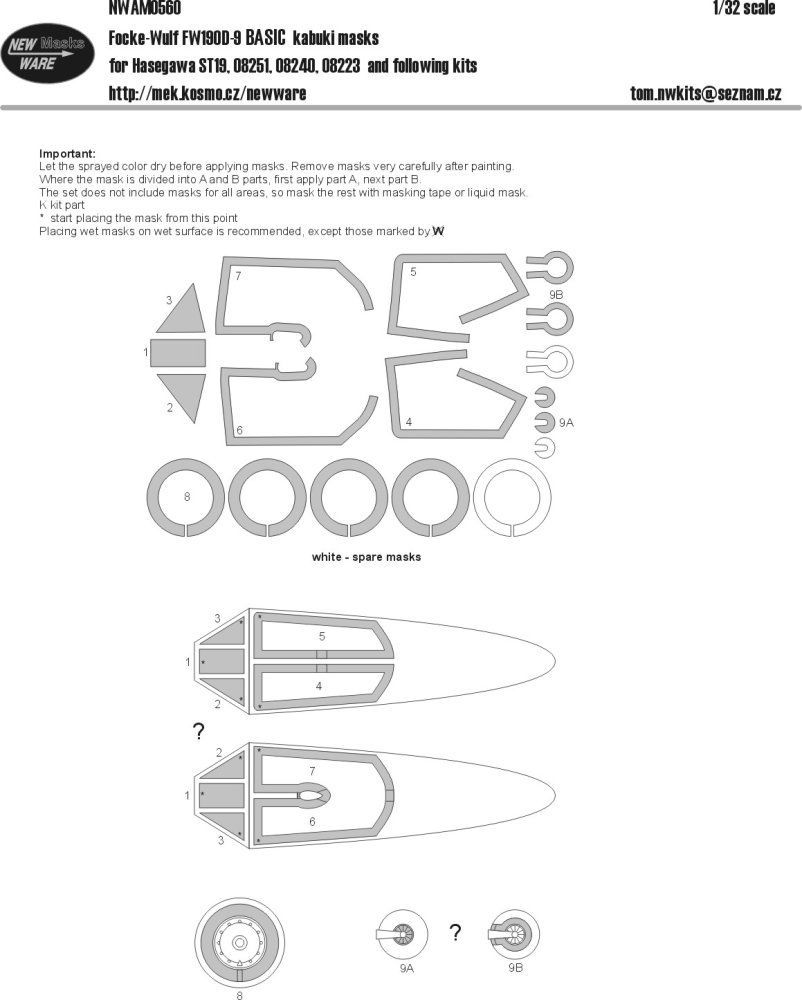
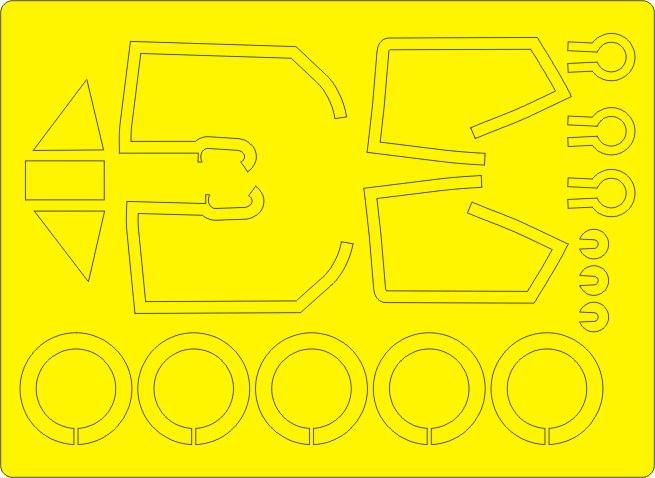
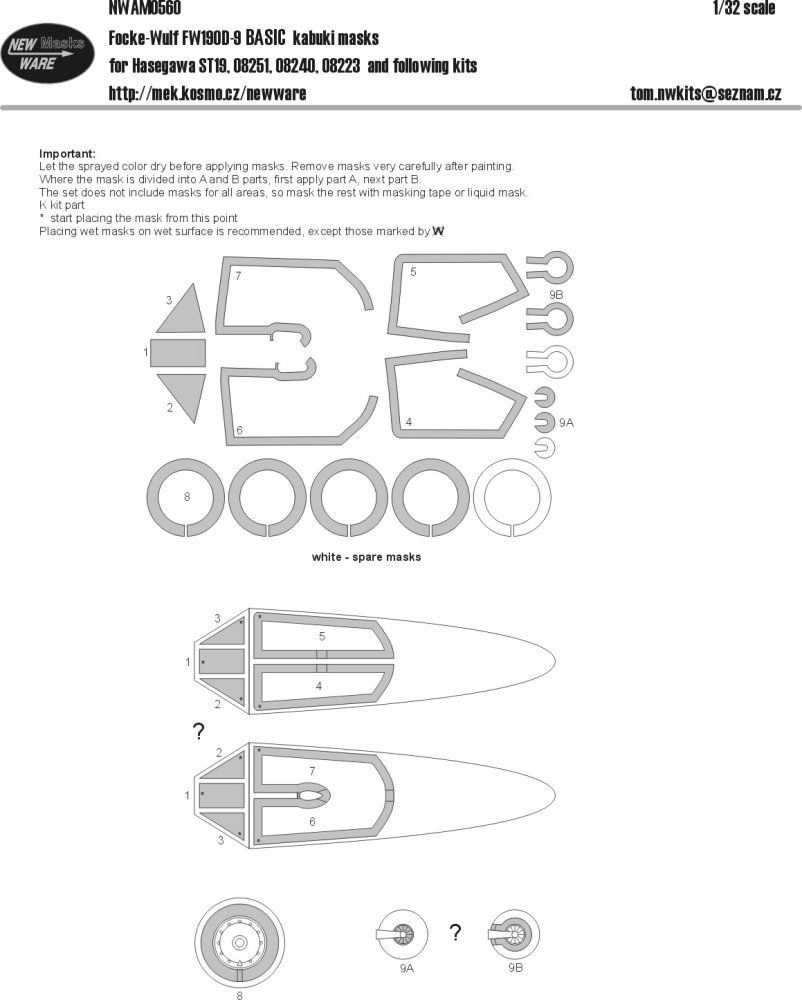
Masking shapes in 1:32 scale for the canopy and the wheels of the late German fighter with the V12 engine, cut for the Hasegawa kit.
Responsibility details are not available.
The late branch of Focke-Wulf Fw 190 development gave up the air-cooled radial and was given the liquid-cooled inverted V12 Jumo 213. To keep the center of gravity where it was, the fuselage was lengthened both in front of the cockpit and behind it, and the fighter gained the unmistakable silhouette that German pilots called the Langnasen-Dora.
The D-9 version reached the combat units in the autumn of 1944 and was flown by JG 26 and JG 54, among others. Down low and in the climb it surpassed the older variants enough for an even fight to be thinkable again. Some of the machines covered the takeoffs and landings of the Me 262 jets, when those were at their most vulnerable.
The basic range deals with the framing of the hinged canopy and the windscreen, and with the wheel disks. In a scale this large the paint transitions are seen from close up, so a sharp edge between frame and glass decides the final impression more than it does on small models.
The liquid-cooled engine can be recognized by the annular radiator right at the end of the nose, which at first sight looks like a radial unit. That detail still confuses everyone who sees a Dora head-on for the first time.
It pays to spray the interior shade of the frames first and only then the outer camouflage, or the clear plastic shows through.
Naši poradci a znalci sortimentu jsou připraveni odpovídat na Vaše dotazy (Po–Pá, 8–18 hod).
Zeptejte se na co potřebujete, odpovíme co nejdříve.
Texts from customers in the advice section reflect solely the opinions and views of the customers. MNF trade s.r.o. does not approve or verify customer texts in advance.
There are no questions here yet. Be the first to ask!