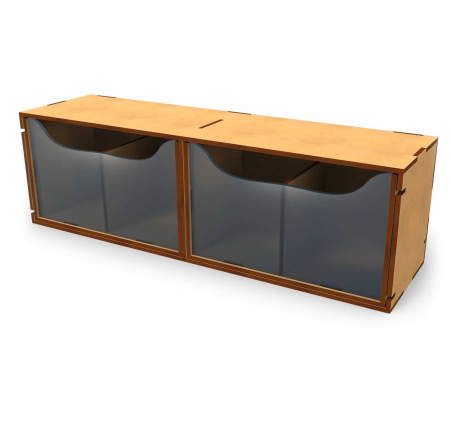
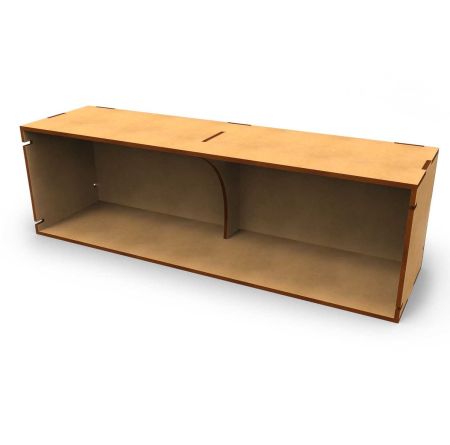
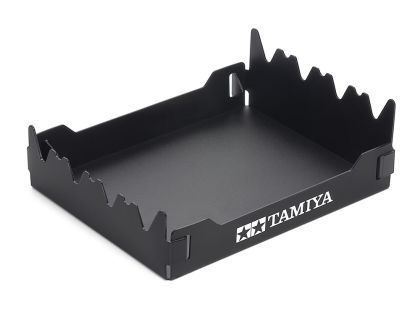
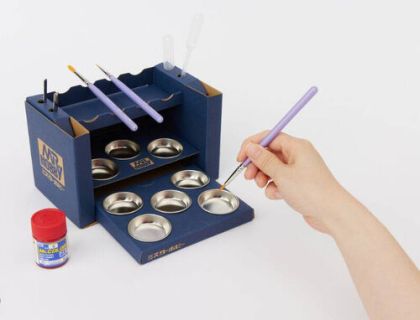
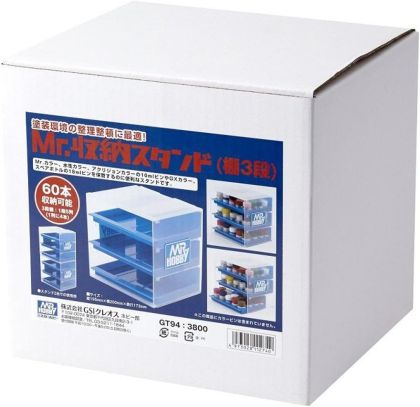
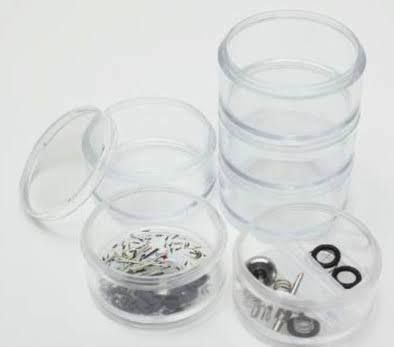
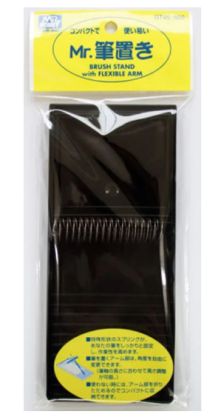
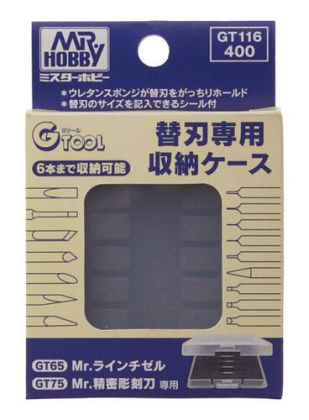
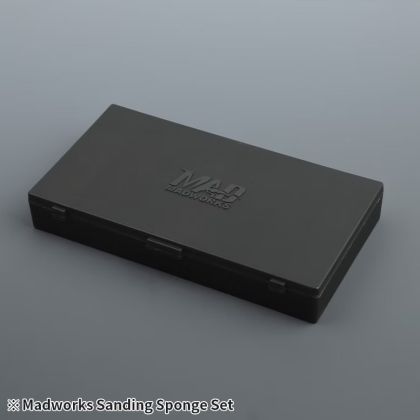
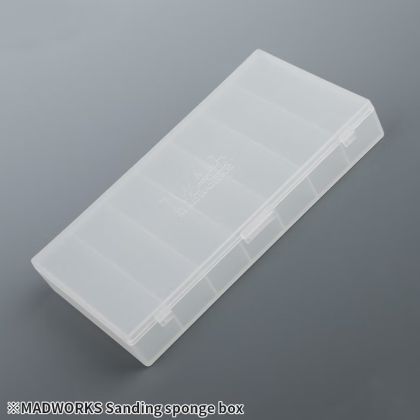
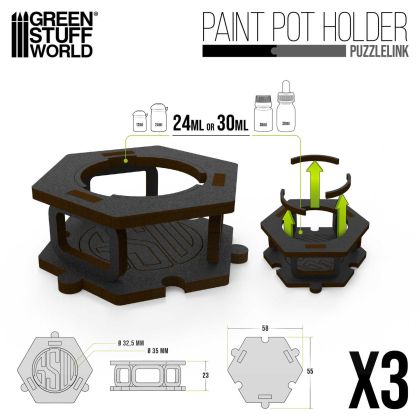
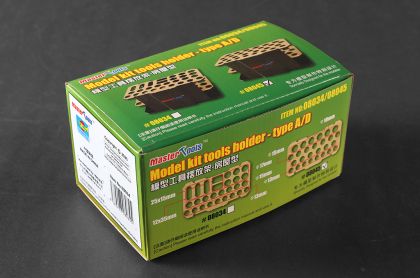
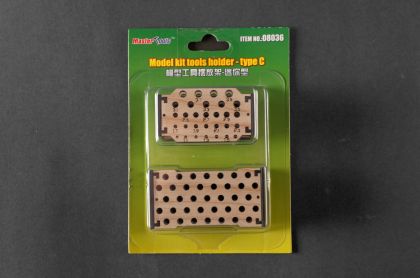
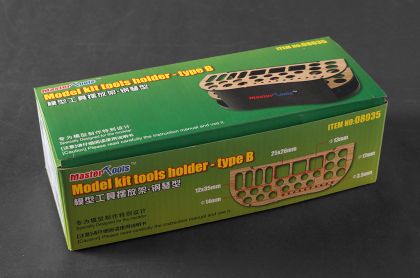
The more paints and tools you own, the more of the evening goes on looking for them. Workbench organizers turn that into a few seconds: stepped racks for paint bottles, drawer and case boxes, holders for brushes and tweezers, transport bags and stands for an airbrush. The range covers horizontal and tiered designs, trays for parking tools mid-build, and holders that mount to the edge of the bench.
Below we suggest how to lay a workspace out and where to start when the bench is small, which is the situation most modellers are actually in.
A modelling bench fills itself. Bottles stand in a ring around the model, brushes lie on the mat, and the tweezers vanish under a cut-off runner. An organizer replaces that with one rule: everything has a place and goes back to it even half-used. The benefit is not only tidiness. Paint in a rack does not get knocked over, a brush in a holder is not resting on its hairs, and a blade dropped into a tray does not find your finger.
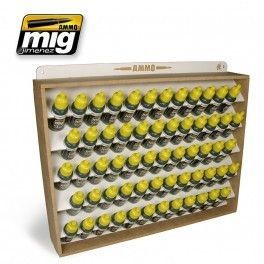
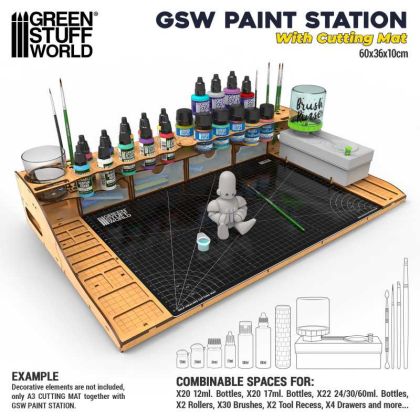
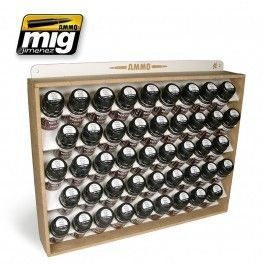
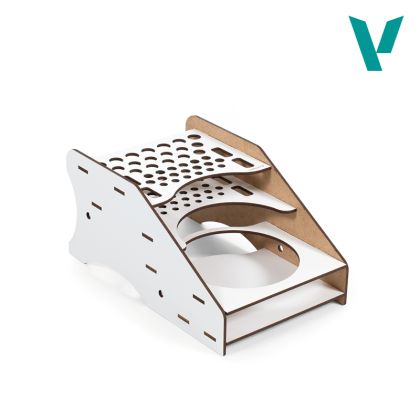
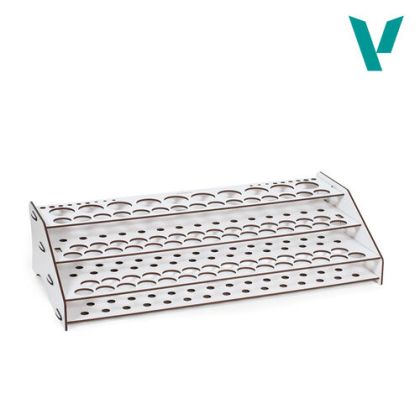
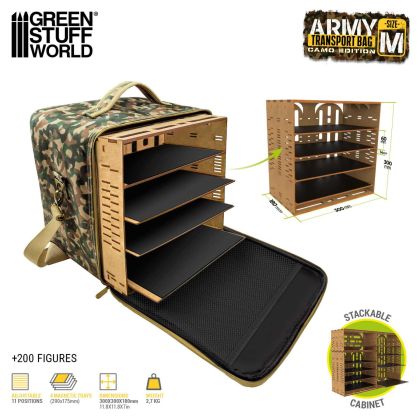
Bottle racks are usually tiered, so you can read the labels in the back rows. Larger case and drawer organizers pay off when you carry paints about or store them away from the bench. Arrange them to match your own practice: some modellers sort by code, others by group according to what they build. Paint colour charts help here, because you are looking for a shade rather than a number.
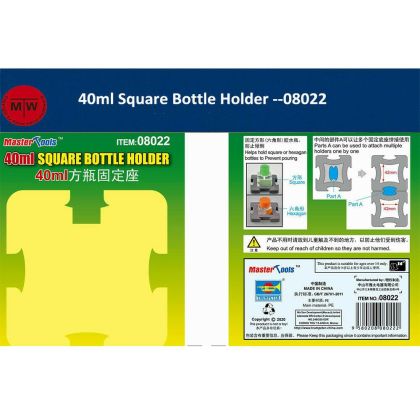
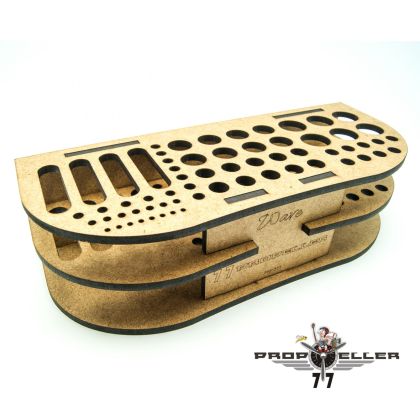
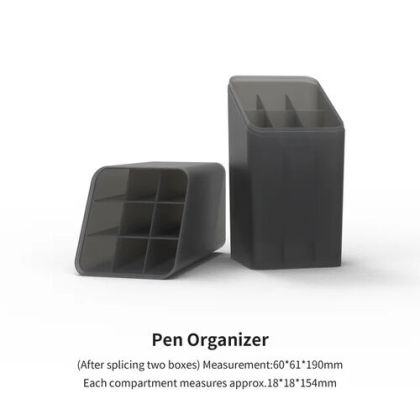
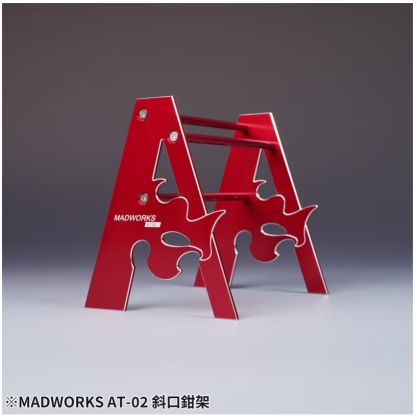
Brush holders keep the hairs upwards or horizontal so they do not splay. Stands for scalpels, tweezers and nippers either clamp to the edge of the bench or stand alone; what matters is picking the tool up one-handed without searching. Trays then take whatever is in play right now: the runner being worked on, the parts cut from it, the open bottle.
Anyone spraying needs somewhere to put the handpiece between passes without the needle touching anything. Holders and cleaning stations solve both at once: the tool hangs or stands in a cradle and the residue drains out of it. The fittings for that are in airbrush spare parts and accessories.
Order on a bench is not built by one big purchase. Fix the thing that slows you down most, live with it for a month, then fix the next one. The rest of the workspace is in modelling workbench equipment.