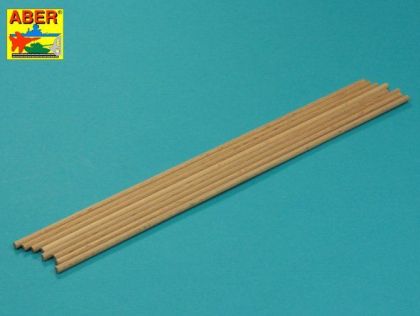
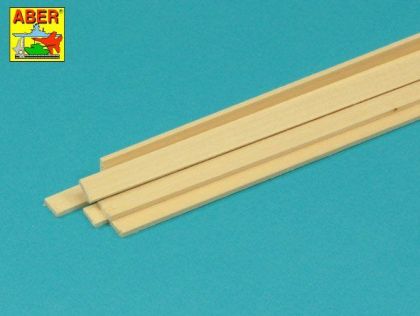
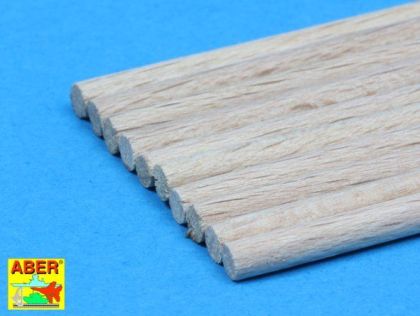
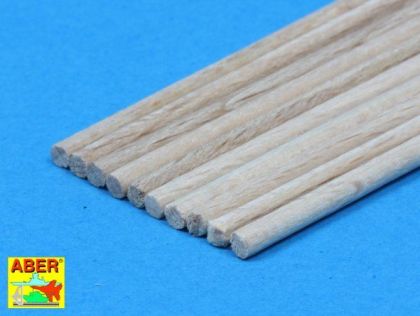
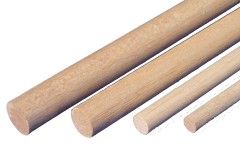
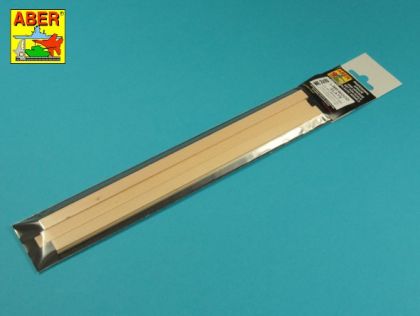
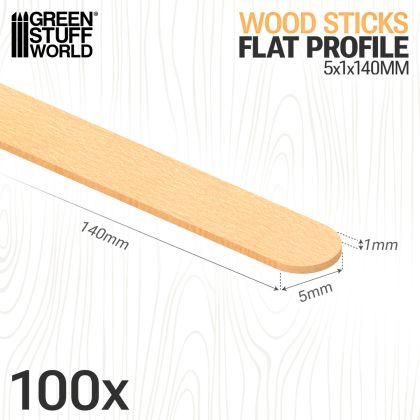
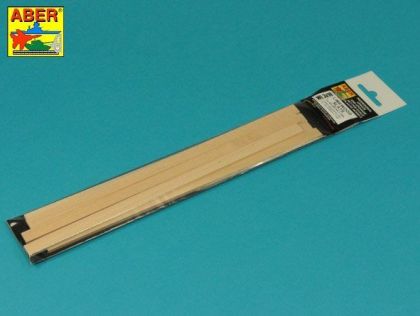
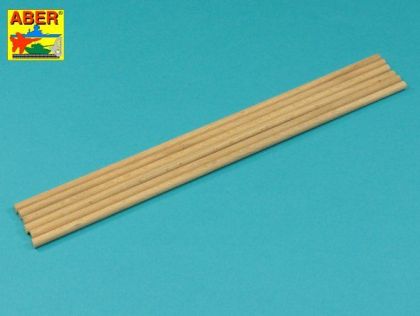
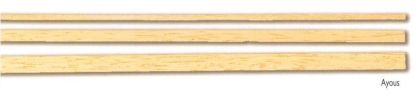
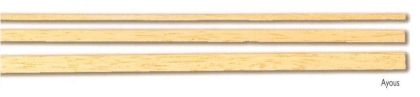
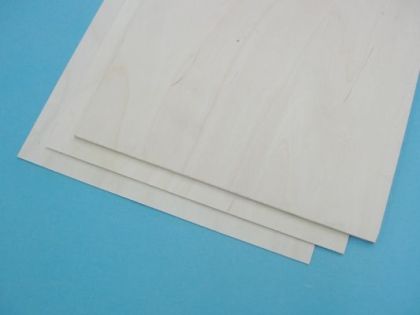
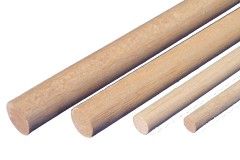
Wooden profiles are the stock for load-bearing structures, hulls and decks. Stocked are lime strip in 2 × 8, 2 × 10 and 3 × 10 mm sections, beech and lime dowel from two to thirteen millimetres, 3 × 3 and 4 × 5 mm square stock in metre lengths, flat beech and birch profiles, and Finnish aircraft plywood in 4 and 6 mm thicknesses with eight and twelve plies.
Lengths run from 245 mm to a full metre, so the choice includes how long a part you can make without a joint showing anywhere along it.
Mainly where lightness and strength are needed together: glider and chuck-glider frames, wing spars, ribs, ship hulls and their deck planking, display bases and frames under models. Wood cuts, sands and shapes with simple tools, butt-joints with white PVA or cyanoacrylate, and once varnished it looks like wood without being painted at all.
Lime is soft and smooth, cuts easily and suits planking and trim strip. Beech is hard and strong and is used for dowel, axles and stressed parts; the individual diameters are under beech dowel and the flat sections under beech blocks. Birch holds a true plane in thin flat profiles. For the lightest structures of all there is balsa, grouped as balsa sheet.
Strip of 2 × 8 or 3 × 10 mm is the basis of deck planking and hull sides: lay one piece against the next and the joints between them read as planks. Dowel makes masts, spars, axles and stanchions. Flat profiles become floors, bulkheads and infill.
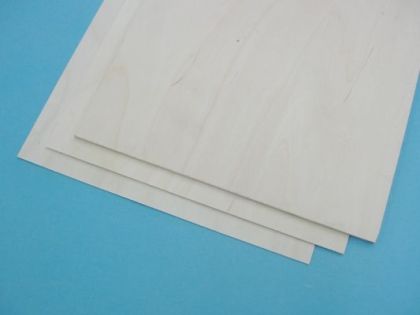
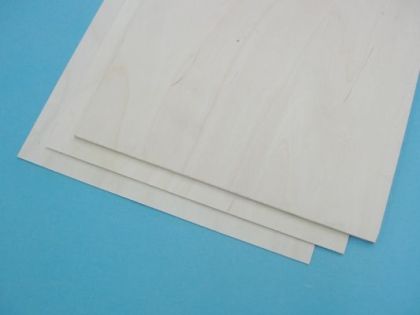
Finnish aircraft plywood has many thin plies with the grain crossed, so it holds its dimension and does not split when bent. It is used for formers, wing roots and motor mounts, meaning the places that carry load. The individual thicknesses are under Finnish aircraft plywood.
Wooden frames and strip earn their keep most on free-flight models, so the kits that use them sit in glider and chuck glider kits.