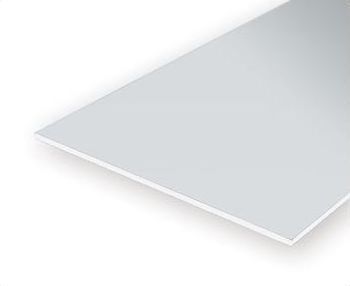
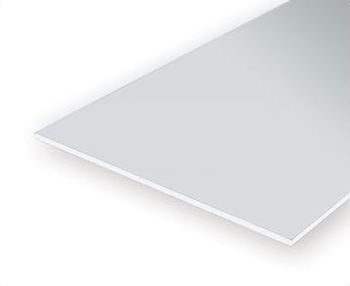
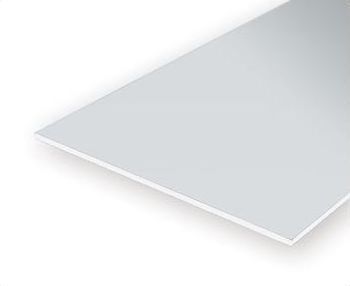
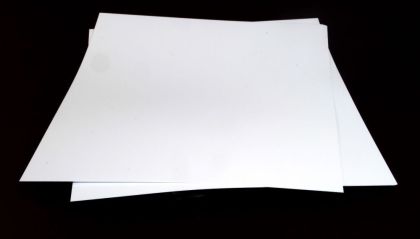
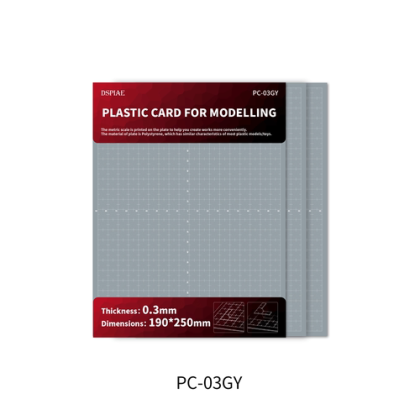
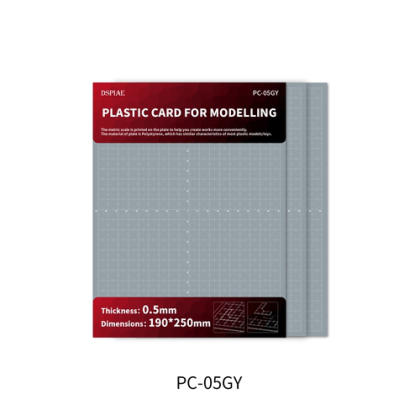
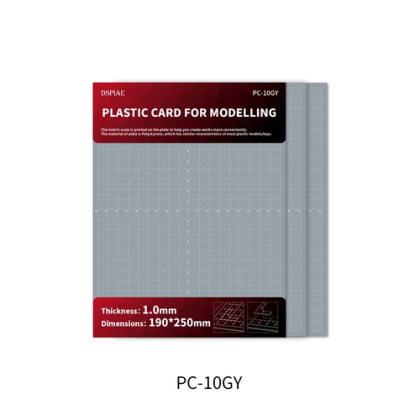
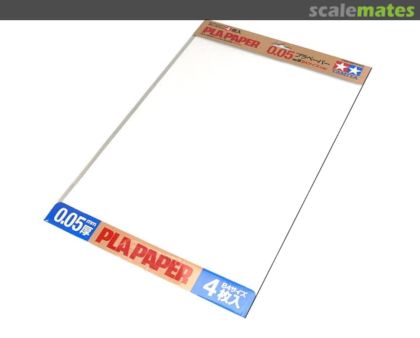
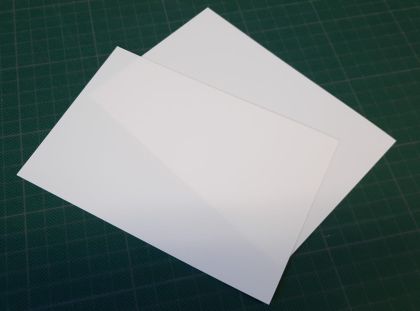
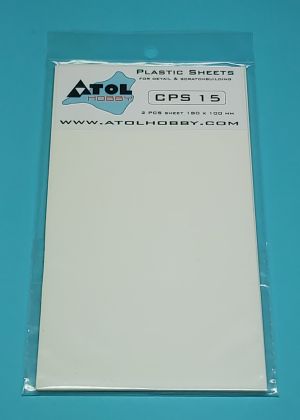
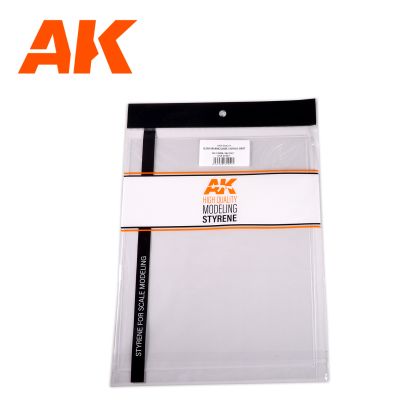
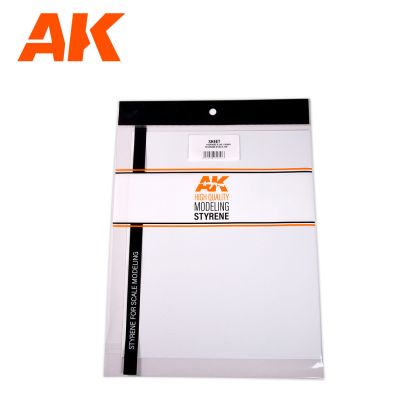
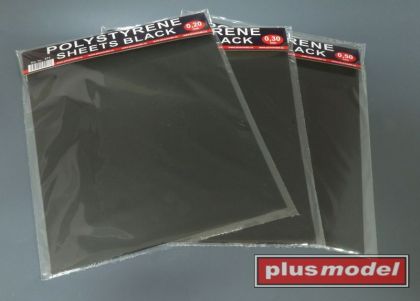
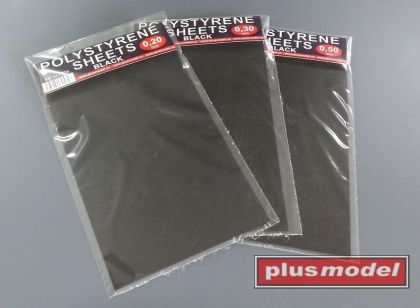
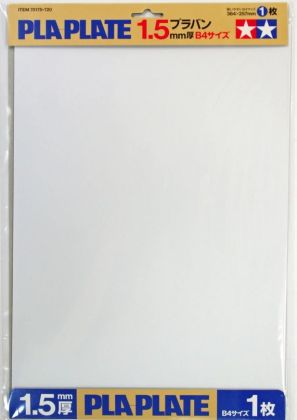
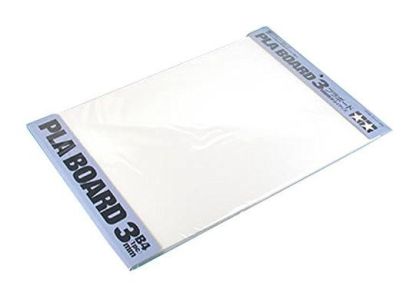
Styrene sheet, or plasticard as most modellers call it, is flat stock for anything on a model that has to be an area rather than a line: bulkheads, floors, infill, new panels and templates. Thicknesses start at five hundredths of a millimetre and go up to two, and the usual formats are A4 and 245 × 195 mm.
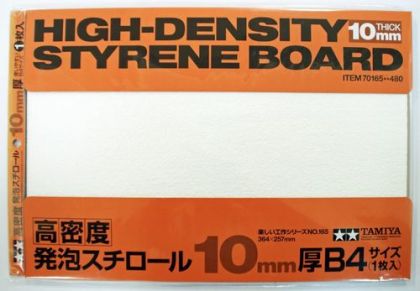
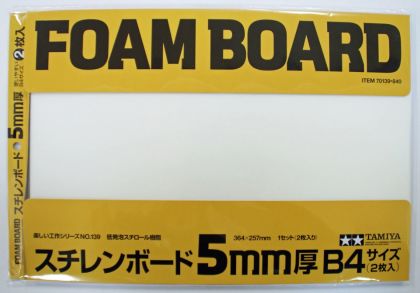
Alongside white and black styrene sheet you will find clear acrylic sheet for glazing, and foam board in 1 to 10 mm thicknesses for bases and mock-ups.
A profile adds a line; a sheet adds a whole surface. Most often it becomes the bulkhead or floor a kit never supplied, a new door or panel, a blanking plate over an unwanted opening, a template for measuring, or the base the rest of an assembly is built onto. Thin sheet also patches: lay a shim over a seam that did not close properly and sand it flush, instead of building up a thick layer of filler.
The finest films around five hundredths of a millimetre can be cut with scissors and suit edge trims, tarpaulins and small patches. Two to five tenths is the general-purpose thickness for panels and bulkheads, and it can be scored and snapped. From one millimetre up it is structural stock that has to be cut in several passes and will not bend.
White and black styrene is the most forgiving and bonds with solvent cement. ABS is harder and holds a true plane even in large formats. Clear acrylic sheet in 0.2 and 0.5 mm is for windows, canopy glazing and leaded panes: bond it with cyanoacrylate or a water-based adhesive, since solvent will fog it. If the surface needs relief, carry on to the textured sheet.
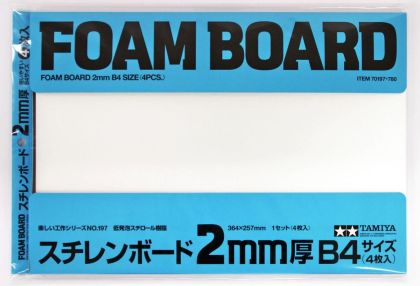
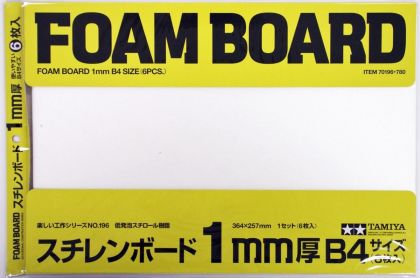
Foam board from 1 to 10 mm carries a light core between two paper or plastic skins. It is used for mock-up bases, scenic substrates and quick building mock-ups, because it cuts in one pass and weighs next to nothing. Related scenic stock sits with the foams and modelling compounds.
Scratch-built panels and bulkheads most often go into cockpit interiors, so the detail sets that follow on are in aircraft model accessories.