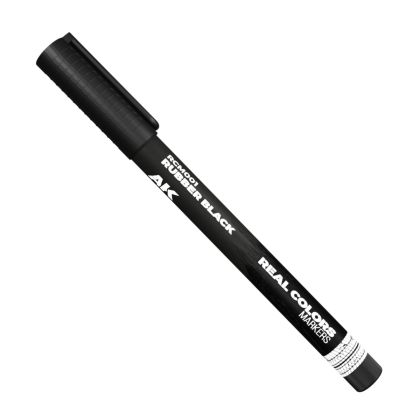
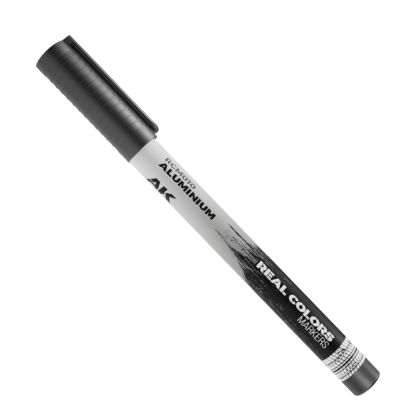
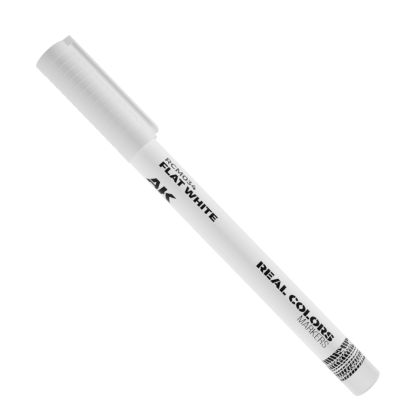
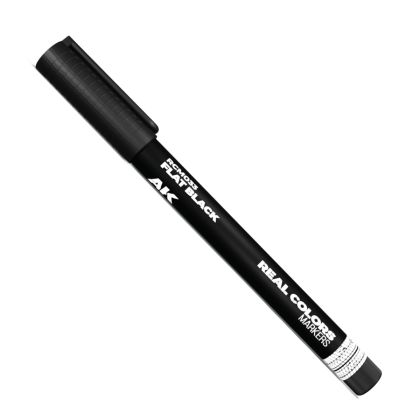
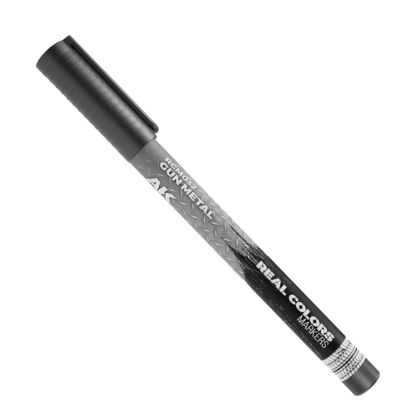
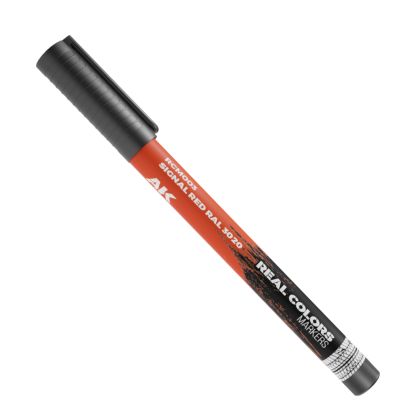
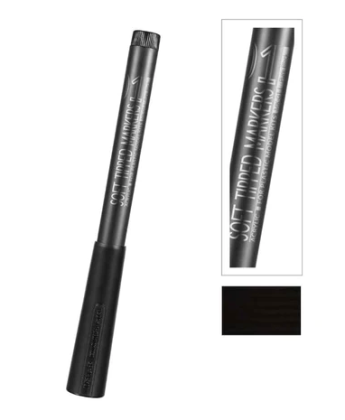
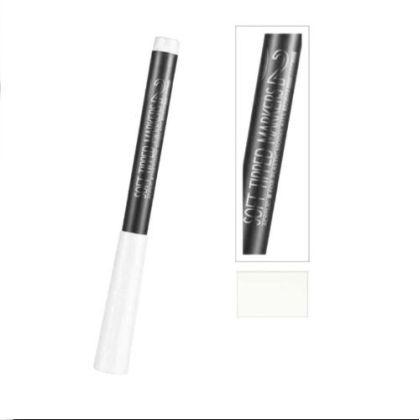
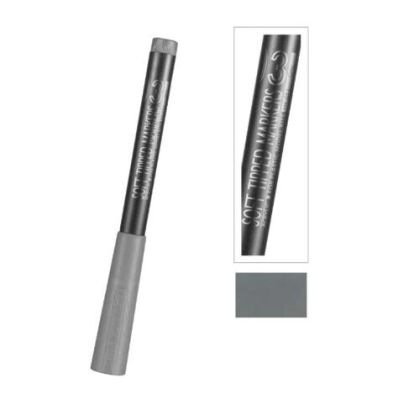
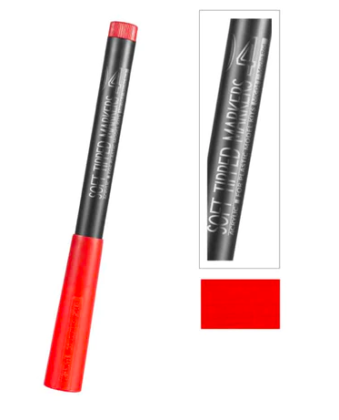
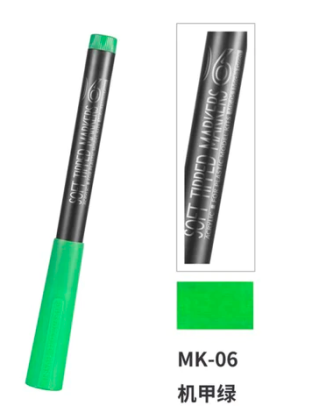
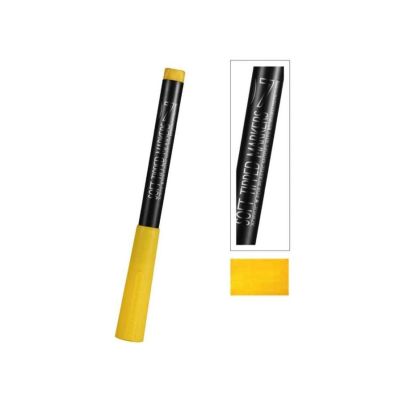
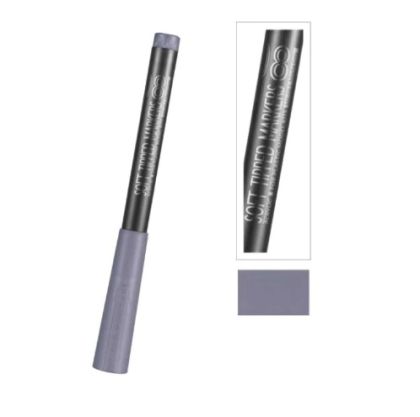
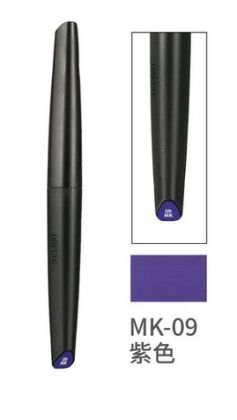
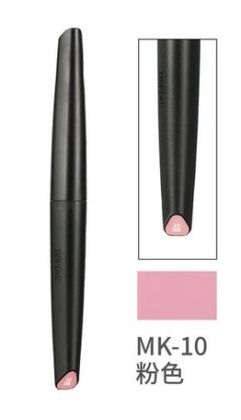
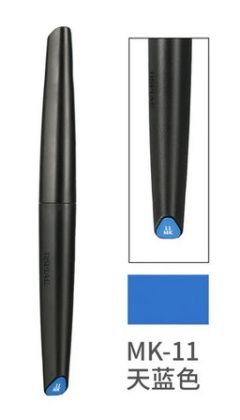
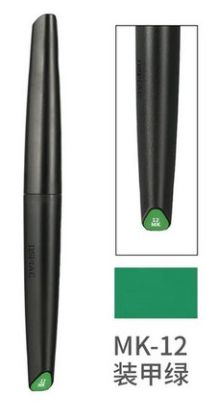
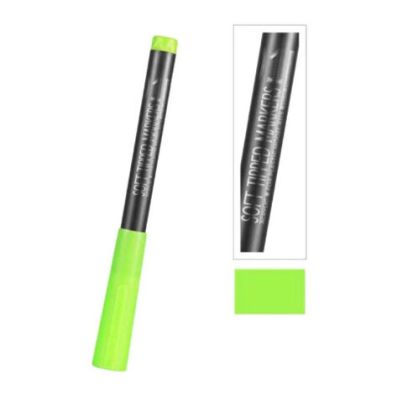
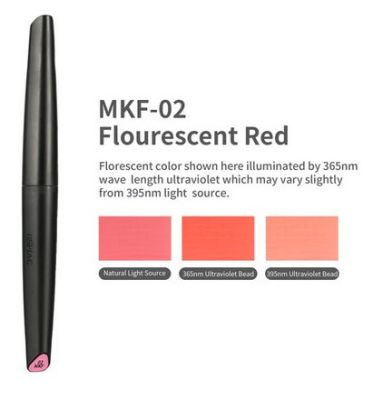
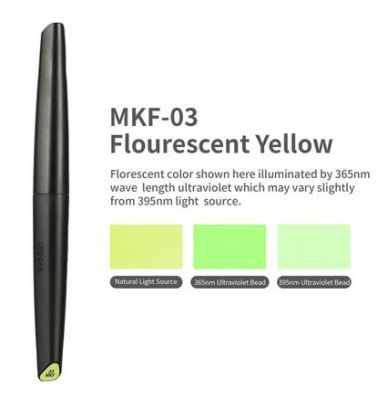
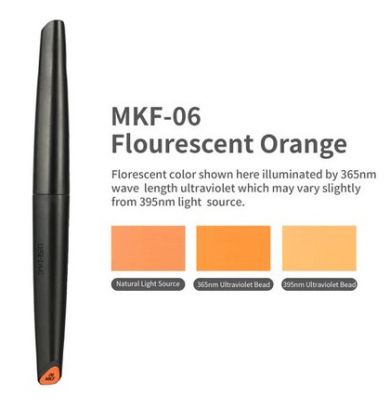
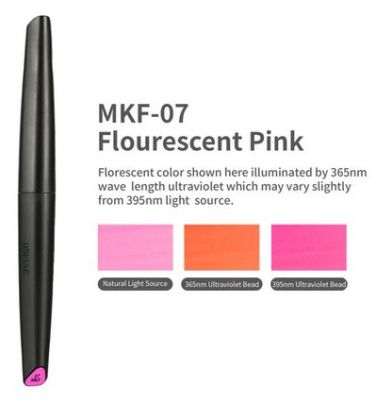
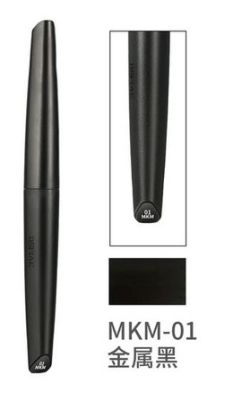
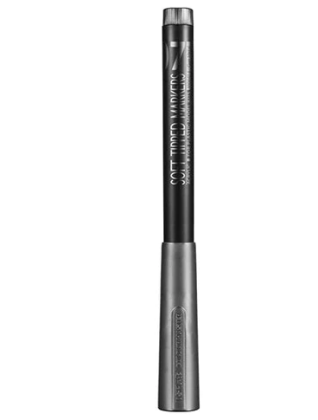
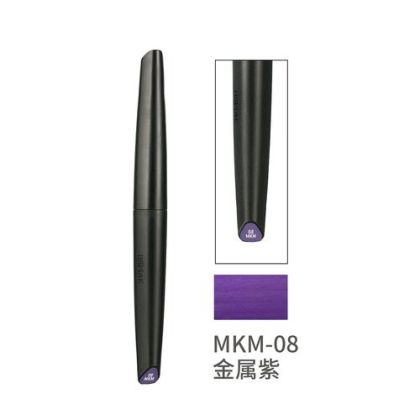
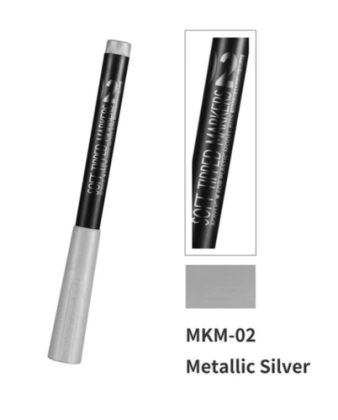
What is listed in this section is a range of soft-tipped marker pens rather than pigment fixing agents: water-based and acrylic markers with a flexible brush-like nib, in standard colours, fluorescents and metallics including gun metal and silver. They are a way of putting paint down, not a medium of their own — the pigment is held in the barrel and the nib puts it exactly where the tip touches.
That makes them useful for jobs where loading a brush is more trouble than the mark is worth: lining an engraved panel, picking out a raised edge, touching in a chipped corner, marking a lens or a warning stripe. On mecha and science-fiction subjects they are often the primary tool rather than a convenience.
Soft-tipped pens in black, white, grey and primary colours; a mecha-oriented group in greens, yellows and greys; fluorescent markers in green, red, yellow, orange and pink; and metallic markers including black, gun metal, silver and purple. Most are water-based, which means they can be wiped back with a damp swab while still fresh and will not attack the paint underneath.
A fresh marker floods on the first stroke. Press it onto a piece of card until the flow steadies, and make the first mark on the model with a nib that is already slightly dry — a soft nib holds more than you expect.
For panel detail, run the tip along the engraved line and let the ink collect in it, then wipe the surrounding surface with a cotton bud from cotton swabs before it sets. Over a gloss coat the wipe is clean; over matt the ink grips and stays.
Drag the side of the nib lightly along a raised edge for a continuous highlight, or tap it to leave small irregular marks for chipped paint. A metallic marker used this way gives bare-metal wear on hatch rims and step edges in seconds; for a more controlled version of the same effect, a fine brush and a chipping colour still have the edge.
Marker ink is thin and rubs off, especially the metallics. A light coat from varnishes and clear coats locks it in, and a matt version also kills the slight sheen the nib leaves behind.
The complete list of effect types is in weathering products.