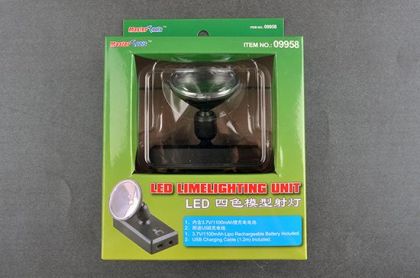
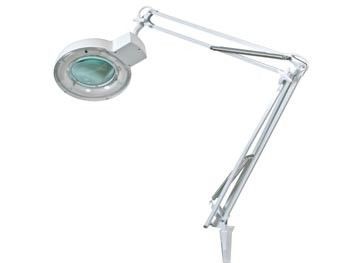
Lighting is the least glamorous item on a modelling bench and the one that changes the most. Overhead light from a ceiling fitting hides the unevenness in filler and the edge of a paint transition, and after two hours your eyes ache. A modelling lamp throws light from the side, exactly where you aim it, and some have a lens built into the head so they magnify at the same time.
The notes below explain what sort of light building and painting really need, and what to look at when choosing a lamp for the bench — starting with the stiffness of the arm, which is where most disappointments begin.
Light from above falls on the model and suppresses shadow. The shadows are where the important things live: a scratch left by abrasive paper, the edge of a seam that is not quite filled, the place where paint took differently. Side light from an adjustable lamp shows you those faults while they can still be fixed, rather than after the varnish has sealed them in.
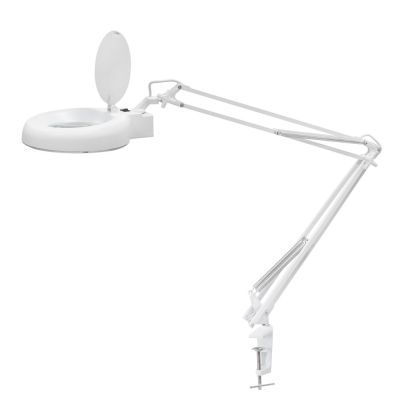
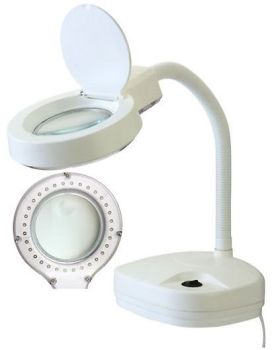
A lamp on a stand is mobile and moves to another table with you. A bench-clamp version takes up no working surface and can be set high above the subject, which you appreciate with large scales. The deciding factor is the stiffness of the arm. A flexible neck that gradually gives way and lowers the lamp onto the model can ruin a whole session.
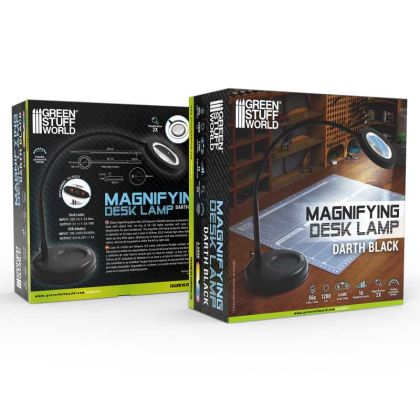
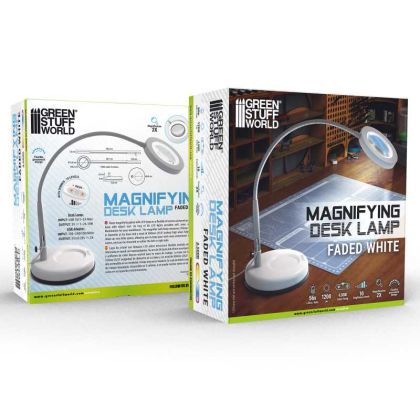
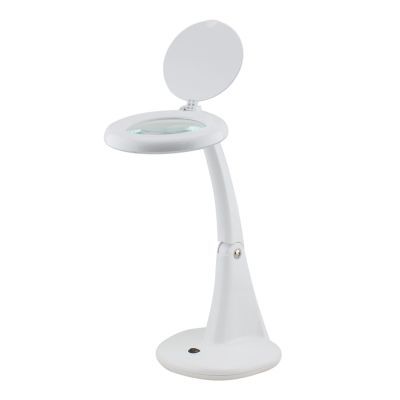
Part of the range has a circular lens in the head with an LED ring around it. The advantage is obvious: the magnified area is lit, and you never have to think about where the light is falling. If you do not need magnification all the time, consider a separate magnifier and a plain lamp, because two devices can be positioned more freely than one combined unit.
When mixing and checking shades, the temperature of the light matters. Cool white shows contrast and detail; warmer light is kinder over a long evening but shifts how you read a colour. If you are deciding on a camouflage shade, always compare the sample under the same light and check it again by a window. Paint colour charts help, because you are then comparing a printed shade and a sprayed one side by side.
Good light is the sort you stop noticing. You simply see the model and no longer carry it to the window. The rest of the workspace is in modelling workbench equipment.