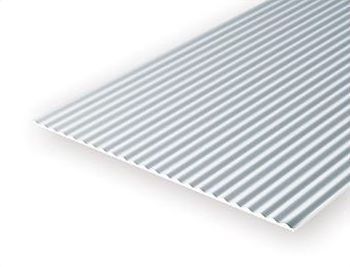
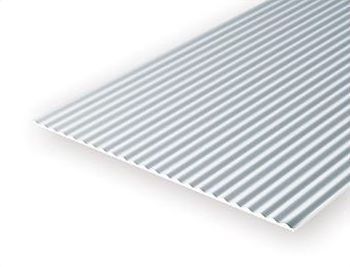
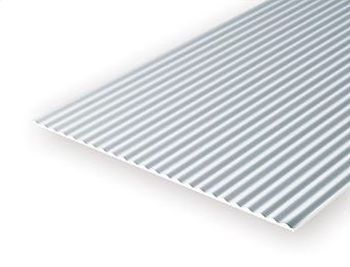
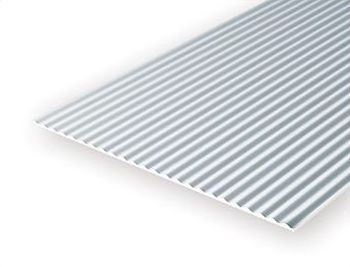
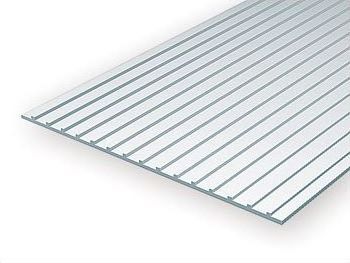
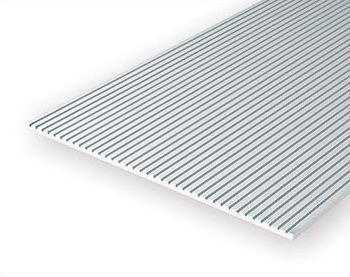
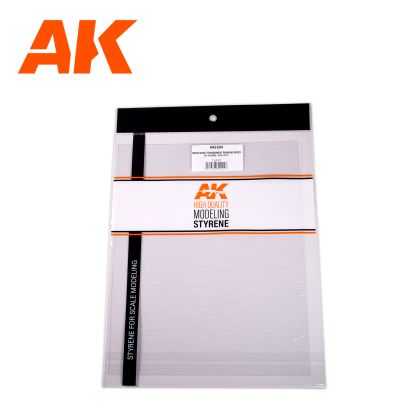
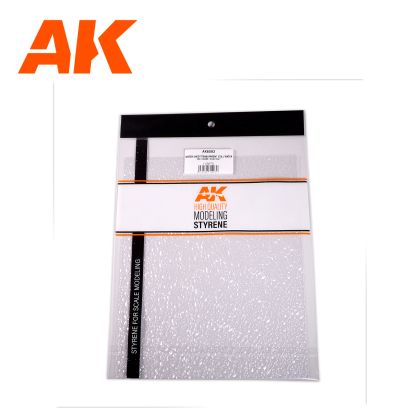
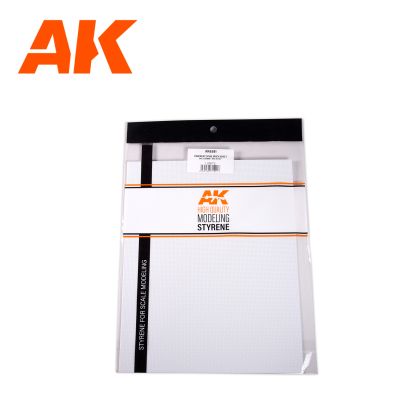
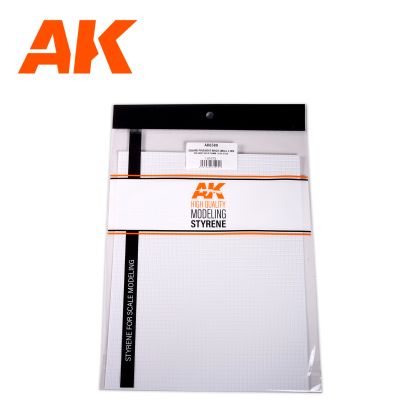
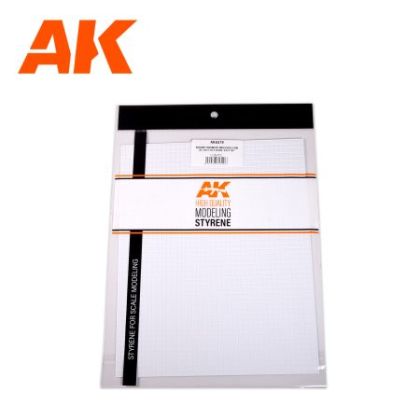
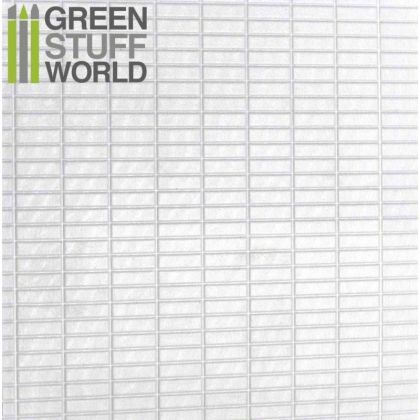
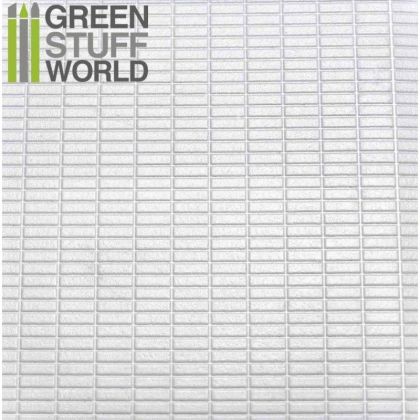
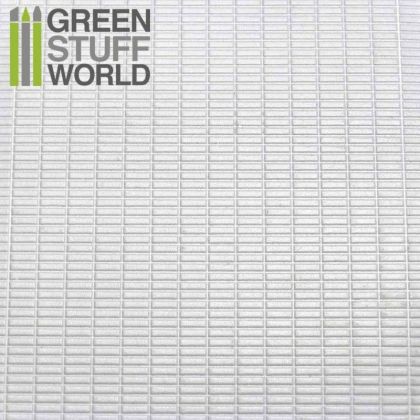
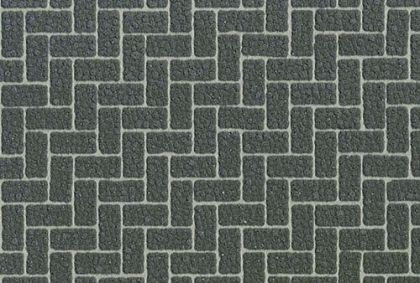
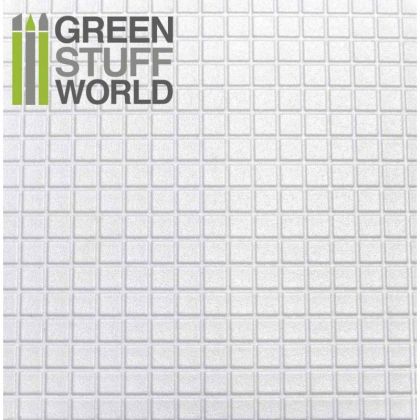
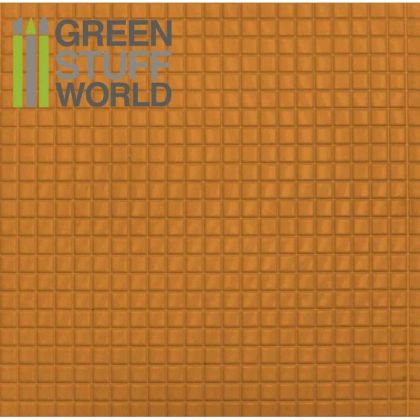
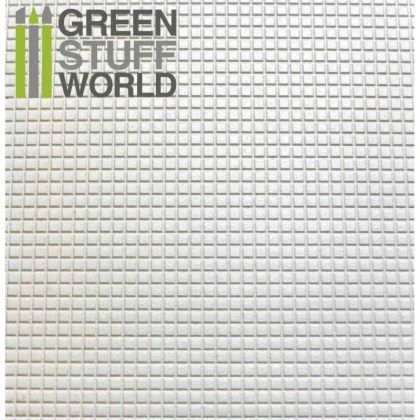
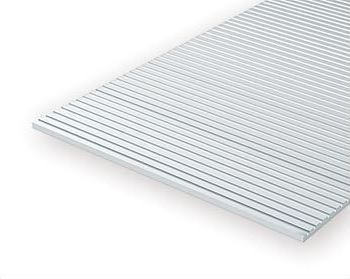
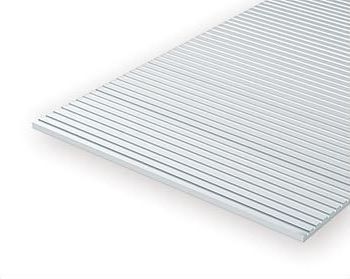
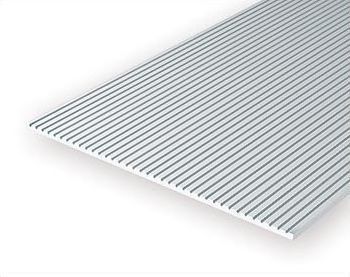
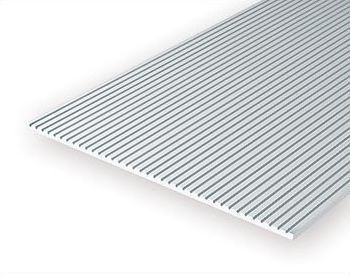
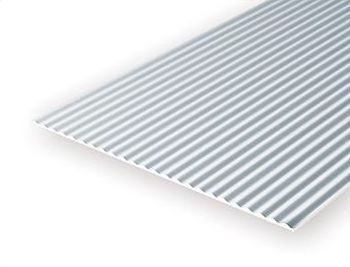
Textured sheet is plastic stock with the relief already embossed into it, so a patterned surface takes one cut rather than an evening of scribing. Patterns include brickwork in several brick sizes, square and random stone setts, corrugated iron, regular squares and rectangles for industrial surfaces, carriage panelling, and acrylic sheet moulded to imitate still and flowing water.
Formats are usually A4 and 245 × 195 mm, which is enough for a wall, a yard or a stretch of roof in one piece.
Because over any real area it never comes out regular. A wall five by ten centimetres holds several hundred bricks in 1:35, and one badly drawn line shows on the finished model. Embossed relief has the correct spacing across the whole sheet, leaving you only the colour, the grime and the damage to deal with. The second advantage is speed: cut the sheet, glue it down, and the texture is finished.
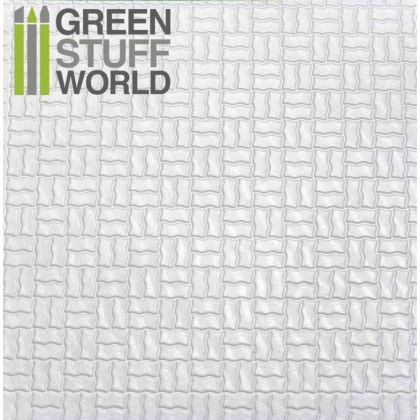
Brick sheets differ in the size of the individual brick, so one version suits 1:35 and another the smaller scales. Paving comes either as regular squares or as irregular random setts for older roads and yards. For the architectural parts that go with them, look through the diorama accessories.
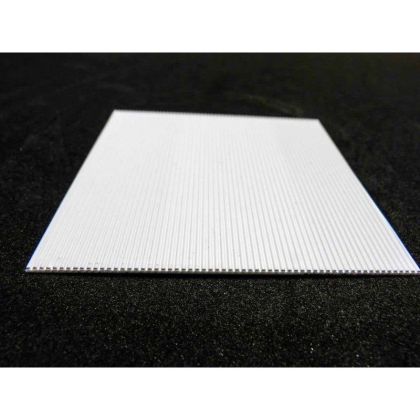
Corrugated sheet is probably the single most used texture of all: lean-to roofs, flashing over a bend, improvised walls. Regular squares and rectangles imitate tiling, panelling and floor gratings. Passenger and goods carriage panelling has a different groove spacing again, so it is chosen by the type of vehicle, and those subjects are in the railway model kits.
Clear acrylic sheets embossed with still or flowing water are used as a ready-made water surface under a model. Nothing has to be cast: cut the sheet to the outline and paint the underside. The products for waves and foam on top of it are under diorama water.
A textured surface is only finished once it has been dirtied down, and the products for that are under weathering.