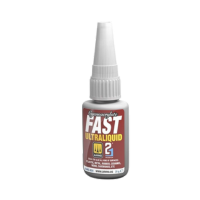
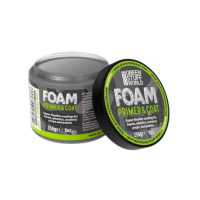
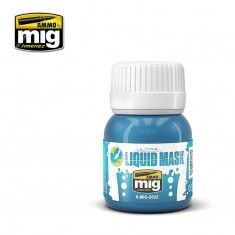
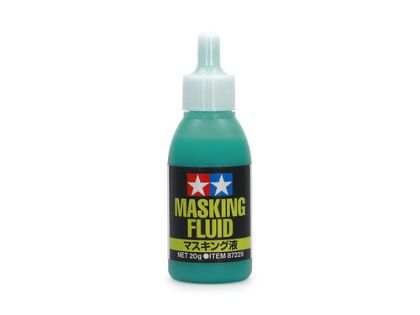
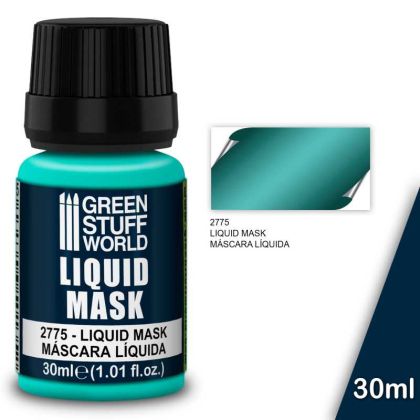
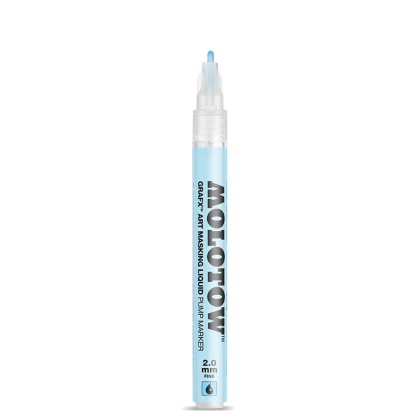
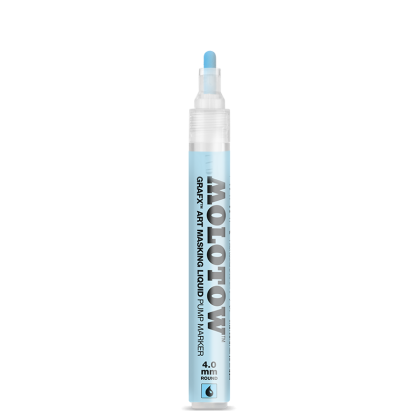
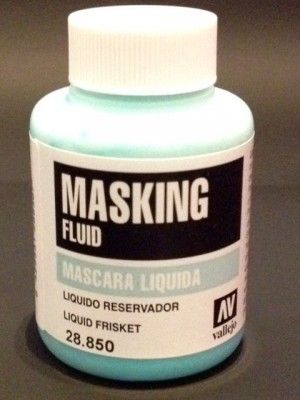
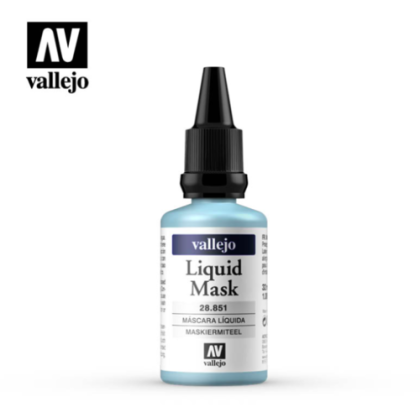
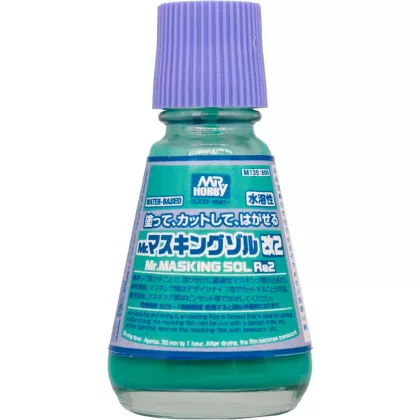
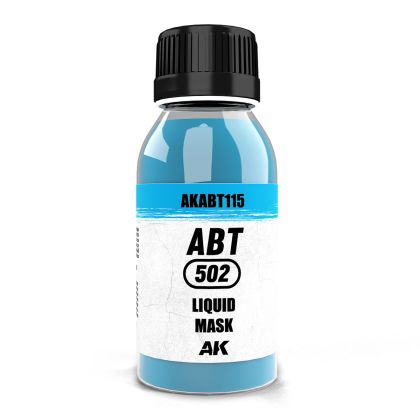
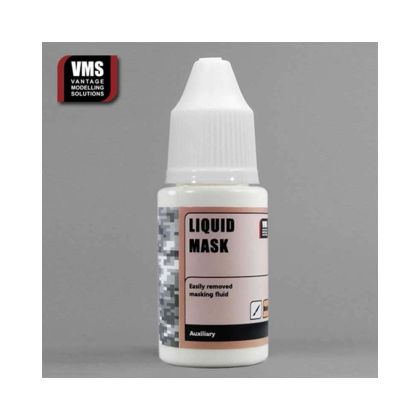
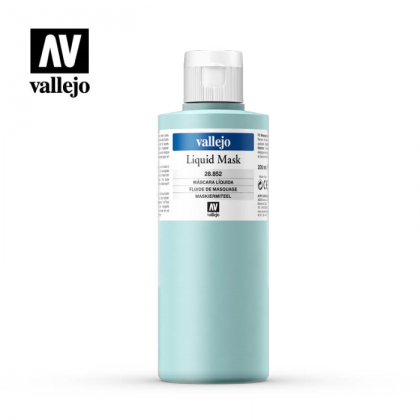
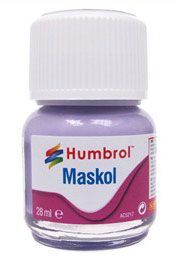
Masking fluid is liquid rubber: brushed or pen-applied, it dries to a flexible film and peels off after spraying. It earns its keep everywhere tape fails — curved canopies, tyres, soft-edged mottled camouflage and the awkward gaps around small details that cannot be removed. The advantage is that it copies any shape at all and reaches places no tape would ever bend into.
Below: how to build the film up, how to keep a brush alive while using it, and above all the rule about when to take the film back off the model.
Tape is precise along a straight edge and hopeless on a double curve or in a corner. Masking fluid is the reverse: it holds a crisp edge less well but seats perfectly on any shape. In practice the two get combined — tape for large flat areas, fluid for the rest.
Typical jobs: wheels and tyres, small glazed panels, lights, cut-outs around fixed detail, and above all soft mottled camouflage. There the fluid is painted on in the shape of the blotch and peeled after spraying, leaving a clean edge with none of the fiddling tape would need.
Build it up in two or three thin coats rather than one thick one. A heavy layer takes a long time to cure and can be dry on the outside while still wet underneath.
For accurate edges, an old short-bristled brush or a pen-style applicator that keeps a constant line width works best.
The fluid will destroy a brush if it dries in the bristles. Keep an old one for the job, or wet the hair in water with a drop of soap first so the rubber does not grip it. Wash the brush out immediately afterwards.
Take the film off as soon as the paint is dry, ideally within a day or two. The longer it stays on, the harder it comes away and the greater the chance it lifts paint with it. Lift one edge with a cocktail stick or the point of a scalpel and pull the whole piece off in one go. Pick small remnants out of recesses with a stick or a blob of tacky putty.
Do not apply it over fresh paint; let the surface harden properly, ideally overnight. It should not be used on delicate finishes or over decals at all, because peeling drags at them.
Everything else auxiliary is under modelling chemicals. If this is your first time, try the fluid on an unfinished model: you will learn how thick a film you need and how it behaves coming off.