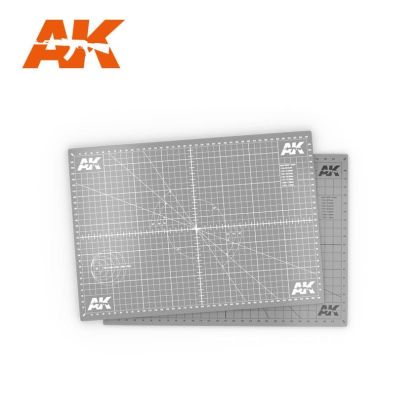
A cutting mat is the first thing to arrive on a modelling bench and the least interesting purchase in the hobby. It still decides whether, a year into a build, your desk is scored to pieces and your blades are blunt. A self-healing surface closes behind the cut, guides the blade and holds the part in place while you work.
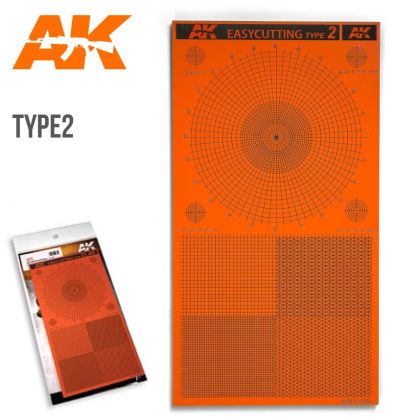
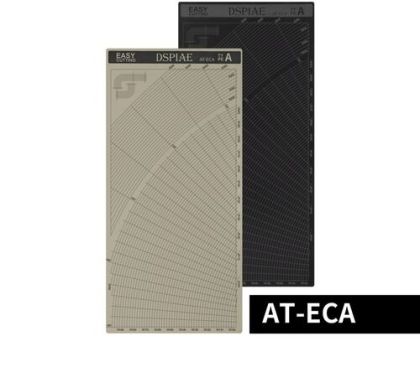
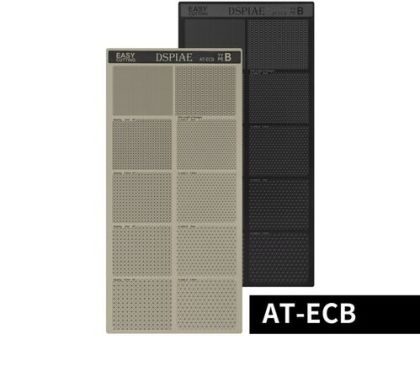
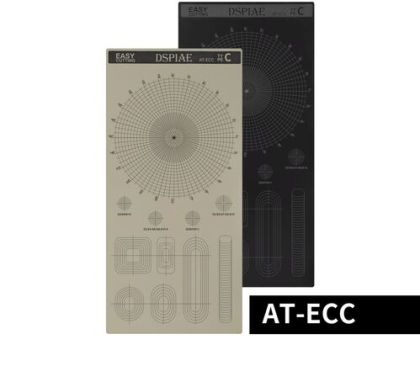
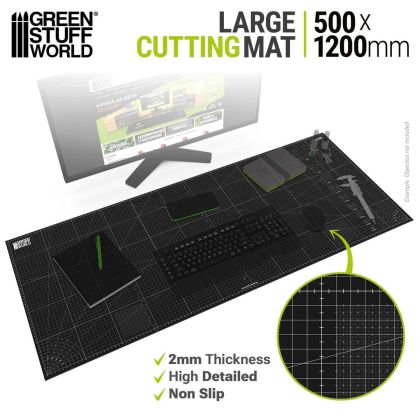
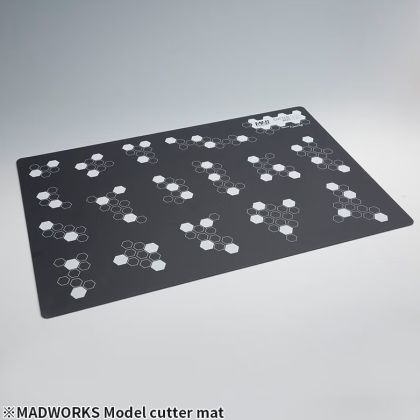
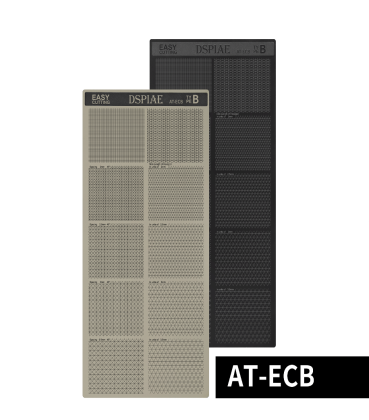
The range runs from A5 formats up to large sheets over a metre across, with plain and printed-grid versions, plus small mats carrying engraved templates for slicing masking tape into arcs and circles. Below we cover how to pick the format and the surface.
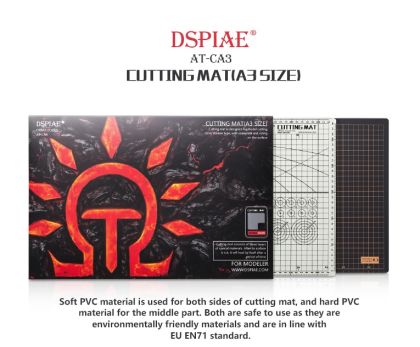
The mat is laminated from several layers of soft plastic. The blade enters the material and the layers close behind it, so no open groove is left on the surface for the knife to slip into next time. The side effect matters just as much: on a soft surface a blade stays sharp far longer than it does on glass or laminate.
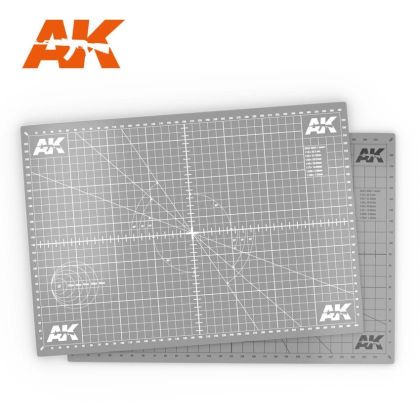
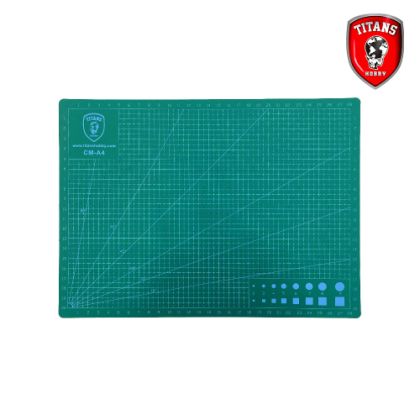
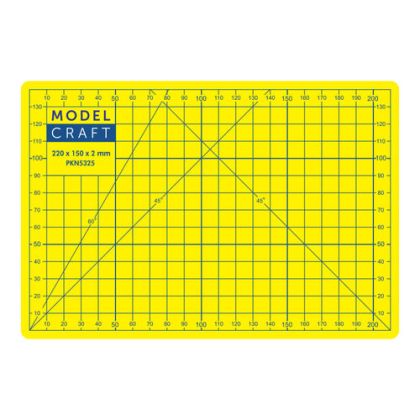
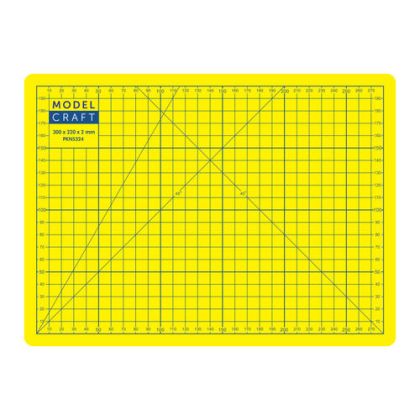
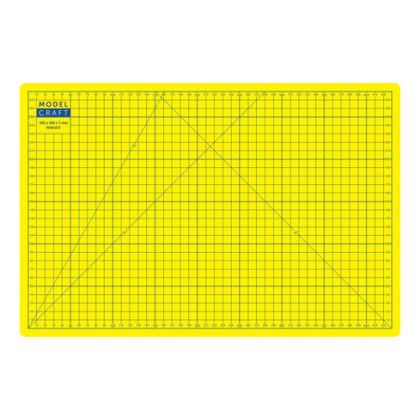
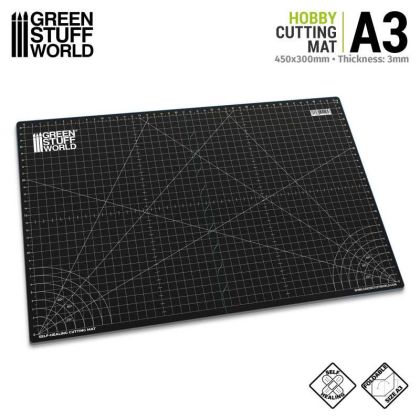
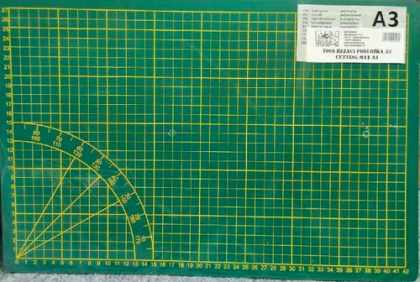
A3 is the most generally useful. It takes the part, the hand holding it and a straight edge, and it still slides into a shelf. A4 and A5 work as a portable bench or as a second mat kept for dirty jobs. Large sheets over a metre wide are for building a diorama on the table or working with long sections.
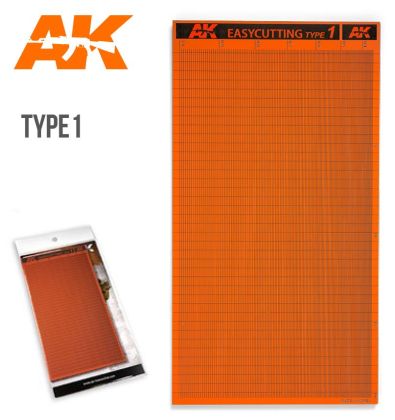
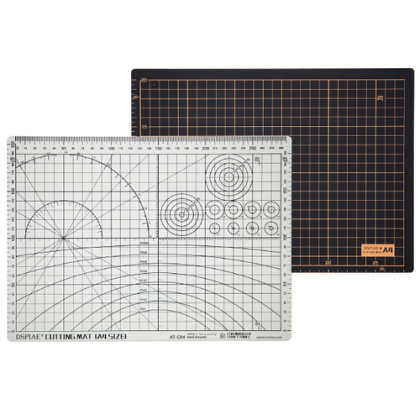
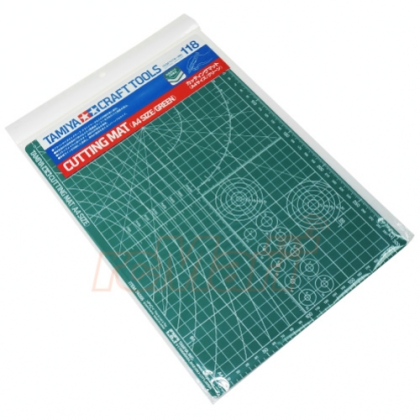
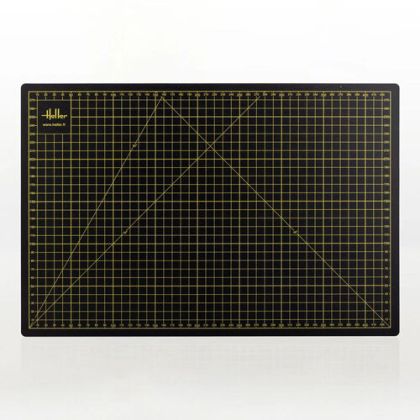
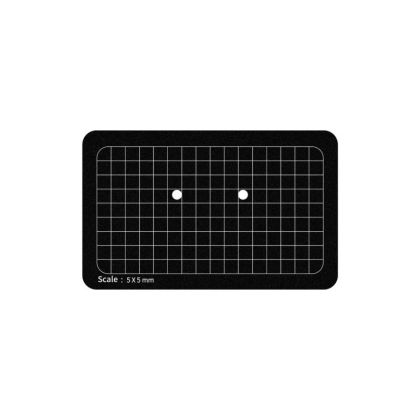
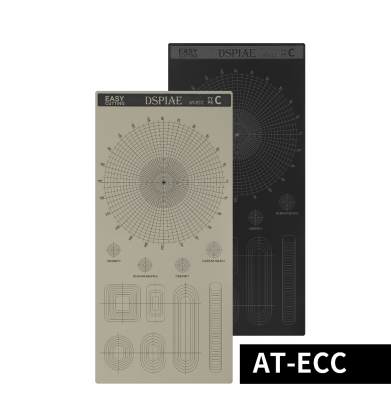
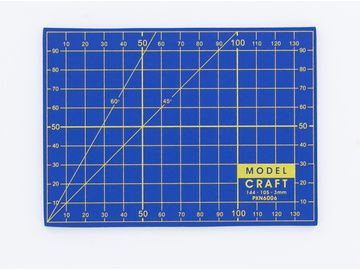
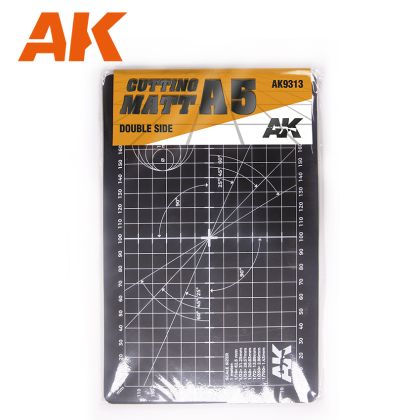
A centimetre grid on the surface replaces a rule for rough measuring and helps keep a cut square. Angle scales earn their place when you shorten sections. A separate group is the small mats with engraved arcs, circles and polygons, used for cutting masking tape into the shapes you need for canopies and camouflage edges.
A dark mat is easier on the eyes and shows up light plastic or decal trimmings better. On a light mat, black parts and small etched frets do not disappear. If you cut a great deal, keep both and pick according to the material in front of you — it takes two seconds and saves a part.
Keep the mat clean of glue and filler residue. One hardened drop of cyanoacrylate under a part will ruin an otherwise careful cut. The wider workspace is in modelling workbench equipment, the blades themselves under cutting.