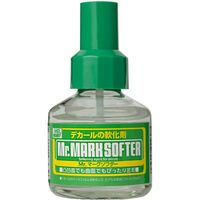
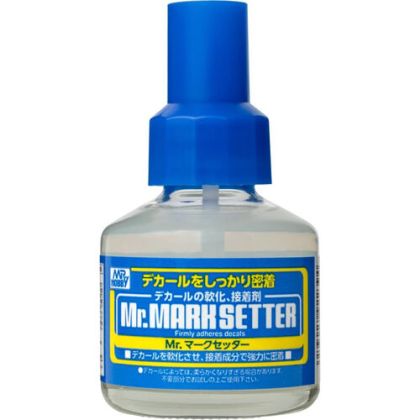
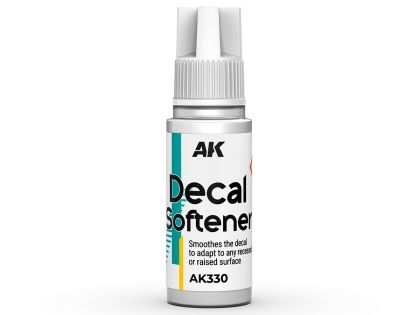
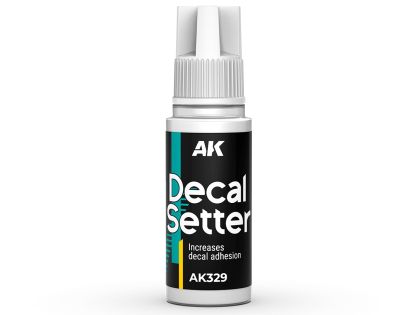
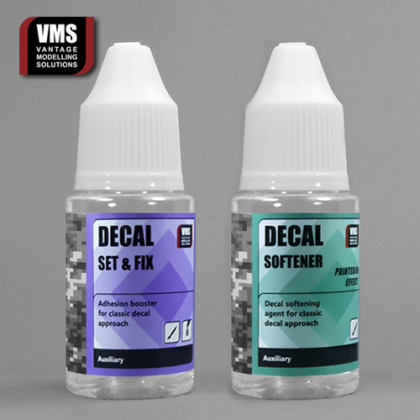
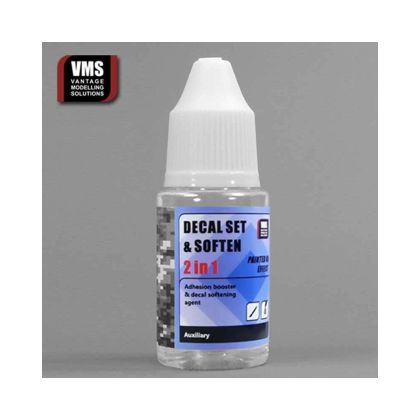
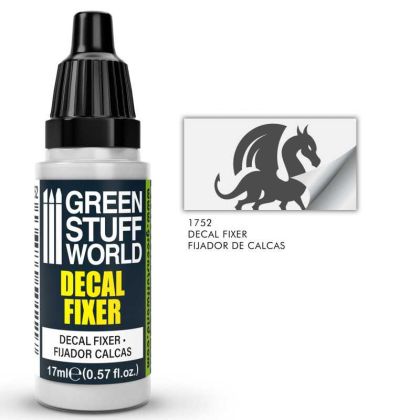
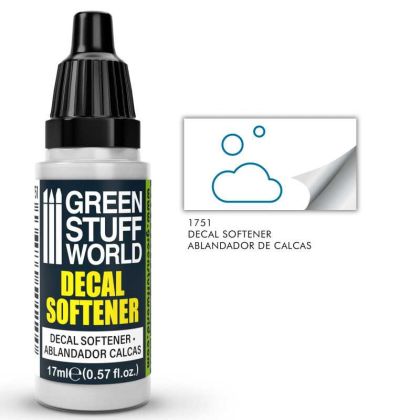
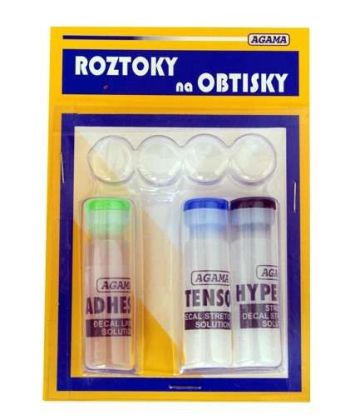
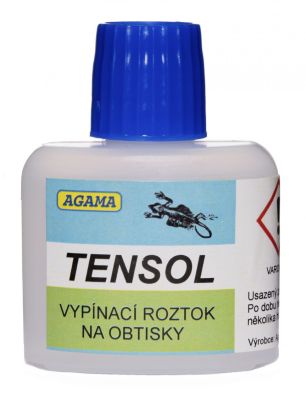
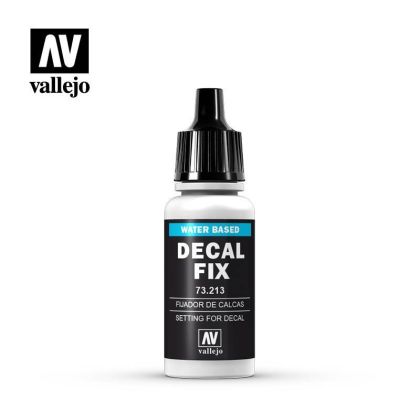
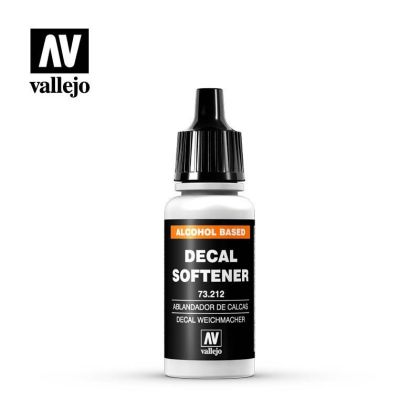
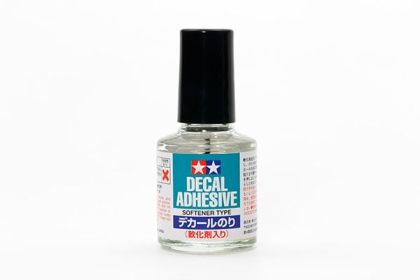
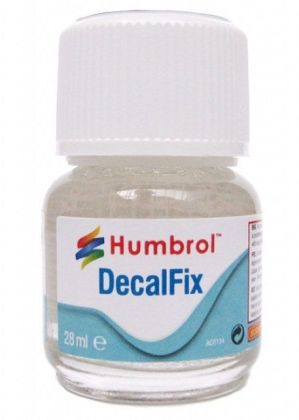
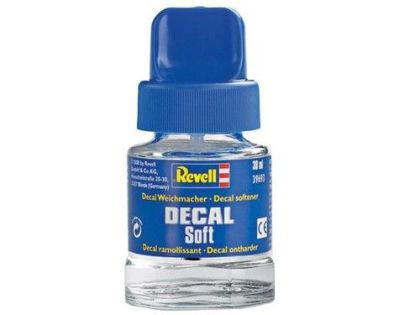
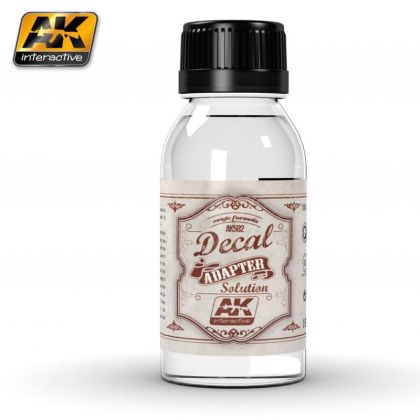
Decal setting solutions come as a pair, and without them a decal almost always stays visibly stuck on rather than printed on. The setter improves adhesion to the clear coat; the softener relaxes the carrier film so it sinks into panel lines, drapes over rivets and follows compound curves. Once dry, you cannot tell where paint ends and marking begins — and that single detail separates a carefully finished model from one rushed on the last evening.
Below you will find why the silver halo around markings appears at all, the order the two solutions go on in, and how to judge softener strength so a thin film does not disintegrate.
A decal is a thin clear film with print on it. On perfectly smooth gloss it behaves well, but as soon as there is an engraved line, a rivet or a curve beneath it, the film bridges the gap instead of touching down. The trapped air reflects, and the result is the mirror-like halo known as silvering — usually more obvious in photographs than on the bench.
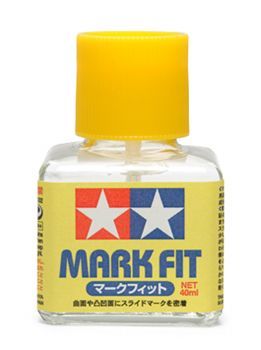
The two solutions attack this from opposite ends. A setter raises adhesion and helps the film hug the surface. A softener chemically relaxes it until surface tension pulls it down into every irregularity, after which it behaves like printed colour.
Markings go onto gloss. A matt coat has a microscopic texture that traps air, so silvering appears even when the solutions are used perfectly. Matting down comes last, over the finished decals.
Put a drop of setter on the spot, slide the decal off the backing paper into it and align it. Press out surplus liquid and air with a damp cotton swab, working from the centre outwards. Only then brush softener over the top. The decal often wrinkles and looks ruined at this point — that is normal, it must not be touched, and it flattens itself as it dries.
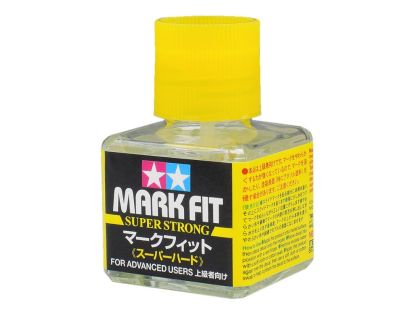
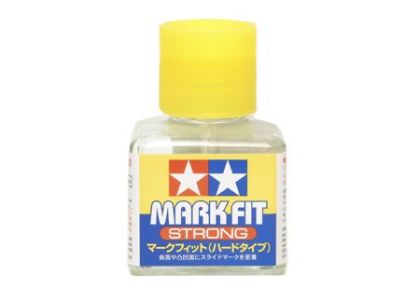
Softeners differ in aggressiveness. Stronger ones handle stiff markings and deep engraving, but thin films risk tearing. If a solution is new to you, or the sheet is an old one, test it on a corner you will not use. Over heavily detailed areas, several light applications of a milder solution beat one heavy dose of a strong one.
For the rest of the auxiliary range, see modelling chemicals. Few small bottles repay themselves as visibly as this pair, and it is worth owning before the first fight with a decal, not after it.