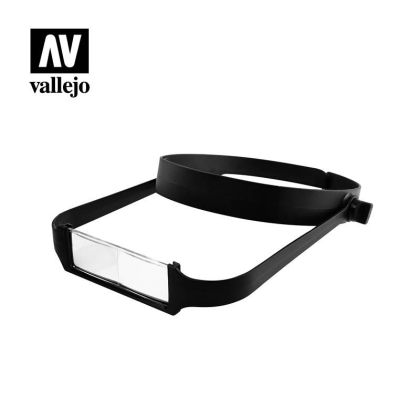
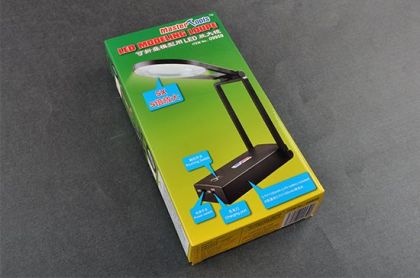
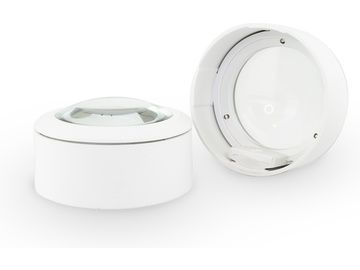
A magnifier is the piece of equipment modellers buy later than they should. The moment you start handling photo-etched parts, small decals or figure faces, magnification saves your eyes and a measurable number of ruined parts. This section covers desk magnifiers on a stand and on a clamp for the edge of the bench, versions with LED lighting, and headband types that leave both hands free.
Stronger is not automatically better, because magnification and working distance trade against each other. The notes below explain how to choose the power and the format for the work you actually do.
At a normal working distance the eye simply cannot tell where one scribed line ends and the next begins. With small parts you are therefore working on an estimate, and you discover the errors after the varnish has gone on. A magnifier solves that directly: it enlarges the area you are working on and lets you hold the model further from your face, so you stop hunching over the bench.
The rule is simple. The higher the magnification, the smaller the field of view and the shorter the distance at which the image is sharp. Two to three times is a good compromise for ordinary building, because you see the whole part and still fit a pair of tweezers in above it. Save the stronger lenses for detail work such as faces on figures or placing small etched parts.
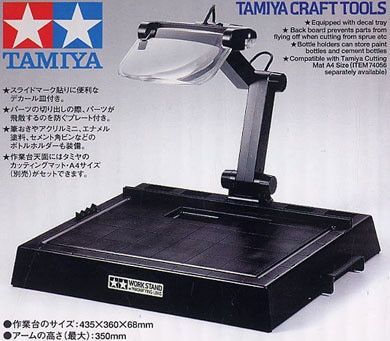
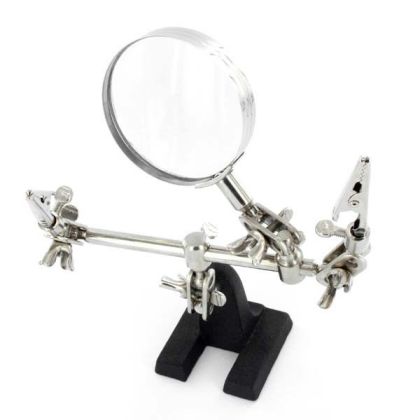
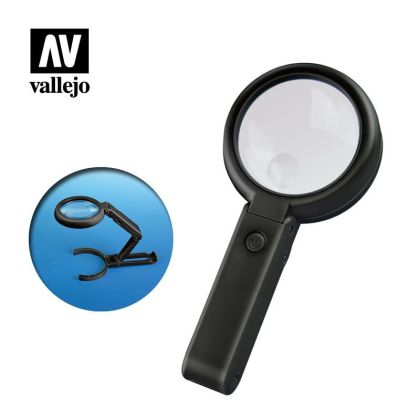
A desk magnifier on an articulated arm or a bench clamp is set once and then forgotten about. Headband and spectacle types suit anyone who moves around the model or turns it in their hands. Many desk units have LEDs in the frame, which light exactly what they magnify; if yours does not, pair it with a separate modelling lamp.
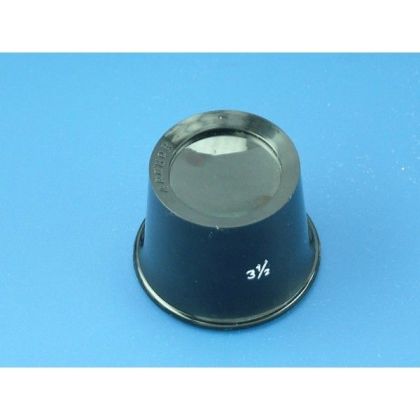
Some magnifiers carry two lenses in the head, a weaker one for the overview and a small supplementary one for detail. Headband types often come with a set of interchangeable lenses, so you choose the power to suit the job. If you prefer free hands and nothing on the bench, look at magnifying glasses.
Choose a magnifier by the work in front of you rather than by the number on the packaging. The rest of the workspace is in modelling workbench equipment.