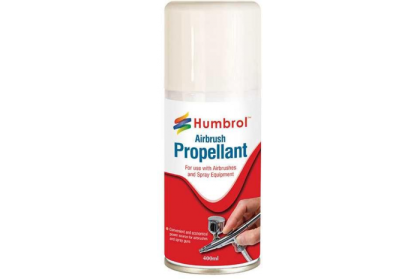
Propellant in a can is the simplest air supply an airbrush can have. It needs no mains power, it makes no noise and it connects straight to the handpiece, which is why it suits occasional painting, small jobs and travelling, or serves as a fallback when a compressor is not to hand. The one behaviour to plan around is that pressure falls as the can empties, so on a longer session the spray pattern changes under your hands rather than staying put. Plan the work around that and a can is perfectly usable; ignore it and the last panel will not match the first.
A can replaces a compressor for short work: one part, a base coat, a test of a new shade. On a long pass the can cools and the pressure drops, so the paint comes out coarser; a pause helps, or warming it in lukewarm water, never over a flame. For regular painting an airbrush compressor with a regulator is the stable answer, and couplers sit in spare parts under airbrush equipment.