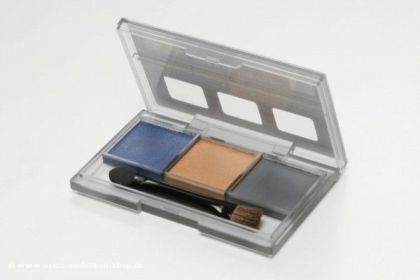
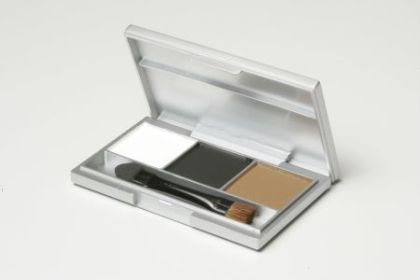
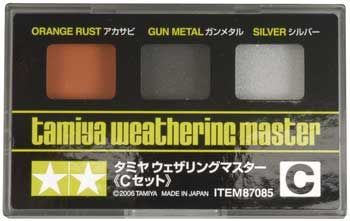
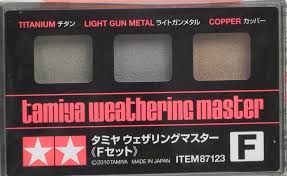
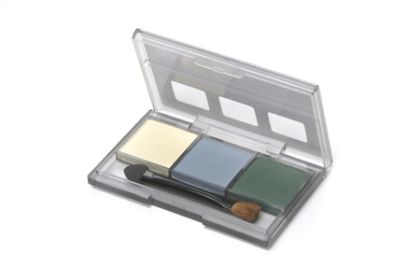
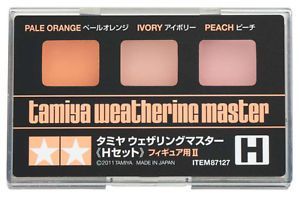
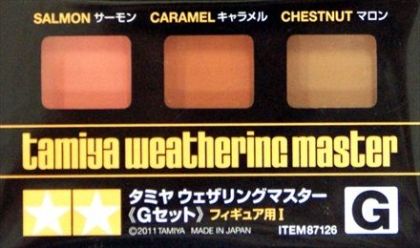
Pressed powder palettes and soft weathering sticks are the quickest route to a dirty model. The colour is compacted into a pan or formed into a crayon, you pick it up with the supplied sponge applicator or a brush, and you rub it onto the surface. Nothing is mixed, nothing is thinned and nothing has to dry, so the result is visible immediately and can be adjusted or wiped away on the spot.
The trade-off is control at the small end: a sponge applicator cannot put colour into a rivet recess the way a liquid can. Where these products are unbeatable is broad, soft transitions — soot around an exhaust, mud fading up a skirt, dust on an upper surface.
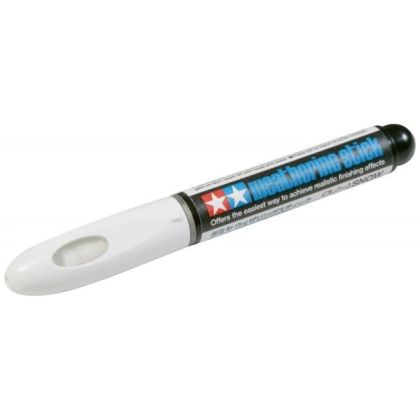
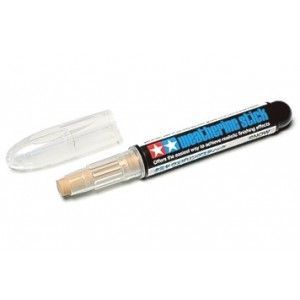
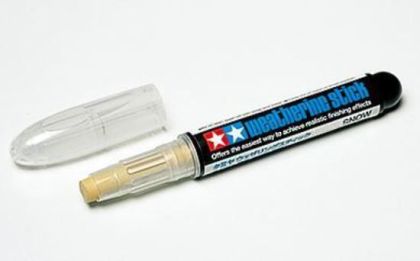
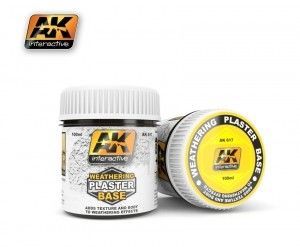
Palettes with several related pressed-powder tones in one case, covering soot, rust, earth, sand, snow and metallic wear, each supplied with a double-ended sponge applicator. Alongside them, soft stick-format compounds in snow, sand and light earth that are rubbed on directly and spread with a finger or a brush, plus a plaster-type base for building up ground texture.
Pick up very little on the applicator and work it in with small circular movements. Each pass adds colour, so stopping early is easy and going too far is not — these compacts are strong, and over-applied soot is hard to remove without disturbing what is underneath.
Like any dry medium, these grip a matt finish. If the model is still glossy from decal work, a matt coat from varnishes and clear coats has to come first or the powder will simply slide around.
Left unfixed, the finish stays convincingly dusty but comes off on fingers. Sealed with a matt coat it becomes handleable and loses roughly a third of its visible texture, so decide in advance whether the model will be touched.
The crayon-type sticks are worked with a damp brush or a cotton bud from cotton swabs and are the easiest way to produce a long soft gradient — snow thinning out up a hull side, dust rising from a wheel. For a crisper highlight on raised edges, dry brush paints are more precise.
All effect types are compared in weathering products.