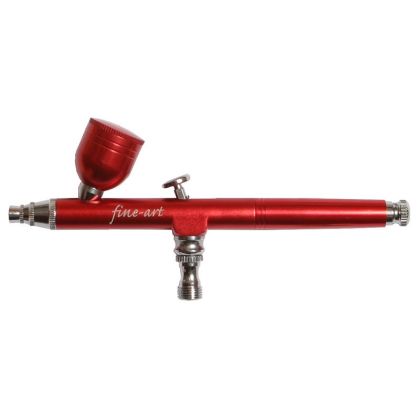
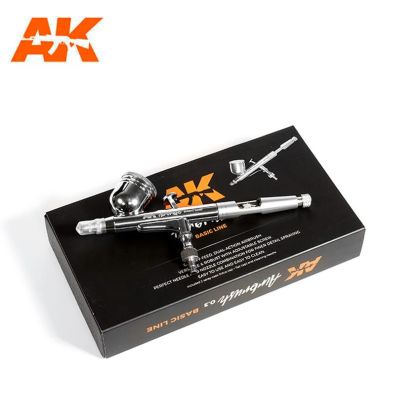
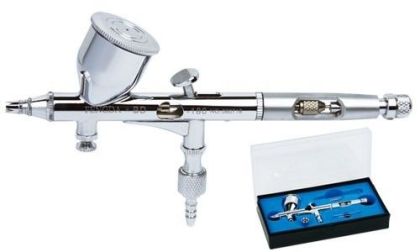
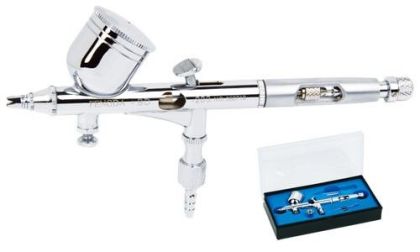
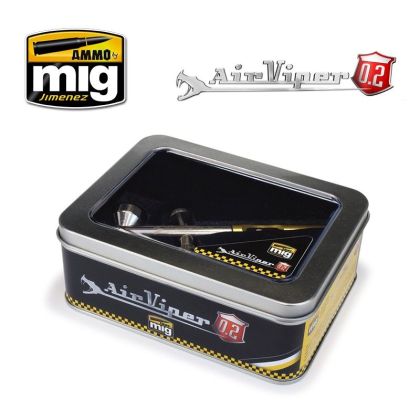
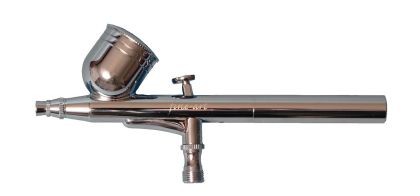
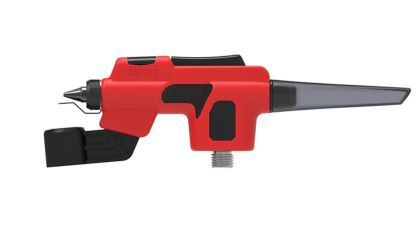
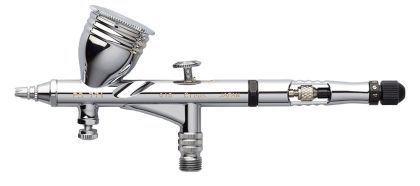
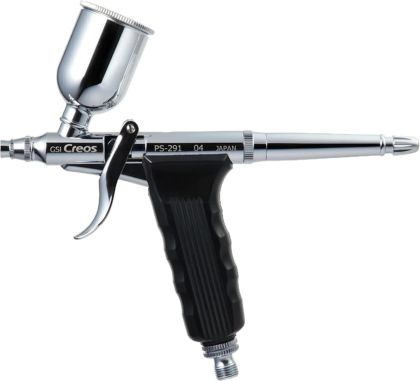
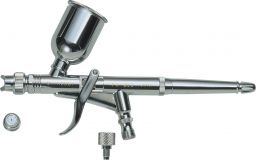
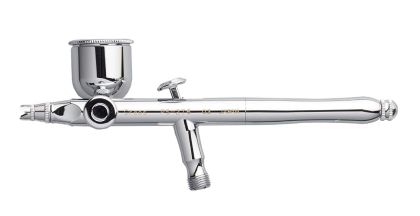
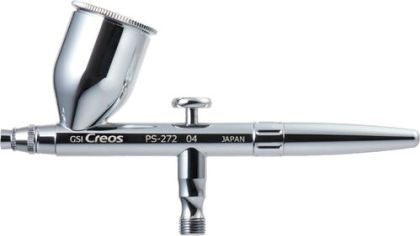
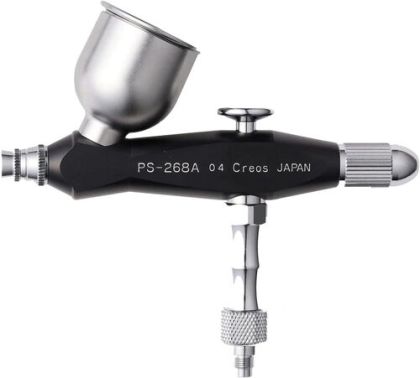
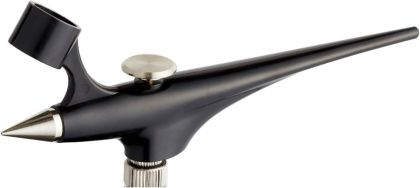
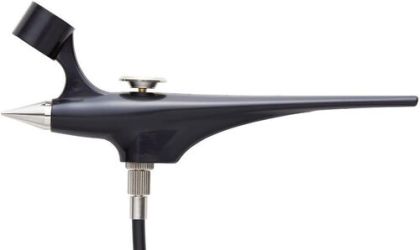
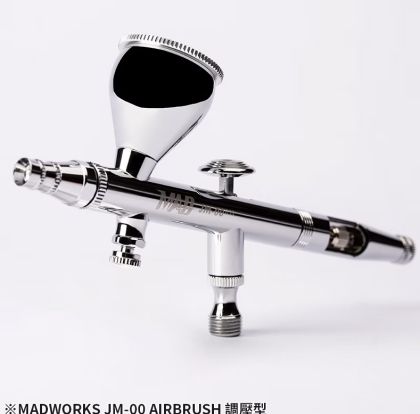
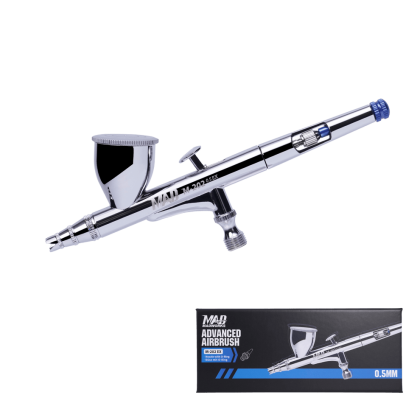
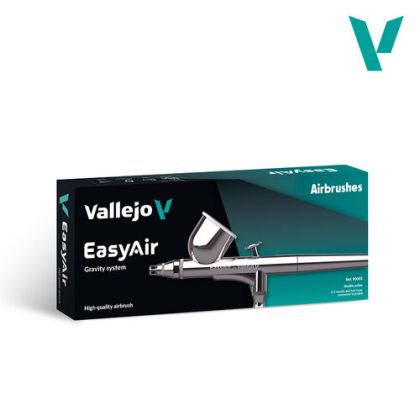
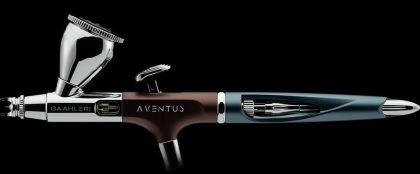
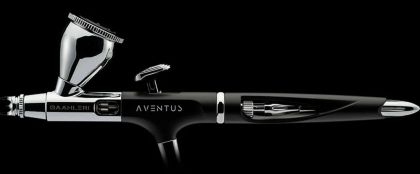
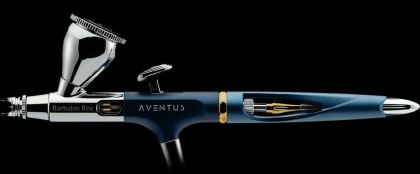
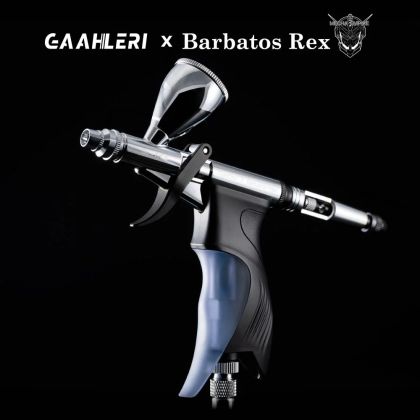
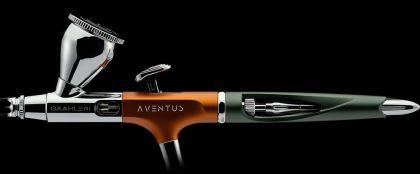
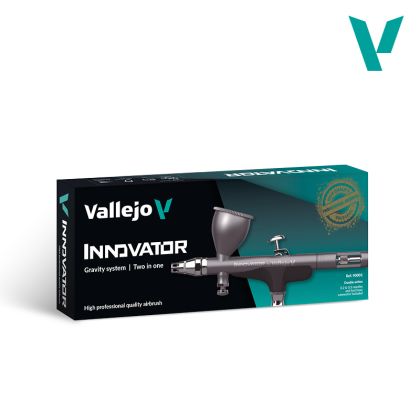
The handpiece is the heart of an airbrush setup and the only part you actually hold. It decides how thin a line you can draw and how smooth a large panel comes out. This section covers dual-action airbrushes in several nozzle diameters, bodies with gravity-feed and side-feed cups, trigger-type designs and sets supplied with accessories.
Two specifications do most of the deciding: what dual-action actually means in your hand, and which nozzle diameter belongs to which job. Both are explained below, along with the consumables you will meet within the first few months.
Air passing the nozzle creates a low-pressure zone, draws paint out of the cup and atomises it. How much paint arrives depends on where the needle sits in the nozzle. On a single-action tool you preset that amount and the trigger only releases air; on a dual-action tool the press gives air and the pull back adds paint, so you change intensity during the pass itself. For scale modelling, dual action is the standard.
Around 0.2 mm draws fine lines and handles soft camouflage and transitions on small subjects, but it clogs easily with thick paint. A 0.3 mm nozzle is the most generally useful size for ordinary building. Diameters of 0.4 to 0.5 mm are for base coats over large areas, for surfacer, and for paints you would rather not thin to the limit.
A gravity-feed cup on top fills and cleans easily and the paint runs down to the nozzle on its own, which suits small quantities and frequent colour changes. A side or bottom jar holds more paint and stays out of your line of sight over the model, which pays off on big panels. Choose the capacity by how long your passes are, because topping up in the middle of a panel leaves a visible join.
The classic finger trigger gives the finest control and most modellers stay with it. Trigger-type bodies, squeezed like a pistol grip, sit more comfortably during long sessions and ask less of the index finger. It is a question of habit rather than of spray quality.
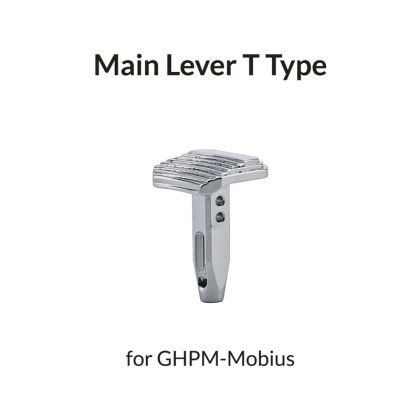
The needle and the nozzle are the vulnerable parts. A bent tip throws the pattern sideways, a damaged nozzle sprays off axis, and both are replaceable — see spare parts and accessories. Flush the handpiece and wipe the needle before the paint dries, not after.
You learn the tool on scrap plastic, not on a model. Practise lines, flat panels and soft transitions at different pressures and dilutions. The rest of the setup is under airbrush equipment.