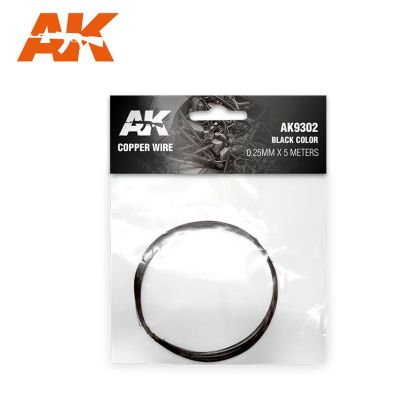
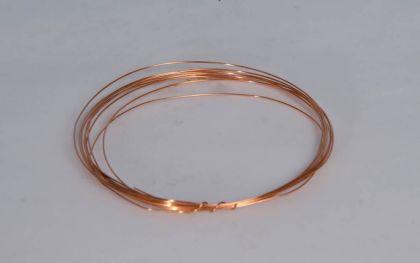
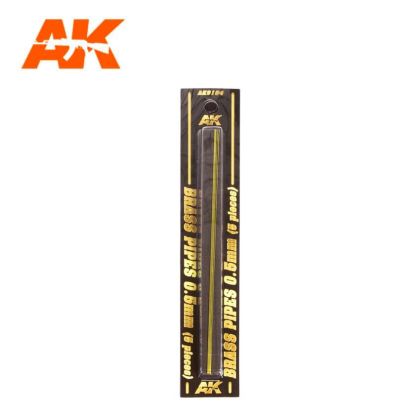
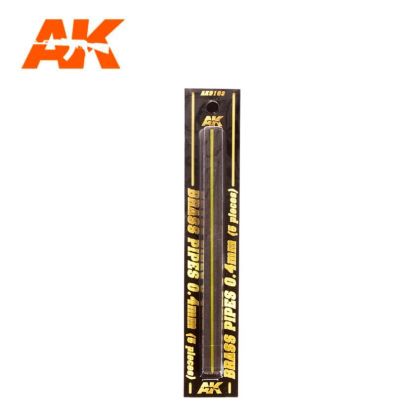
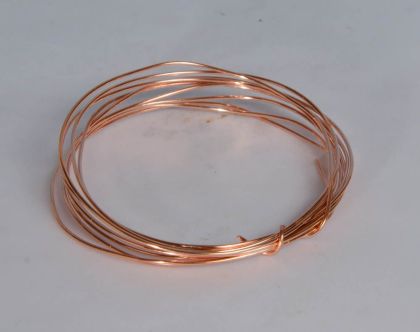
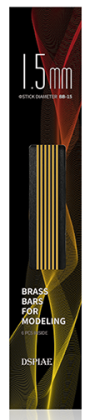
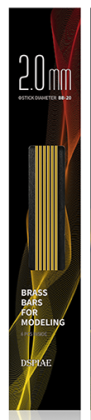
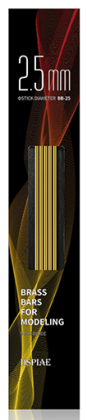
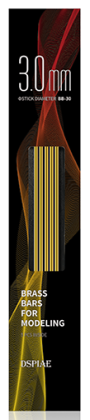
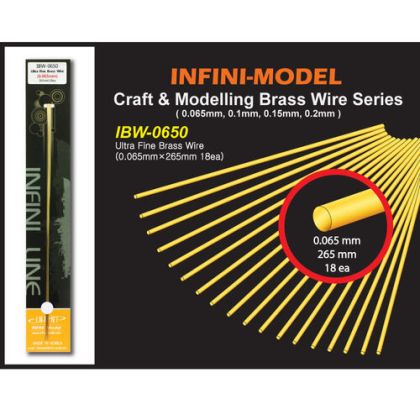
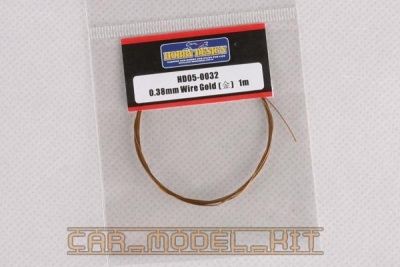
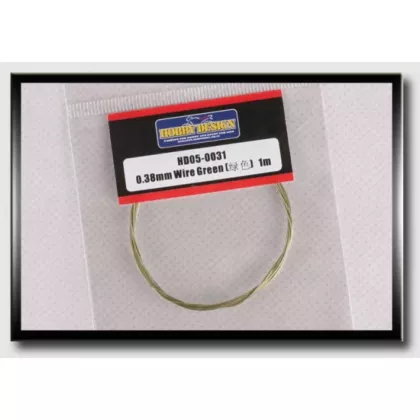
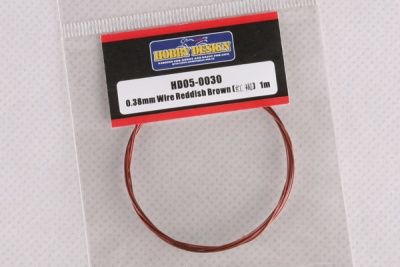
Wire and rod is the most versatile detailing stock there is. Copper wire starts at two tenths of a millimetre and runs up to one, brass rod covers 0.5 to 3 mm, there is ultra-fine wire at 0.065 mm, and coloured wire at 0.38 mm in gold, green and red-brown.
From that comes hydraulic plumbing, cable looms, linkages, aerials, grab handles, control cables, railings and axles. In short, everything that has to be thin and bent to an exact shape, which is precisely what injection moulding cannot deliver.
A moulding can never carry a thin free-standing part. The gate would not fill and the part would snap as the tool opened, so kits tend to come with grab handles the thickness of a pencil and no plumbing at all. Wire fixes that faster than anything else: a handle bent from 0.3 mm wire reads in 1:35 as a tube about a centimetre across, which is exactly right.
The finest wire from 0.065 mm is for control cables and delicate rigging in small scales, where even monofilament is too coarse. Two to four tenths of a millimetre makes grab handles, aerials and electrical runs. From half a millimetre up you are into hydraulic hoses, linkages and structural parts. Above two millimetres it becomes axles and pins, where the metal profiles take over.
Copper is the most malleable, holds a bend with no spring-back and survives repeated reshaping, so it suits runs that must follow the contour of a part exactly. Brass is harder, stays straight and carries a load, which makes it the choice for aerials and axles. Coloured wire already looks like metal or like insulation, so sometimes it needs no paint at all.
For hoses and runs that disappear into nothing, wire is quicker. If the part needs an open mouth, such as an exhaust or a connector, you need a hollow section from the brass tube. For filaments and rigging where no metal should show, carry on to rope and thread.
Hydraulic runs and grab handles are the commonest upgrade to construction and military subjects, so the kits behind them are in military model kits.