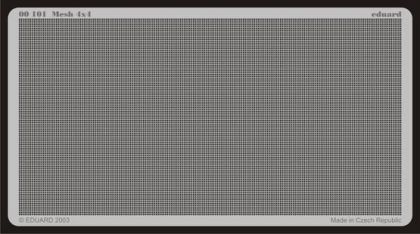
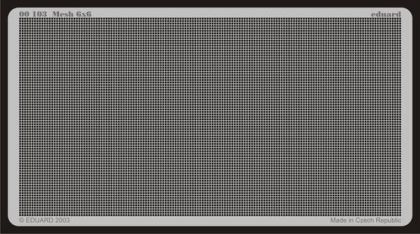
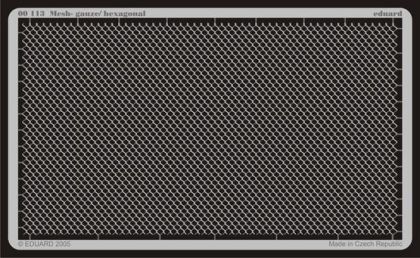
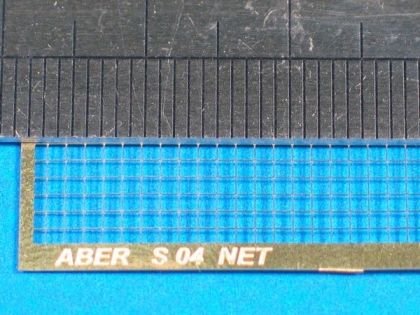
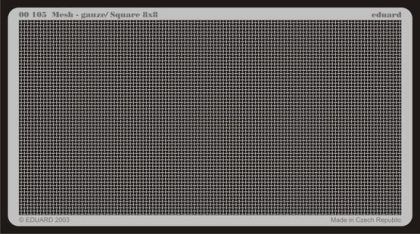
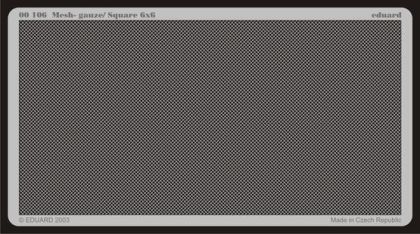
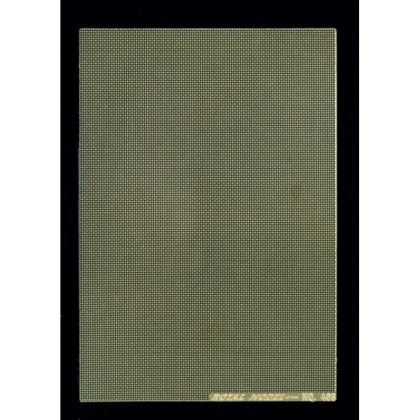
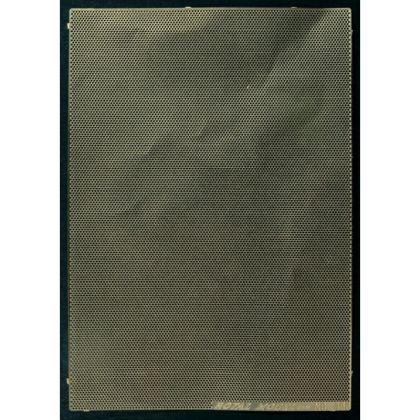
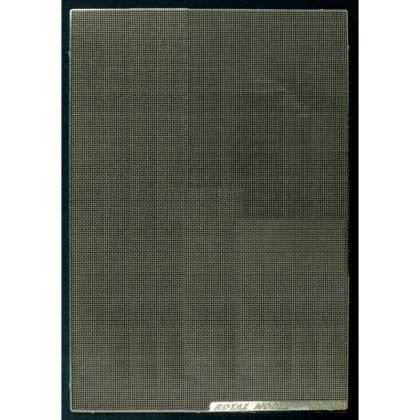
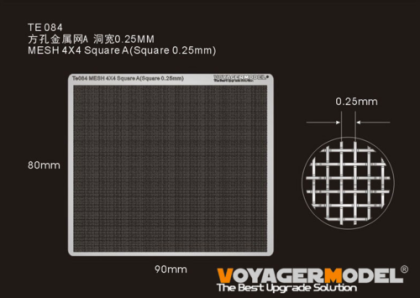
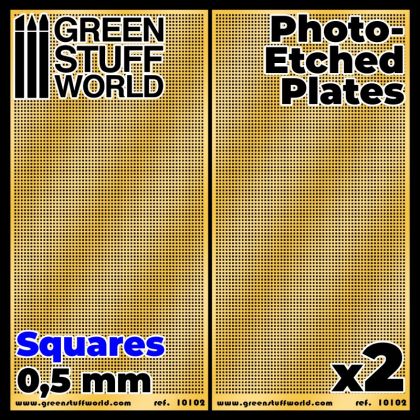
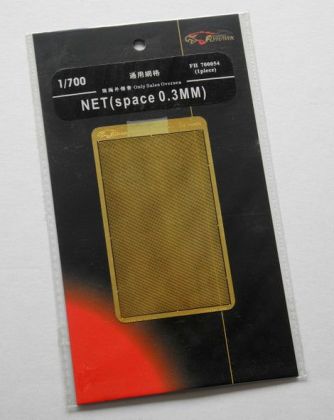
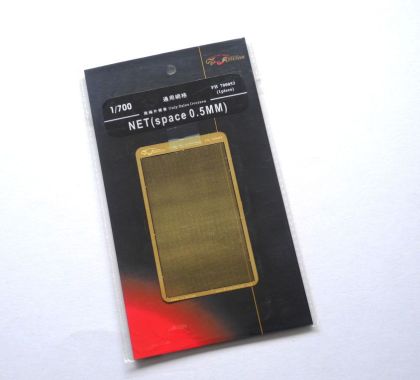
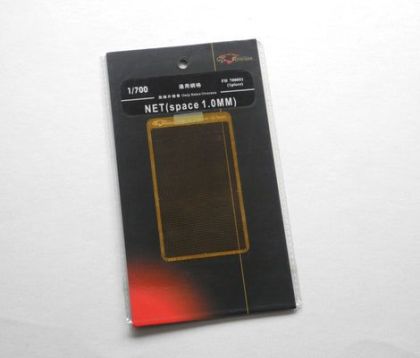
Modelling mesh is thin perforated metal used to replace radiator grilles, vent covers, cage infills, floor gratings and tread plates. Patterns are diamond, hexagonal, square and drilled, in several gauges.
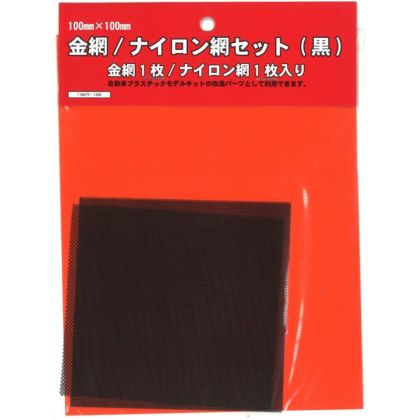
Alongside photo-etched brass and stainless versions there is aluminium mesh, nylon fabric, and very fine screens made specifically for 1:700, where the individual apertures are measured in tenths of a millimetre. All of it is sheared rather than cut, and all of it does something no moulded surface can: it lets you see through.
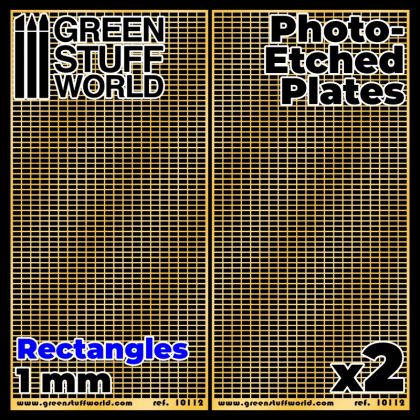
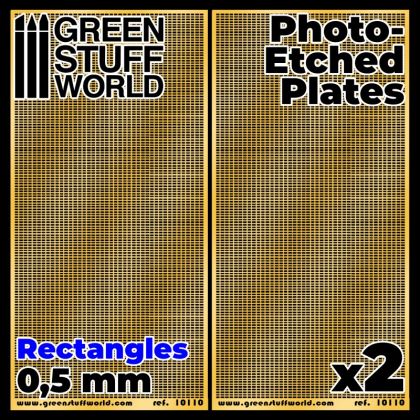
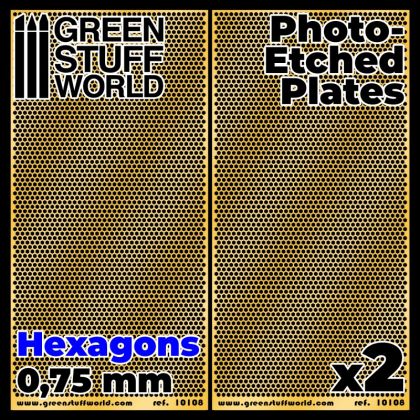
A very thin metal sheet in which the holes have been etched chemically rather than punched. That gives the grille sharp edges, even spacing and a thickness under a tenth of a millimetre. A radiator cover made from it reads as a real grille with the engine bay visible behind, where the moulded version can only ever be a grooved surface.
Fine screens belong in small scales and on small vents; a medium gauge suits radiator grilles in 1:35 and 1:48; the coarsest patterns go on protective gratings and cages in large scales. Convert the pitch: a mesh with a half-millimetre pitch reads in 1:35 as a grid with apertures nearly two centimetres across, which is an ordinary protective grating.
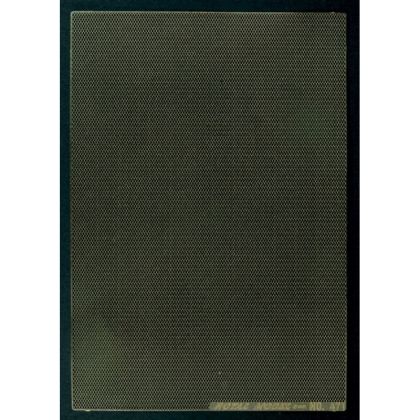
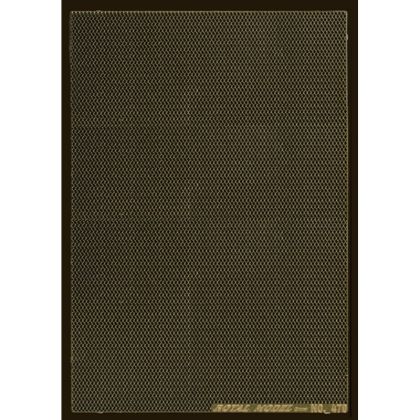
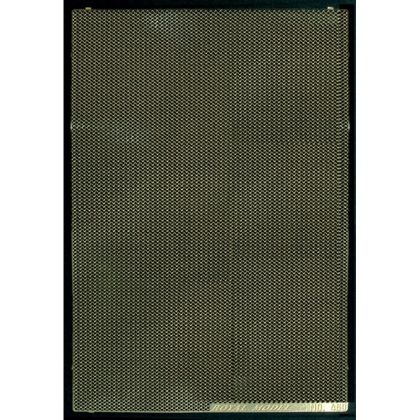
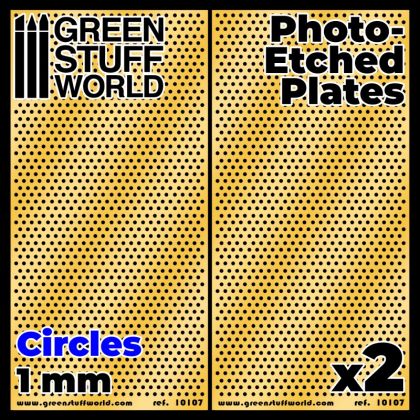
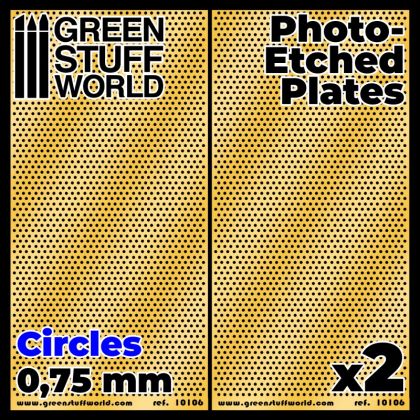
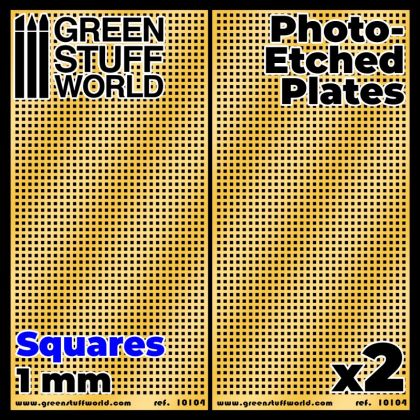
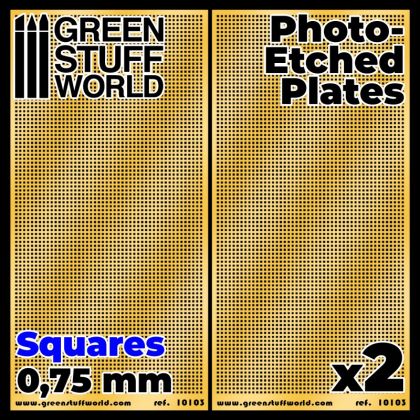
Diamond is typical of radiator covers and protective screens, hexagonal of air filters and light structures, square of gratings and flooring, and drilled of perforated plate and speaker covers. Beside the screens there are also etched sheets of regular squares, rectangles and circles, from which individual items are punched out.
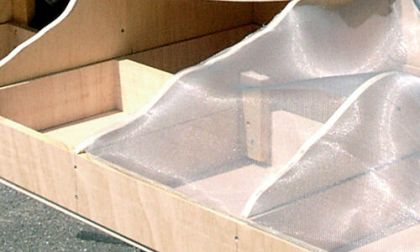
Metal mesh holds its shape and can be curved to follow a cover, but it has to be sheared and fixed with cyanoacrylate. Nylon fabric is pliable and suits stretched tarpaulins, sacks and fibres in a scene. For related fine metal stock, see the metal sheet.
Radiator grilles and protective gratings are most often added to armoured vehicles, so the related etch is under military photo-etched sets.