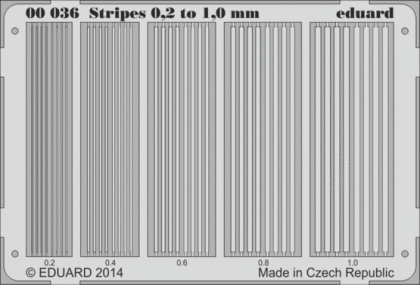
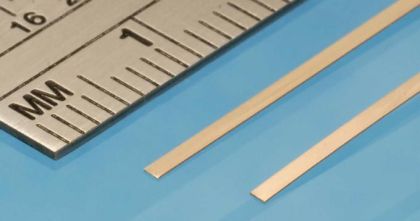
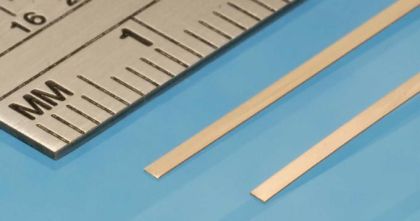
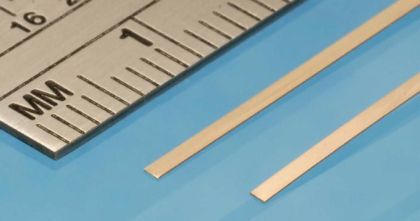
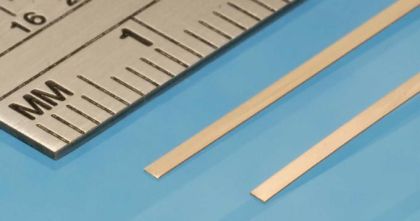
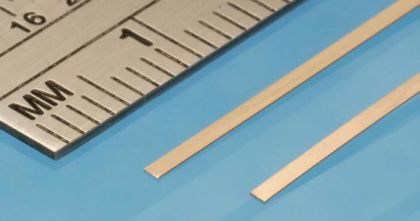
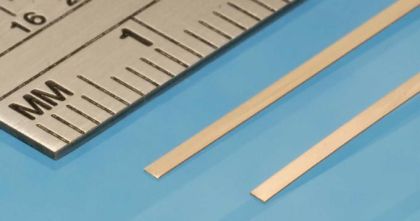
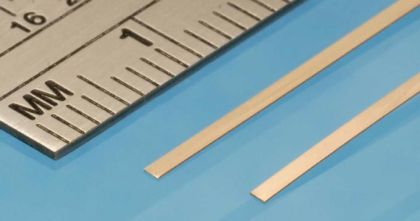
Brass strip is thin flat metal stock you cut into plate banding, straps, bands and joining plates. Widths of 6, 12 and 25 mm in thicknesses from 0.4 to 0.8 mm sit alongside strip with ready-formed rows of raised and recessed rivets, and very narrow strip from 0.2 mm.
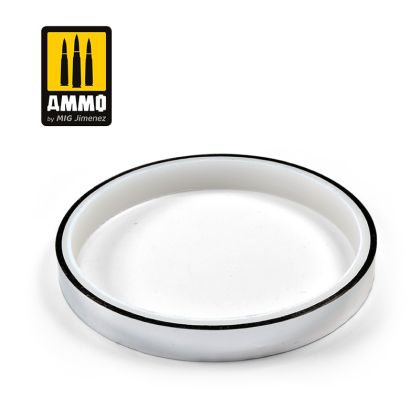
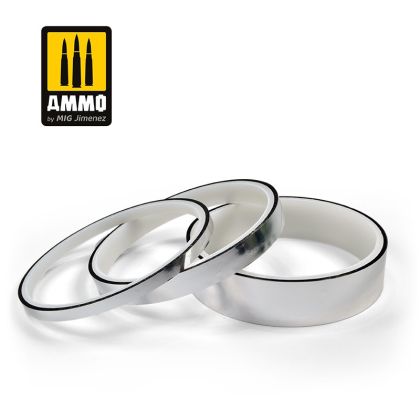
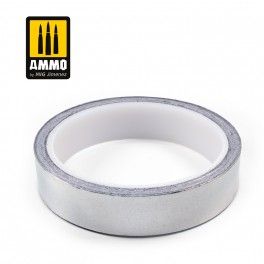
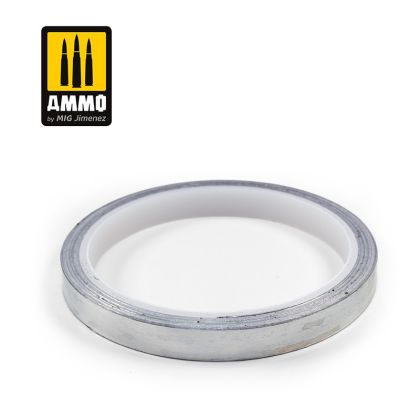
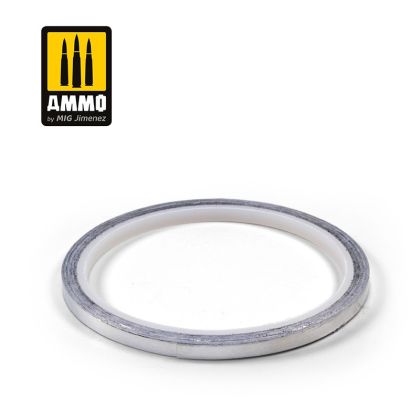
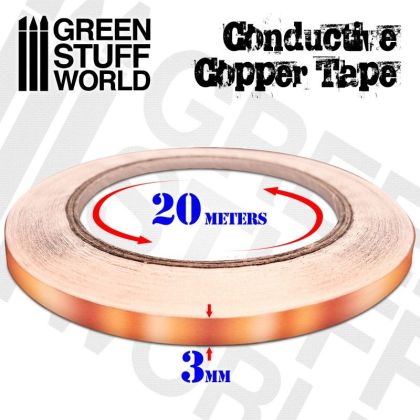
Also grouped here are self-adhesive metallic foils supplied in 10 m rolls in aluminium and chrome finishes, and conductive copper tape for wiring a lit model. All three share the same long, narrow format, and all three are cut with a blade or shears rather than a knife.
Three different things that happen to come as a strip. First, solid metal strip from 0.2 mm up to 25 mm wide, cut into straps, retaining bands, joining plates and plate banding. Second, strip with a ready-formed row of rivets, laid along a seam to give a riveted joint without forming a single dome by hand. Third, self-adhesive metallised foil in rolls, wrapped around frames, trims and bright strips.
A narrow strip becomes a tank band, a jerrycan retaining strap or a hose clamp. Metal is the advantage here, because once wrapped it will not spring open again and it keeps the bend exactly where you put it. For circular links, carry on to the small metal rings.
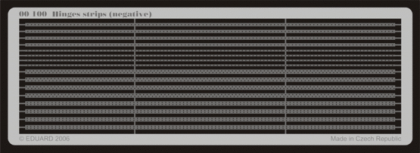
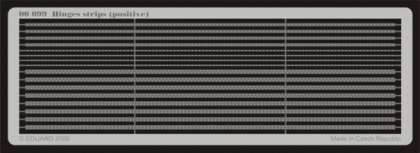
Strip with pre-formed rivets is laid along the seam and saves hours. The raised version gives domed heads, the recessed version produces sunken rivets instead. If the rivets have to be spaced irregularly, look instead at the individual parts under rivets, bolts and nuts.
Rolls in 5, 10 and 20 mm widths are cut into strips or punched into shapes. They suit window surrounds, bright mouldings, mirrors and rubbing plates, where a bright metal finish is better obtained from the surface than from paint. The conductive copper tape is used to run power to a lit model, and the parts that go with it are in electronics for models.
Tank banding and riveted seams are among the commonest additions to armour, so the detail sets that follow on are in military vehicle accessories.