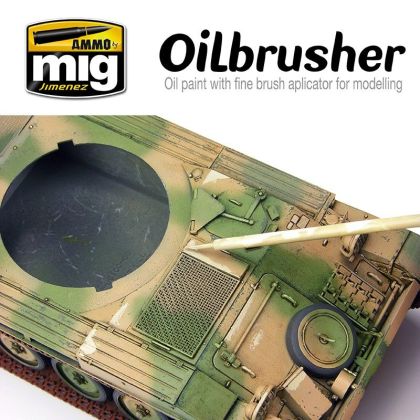
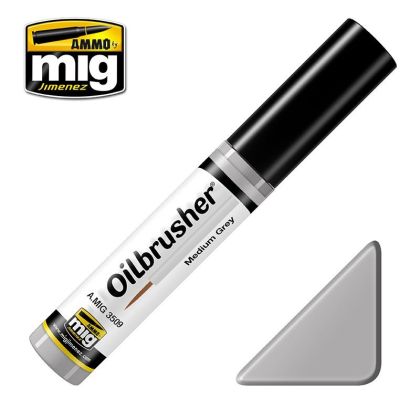
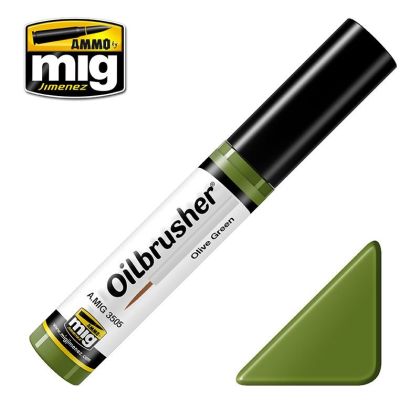
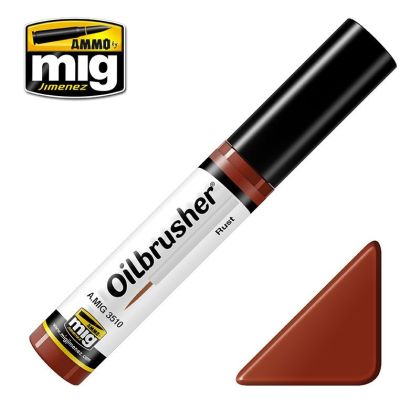
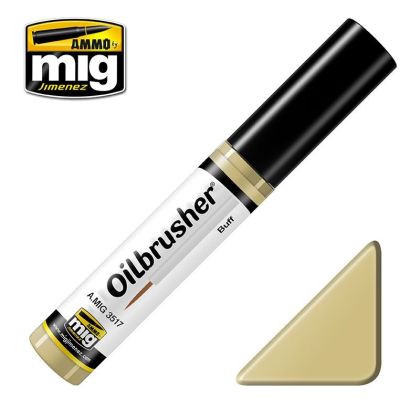
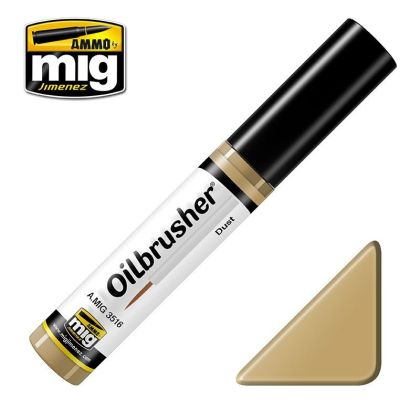
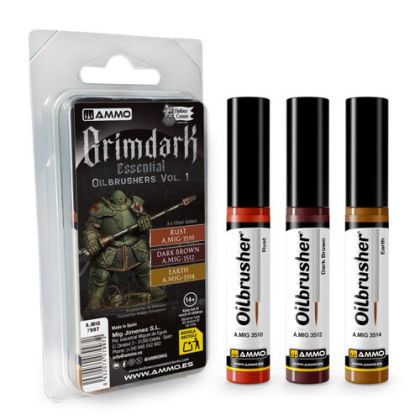
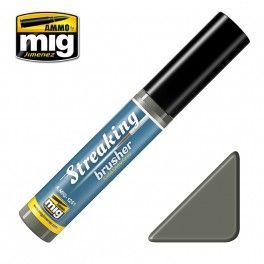
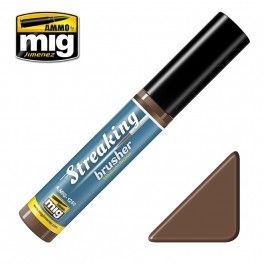
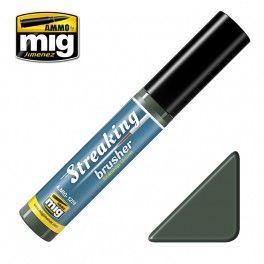
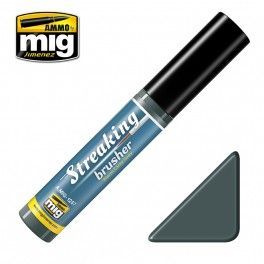
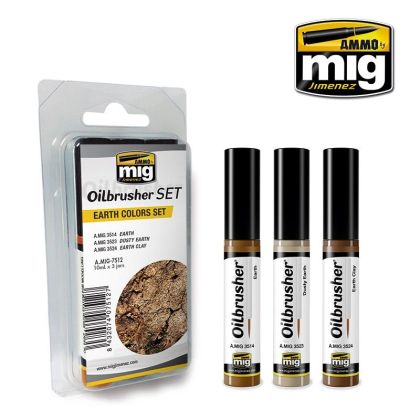
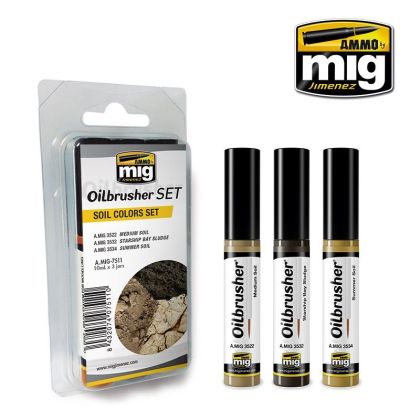
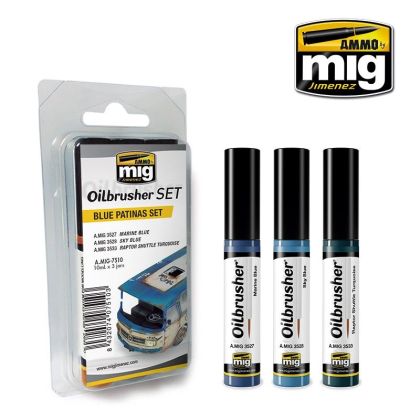
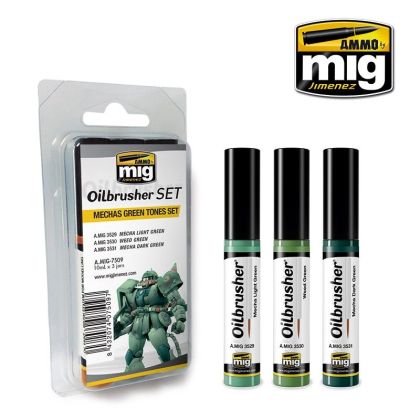
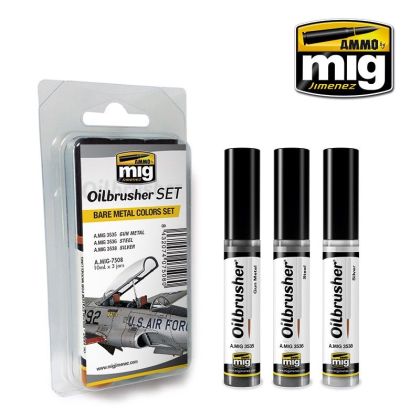
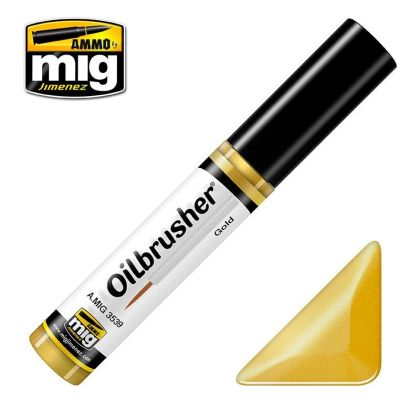
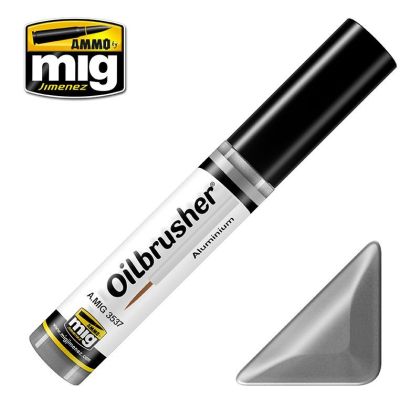
An oil brusher is artist's oil paint in a small jar with a brush built into the lid. That sounds like packaging convenience, and partly it is, but it changes the technique: the brush is already loaded with a tiny amount of undiluted paint, so you can place a dot exactly where you want it and then spend as long as you like spreading it. Oils stay workable for hours, which is the real reason this group exists.
They are used for two jobs above all: pulling vertical streaks down a surface from a hatch, a weld or a rivet, and blending patches of slightly different tone into a flat colour so a panel stops looking factory-fresh.
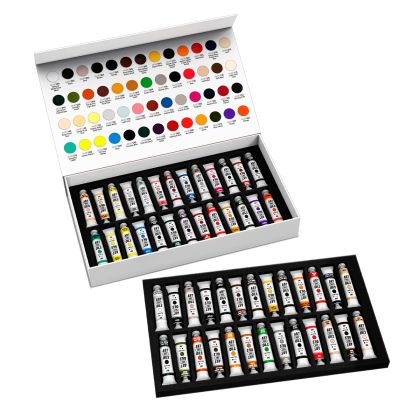
Single-colour jars in earth, soil, grime, rust and metallic tones, dedicated streaking versions with a thinner consistency, and boxed collections grouped by theme — bare metal, blue patinas, soil tones, weathered markings. There are also full ranges of conventional oil paint tubes for modellers who prefer to mix their own on a palette.
Touch the loaded brush to the surface to leave a small dot, then take a second brush moistened with odourless thinner and draw the colour downward in short strokes. The dot is the source of the stain; the dry brush decides how far it runs. Work one panel at a time — oils blend into each other if adjacent streaks are still wet.
For tonal variation, dab three or four colours onto a panel and feather the edges until no boundary is visible. The aim is a surface that is subtly uneven, not a visible patchwork. A flat soft brush from specialist weathering brushes is the right tool; a cotton bud from cotton swabs is better for lifting excess.
Oils and their thinners attack acrylic paint if applied directly, so a clear coat from varnishes and clear coats has to go down first. Satin is the usual choice: gloss lets the oil slide too freely, matt grabs it too hard. Once everything is dry — oils need days, not hours — a matt coat ties the result together.
Oil paint straight from the jar carries excess linseed oil that will leave a shiny halo. Touch the brush to a piece of card and let it draw the oil out for a minute; the pigment that remains is what you want on the model.
The complete overview of effect types is in weathering products.