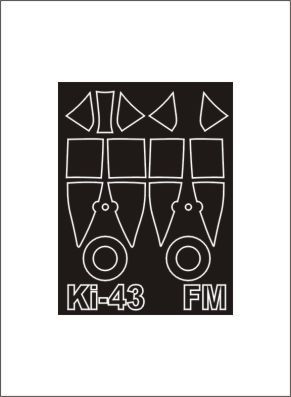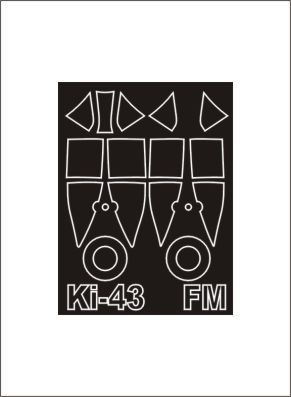
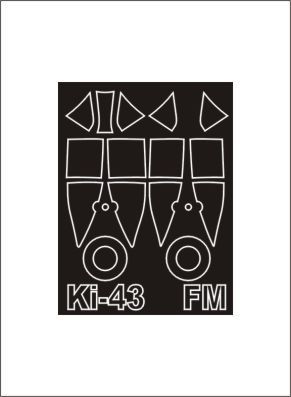
A masking sheet for the cockpit glazing of the 1:48 Japanese Ki-43 fighter of the first series, known to the Allies as Oscar. Outer and inner side, cut for the Fine Molds kit.
Responsibility details are not available.
The Nakajima Ki-43 was named after the falcon, and the name suited its character. The designers sacrificed armor and weight of fire in favor of low weight and added control surfaces of a special type, which deployed automatically in a turn and shortened the turning radius. Allied pilots at first confused the machine with the naval Zero and gave it a reporting name of its own. The first series carried only a pair of machine guns, and it was precisely the insufficient firepower and the unprotected tanks that later pushed it into the background; even so, the Ki-43 served from Burma to New Guinea longer than any other Japanese army fighter. In the last months of the war it was also flown on attacks from which no return was expected.
The cockpit of the first series has a shaped canopy with several flat panels and narrow ribs, where taping by hand is a lengthy business. The pre-cut parts are laid into the panels and the frames stay as thin as they are on the real aircraft.
Masking is done from both sides so that the framing does not look light through the glass. The film will stand being lifted and reapplied if a part is not seated accurately the first time. On Japanese machines this comes in handy especially when a dark green coat applied in patches at unit level is sprayed over the mask. Japanese machines have also survived in photographs with the canopy slid back, so the inner side of the frame really is visible on the model.
Naši poradci a znalci sortimentu jsou připraveni odpovídat na Vaše dotazy (Po–Pá, 8–18 hod).
Zeptejte se na co potřebujete, odpovíme co nejdříve.
Texts from customers in the advice section reflect solely the opinions and views of the customers. MNF trade s.r.o. does not approve or verify customer texts in advance.
There are no questions here yet. Be the first to ask!