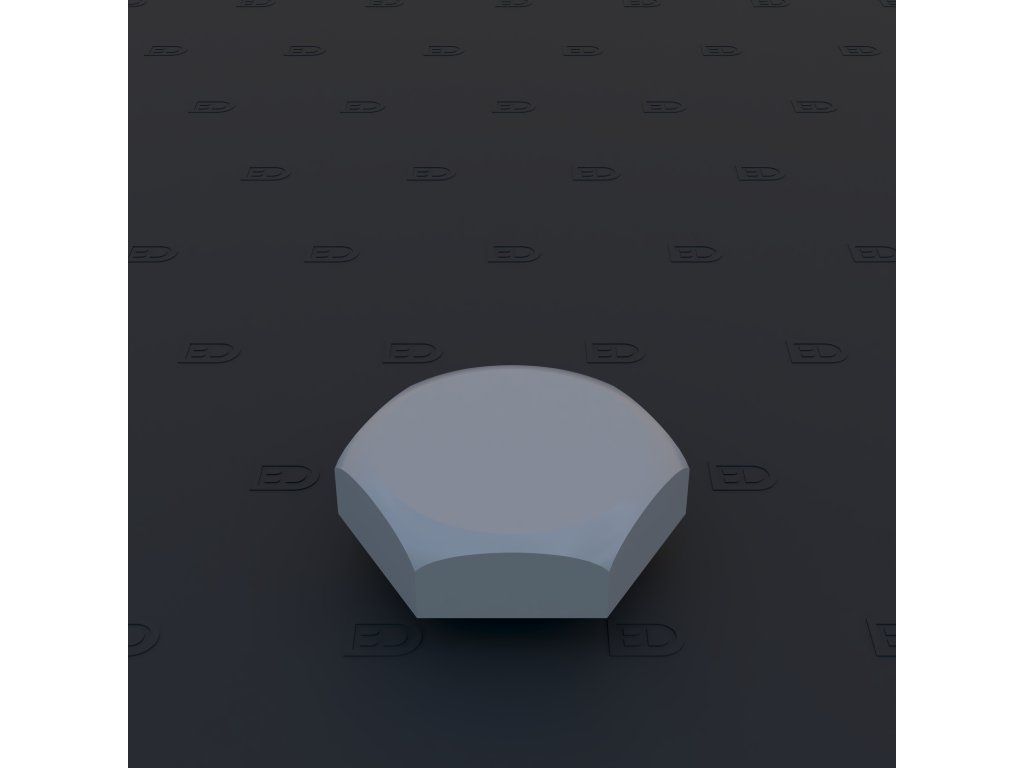
Low hexes seven tenths of a millimeter in diameter. They are reached for by anyone who needs to suggest a joint in a place where a projecting head gets in the way of a moving part or a cover.
Responsibility details are not available.
There are places where a full head simply will not fit. Under a hinged engine cover, within reach of a turning wheel, on the inner side of a door or where two surfaces seat against each other. A lowered profile solves that trouble without any compromise on shape: the hex is still readable, it just does not stand above the surface. The model can then be assembled without the detail obstructing function.
This grade belongs to the finer half of the selection and is popular with aircraft and cars. On a wing or a hood it corresponds to the kind of joint that secures a removable panel on the real machine: large enough for a technician to undo it with a wrench, but not so conspicuous as to break the line. A model gains credibility precisely by distinguishing sizes, not by unifying them into one.
When you are done, run a finger across the surface: where the head catches, it projects more than it should and it is worth pressing it deeper. This simple test reveals unevenness more reliably than a look from above, because the eye is misled by the gloss of the surface. A look against the light at a sharp angle serves just as well, when every protruding piece casts a long shadow and the differences in height stand out at once.
Naši poradci a znalci sortimentu jsou připraveni odpovídat na Vaše dotazy (Po–Pá, 8–18 hod).
Zeptejte se na co potřebujete, odpovíme co nejdříve.
Texts from customers in the advice section reflect solely the opinions and views of the customers. MNF trade s.r.o. does not approve or verify customer texts in advance.
There are no questions here yet. Be the first to ask!