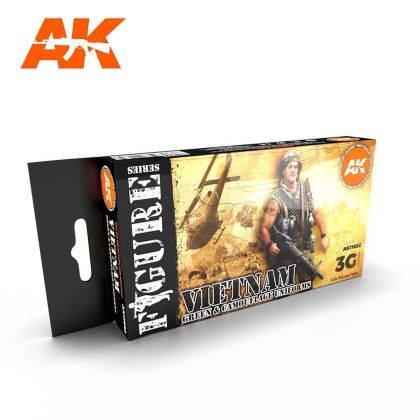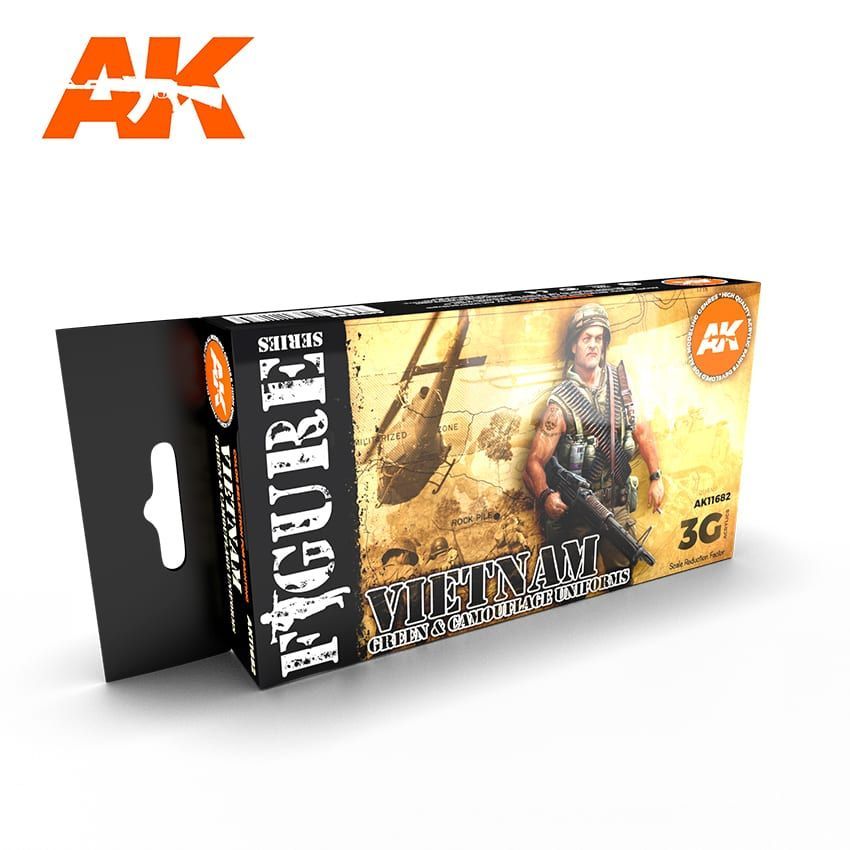
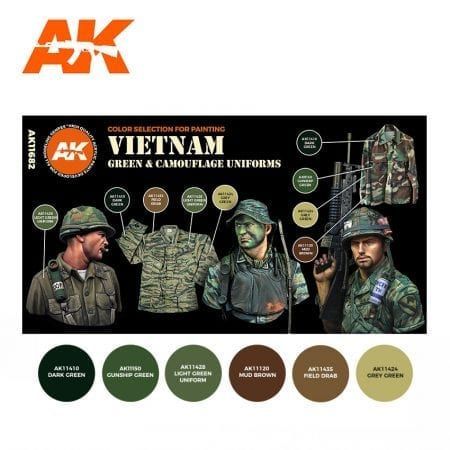
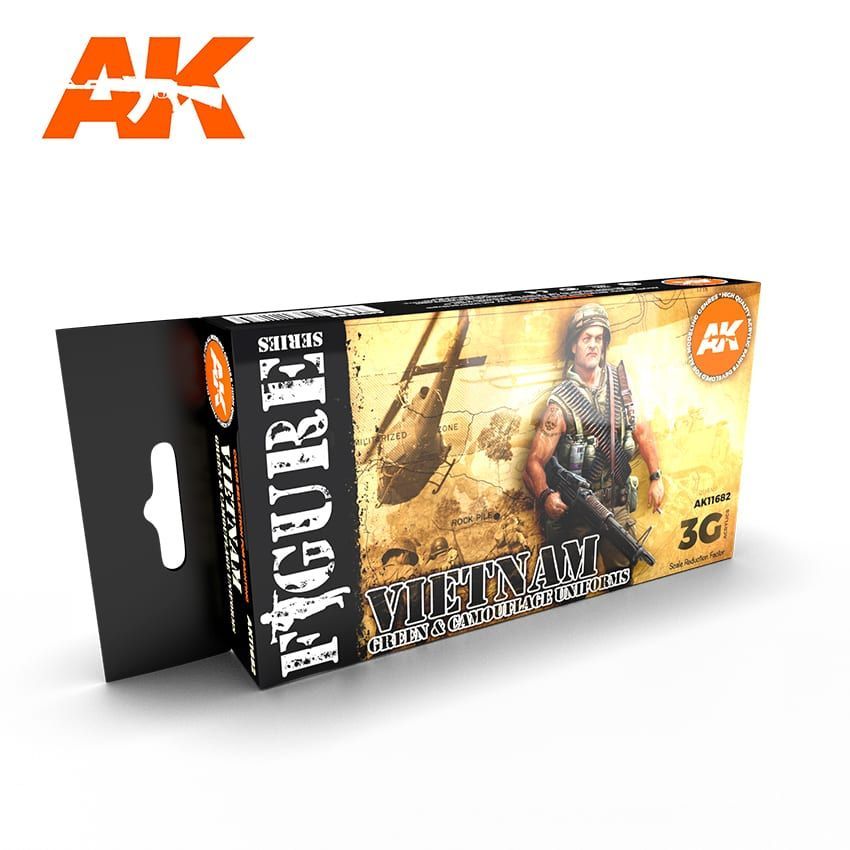
Six shades for American uniforms of the Vietnam War, both plain and with the leaf camouflage pattern.
Responsibility details are not available.
The American soldier arrived in Southeast Asia in a plain working uniform of an olive green shade. Damp, sweat and washing in field conditions turned it within a few months into something between gray-green and faded khaki. From the middle of the 1960s lighter tropical blouses were added to it, and later the leaf camouflage pattern, which combined two greens, brown and black. Reconnaissance units and the marines wore both at the same time, so figures in three different outfits can legitimately stand in a single diorama.
The set covers this variety with six water-thinnable acrylics. Two darker greens serve as a base and a shadow, a lighter uniform green takes care of the washed-out areas and the highlights, a muddy brown and a subdued field brown suit the camouflage patches as well as dirty trouser legs, and a gray-green tone finally settles the whole figure into the subdued register that period color photographs show most often.
On a figure in 1:35 scale there is no point in drawing the camouflage pattern literally. It is more effective to lay down the base, add a few irregular patches on the chest, on the thighs and on the hat and leave the rest to shadow and light. You suggest the fading by putting the light tones on the shoulders, on the upper part of the pack and on the knees, that is where the fabric suffered the most. Paint the webbing equipment noticeably differently from the clothing itself, otherwise the figure merges into a single shapeless mass.
Naši poradci a znalci sortimentu jsou připraveni odpovídat na Vaše dotazy (Po–Pá, 8–18 hod).
Zeptejte se na co potřebujete, odpovíme co nejdříve.
Texts from customers in the advice section reflect solely the opinions and views of the customers. MNF trade s.r.o. does not approve or verify customer texts in advance.
There are no questions here yet. Be the first to ask!