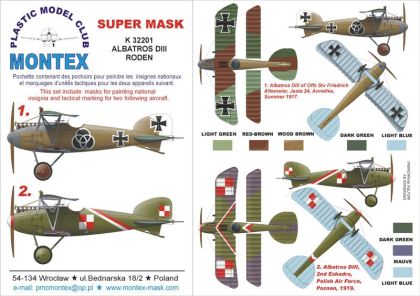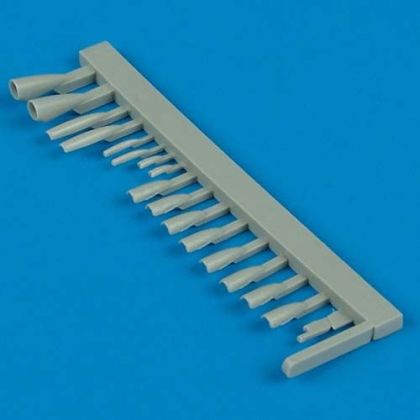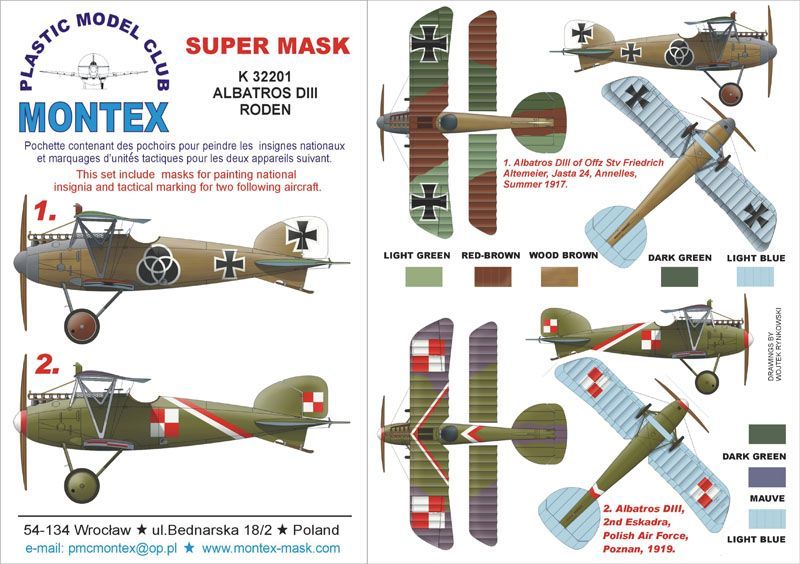
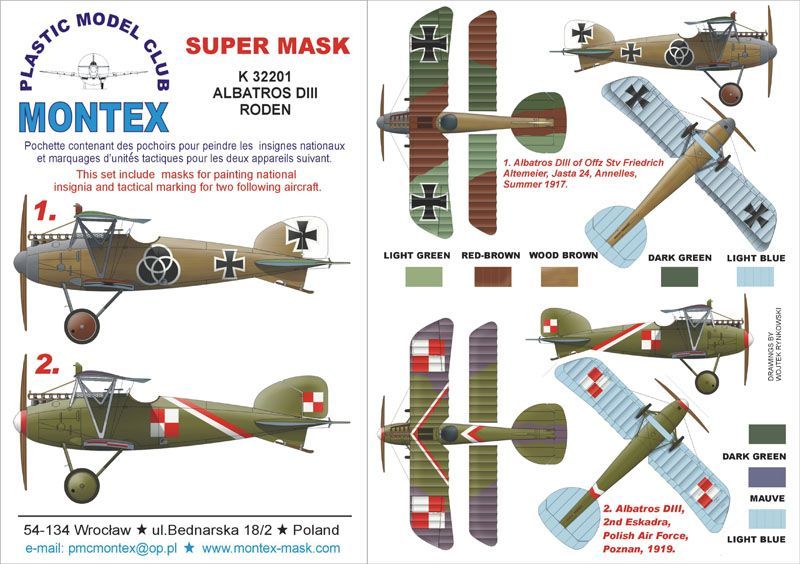
A set of masks for a large model of the German Albatros D.III fighter biplane of the First World War. It contains four national insignia masks.
Responsibility details are not available.
The Albatros D.III was among the most successful German fighters of 1917. It had a plywood monocoque fuselage, a radiator built into the upper wing and a sesquiplane layout, in which the lower wing is markedly narrower than the upper one and V-shaped struts are set between them. The cockpit was open and the pilot was protected from the airflow only by a small windscreen, so no sliding or hinged canopy exists here.
That is what makes the set fundamentally different from masks for Second World War fighters. All the work on glazing falls away and all four parts enclosed serve for spraying the national insignia. On aircraft of the First War that makes exceptional sense: the crosses were painted in large areas on the wings, on the sides of the fuselage and on the rudder, and their shape changed during 1917 and 1918 from the broad Iron Cross form to a straight-armed one.
The crosses on a fabric covering were laid straight into the paint, so they followed every rib and every unevenness. That is exactly what a ready decal sheet cannot imitate, because the film bridges such undulation and in harsh light gives itself away as a glossy rectangle around the artwork. Spraying through a stencil does not have this fault and the paint behaves just like the rest of the surface.
The set does not deal with the wood grain of the fuselage or with any of the color schemes with which the squadrons marked their machines. It is a tool for four large shapes, not a complete color scheme.
Naši poradci a znalci sortimentu jsou připraveni odpovídat na Vaše dotazy (Po–Pá, 8–18 hod).
Zeptejte se na co potřebujete, odpovíme co nejdříve.
Texts from customers in the advice section reflect solely the opinions and views of the customers. MNF trade s.r.o. does not approve or verify customer texts in advance.
There are no questions here yet. Be the first to ask!