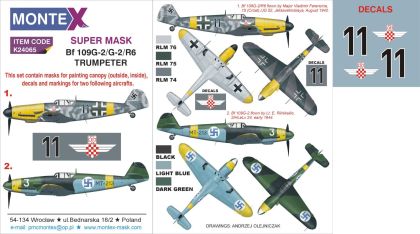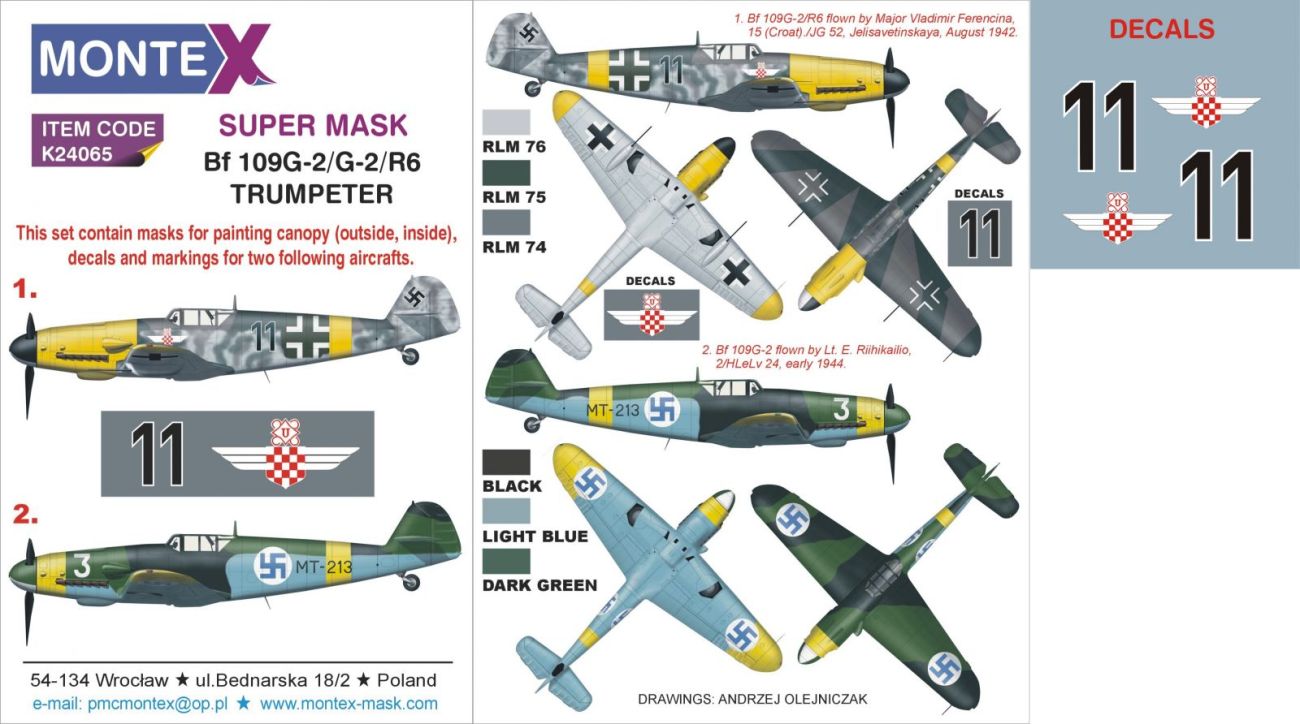
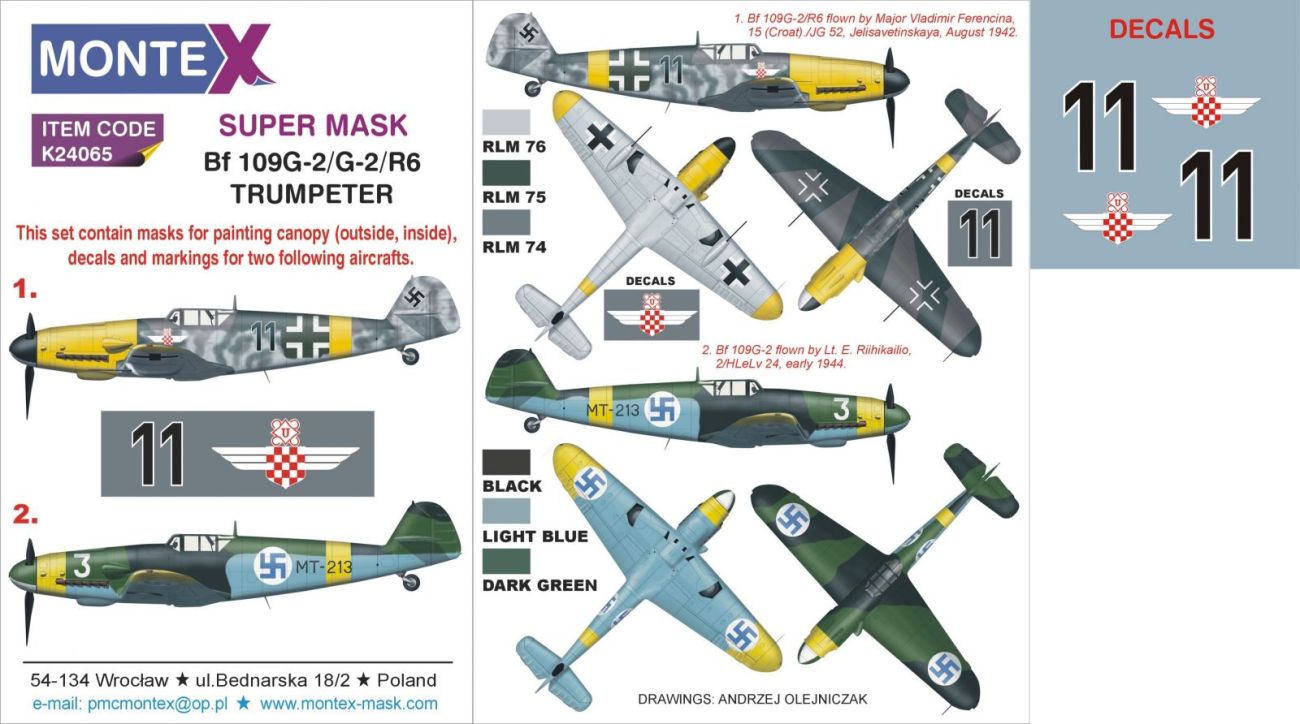
The early Gustav, the G-2 version, in 1:24 scale. The films cover the canopy from the face and the back, and inside there are three marking masks and a printed sheet.
Responsibility details are not available.
The G-2 version came in during 1942 and can be told from the later G-6 above all by what is not on it. The powerplant cowling stayed smooth, without the long bulges over the machine gun breeches, and so the whole nose looks slimmer. The engine was the 605 series in the A form. These machines served with units on the Eastern Front and in Africa, where they were given a sand filter and lighter finishes against the glare from the desert landscape.
Anyone who has masked with tape knows the trouble: a paper carrier breaks on a curve and its edge tends to be fuzzy because of the fibers, so the boundary of a shade comes out soft. A cut film has a smooth and pliable carrier, the edge stays sharp even after warming and the adhesive holds more weakly, which suits clear plastic that you do not want to tear. Paper tape, on the other hand, keeps its advantage where large fuselage areas are concerned, because it is undemanding and can be torn to any width. The sensible thing is to combine both: film for the shapes and frames, tape with paper to cover the rest of the model.
The cockpit is masked from both sides, inside there are three masks for the national insignia and decals with them. The film is machine cut, so the cut-outs match the layout of the frames on the given canopy exactly and there is no measuring by eye. That shows most on the angular glazing of the 109, because its frames are not regular and a hand estimate falls apart on them.
Naši poradci a znalci sortimentu jsou připraveni odpovídat na Vaše dotazy (Po–Pá, 8–18 hod).
Zeptejte se na co potřebujete, odpovíme co nejdříve.
Texts from customers in the advice section reflect solely the opinions and views of the customers. MNF trade s.r.o. does not approve or verify customer texts in advance.
There are no questions here yet. Be the first to ask!