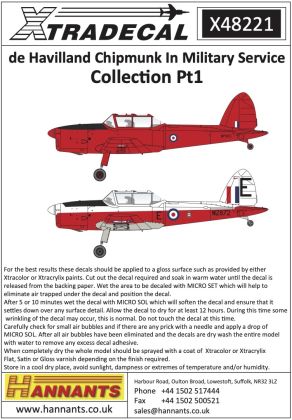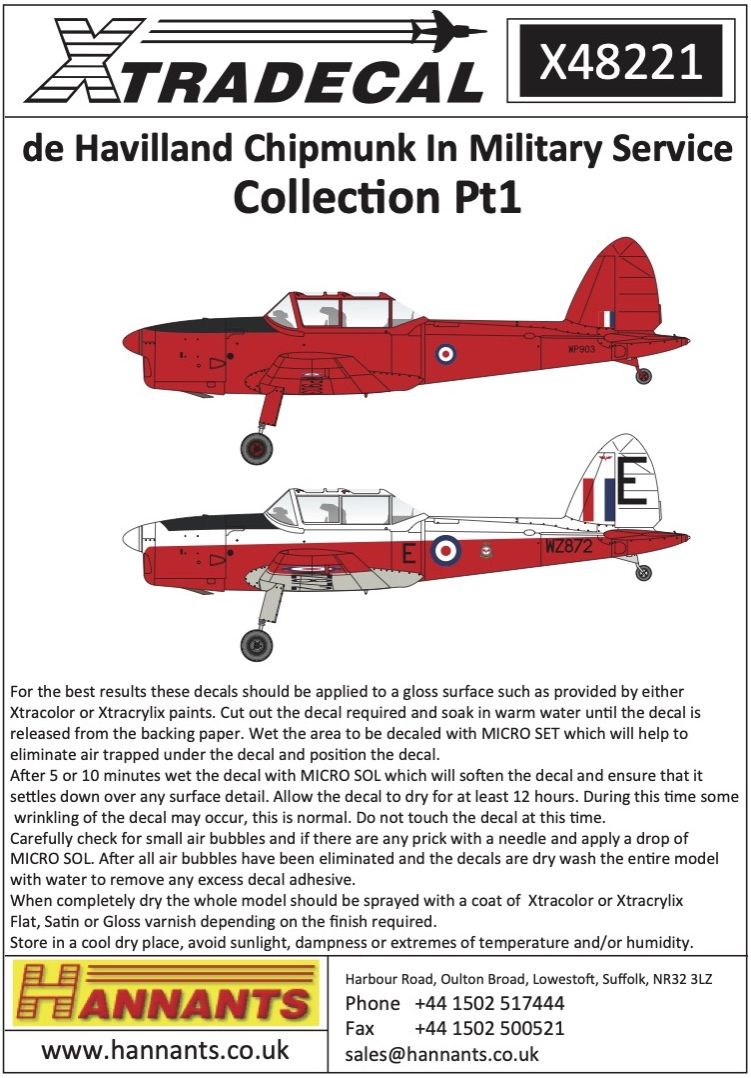
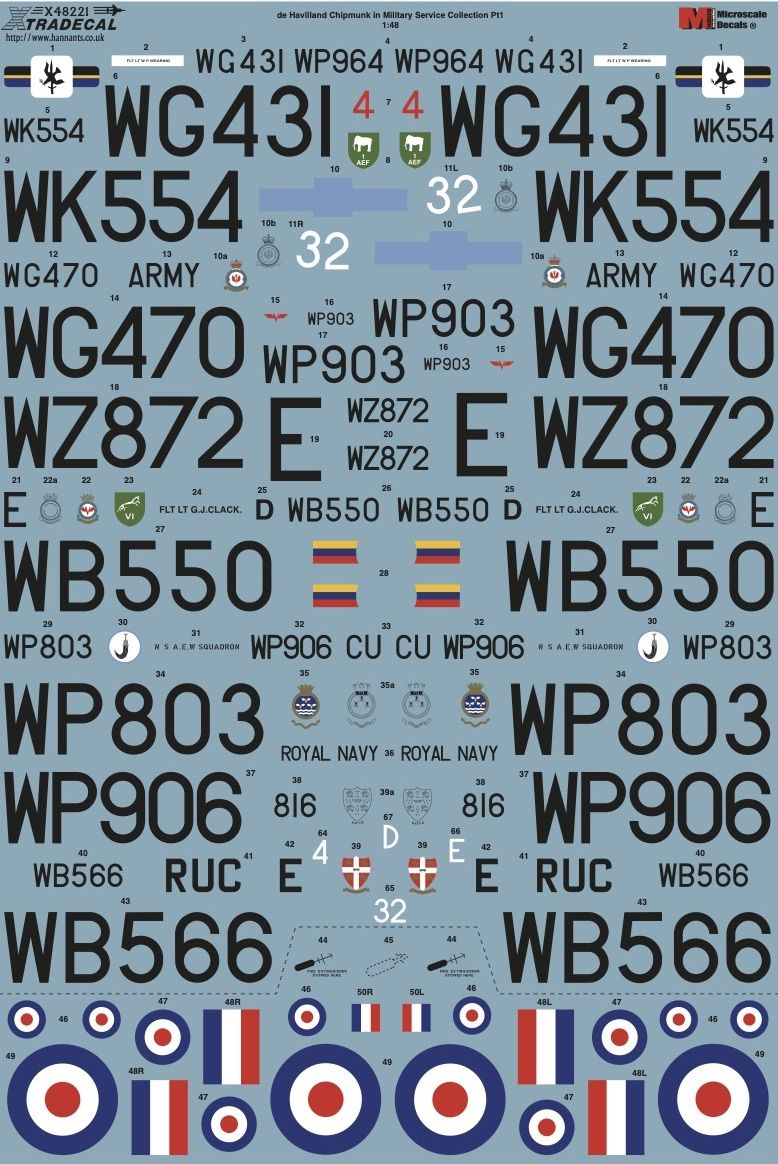
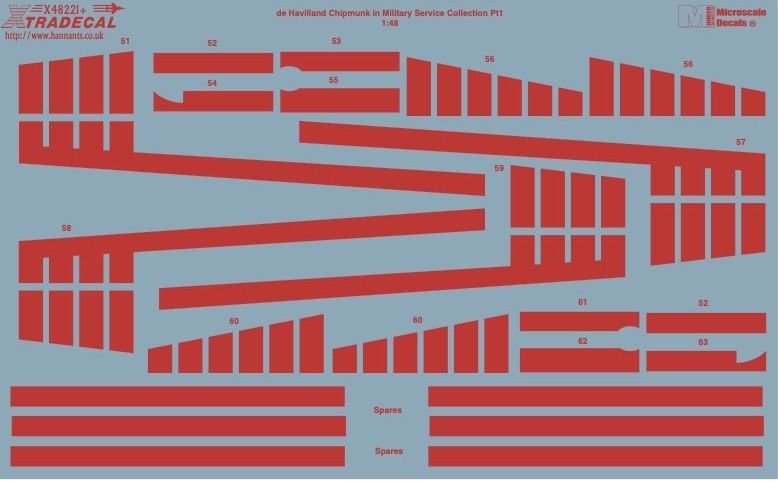
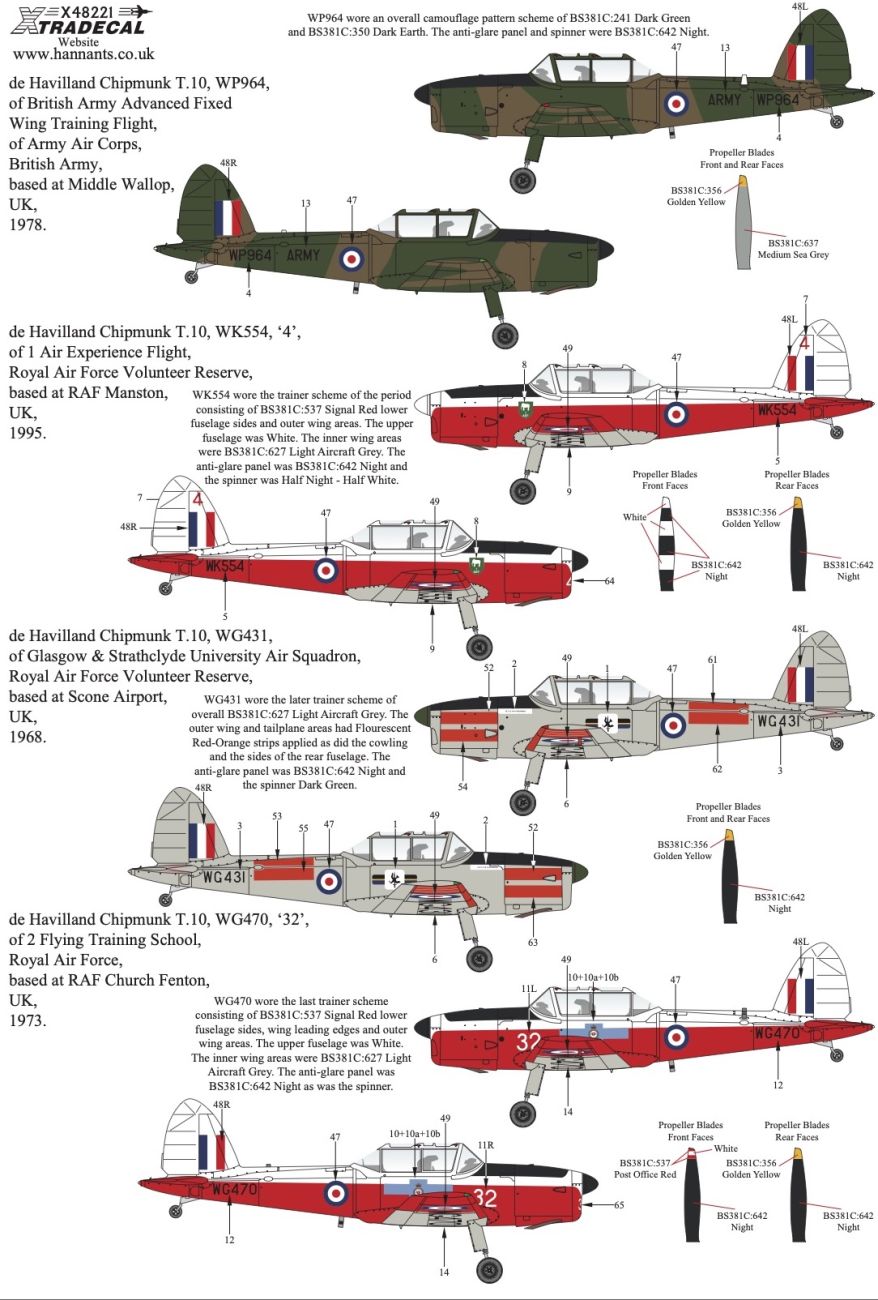
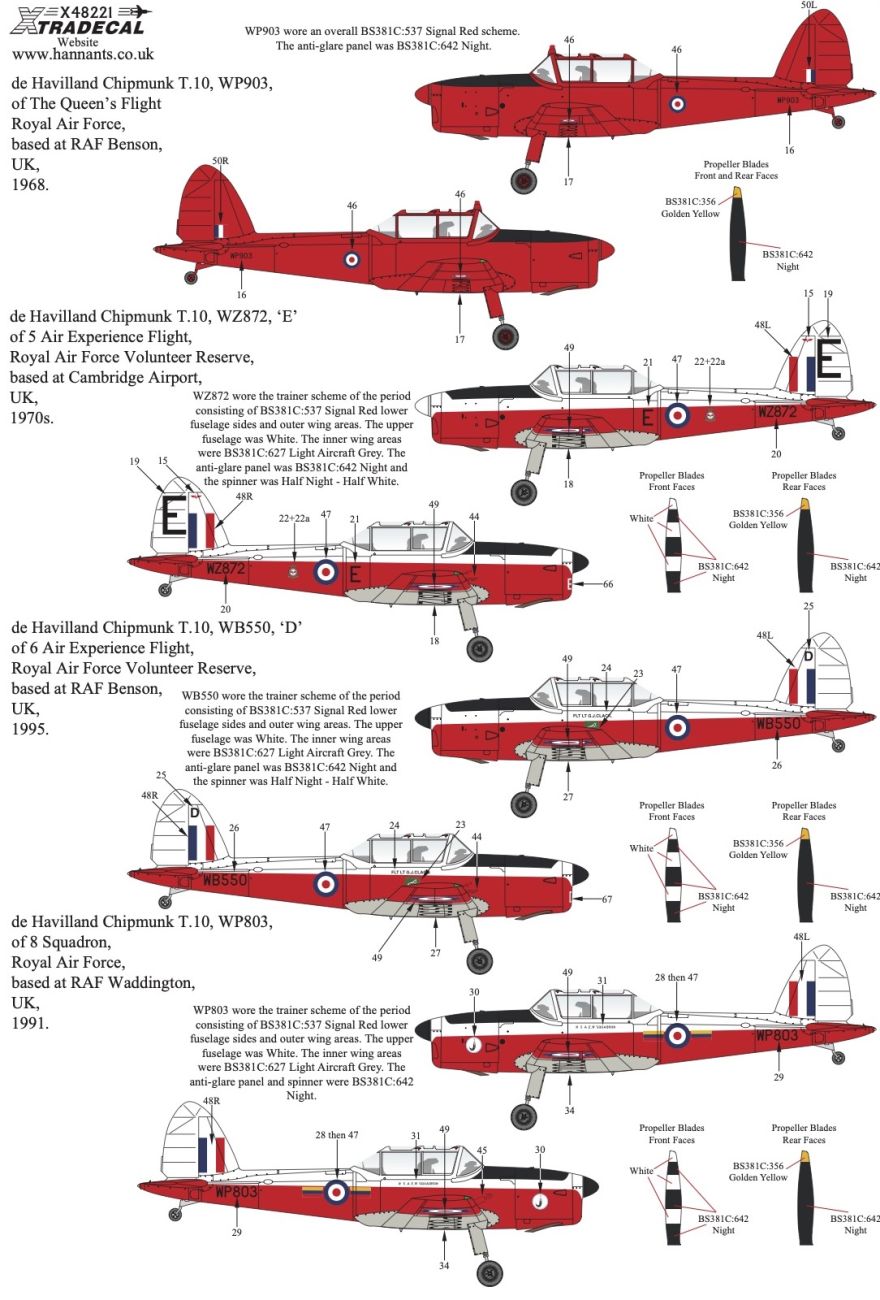
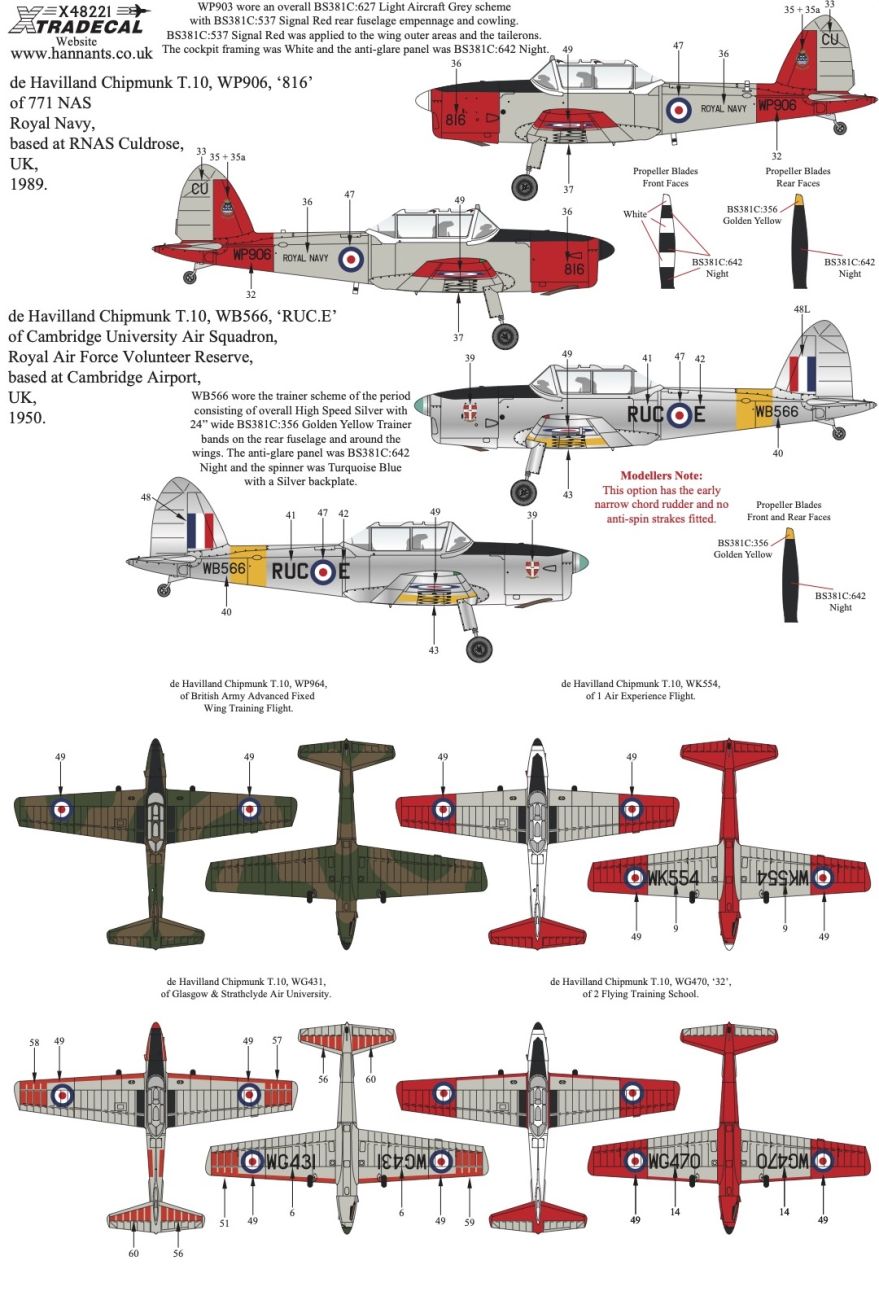
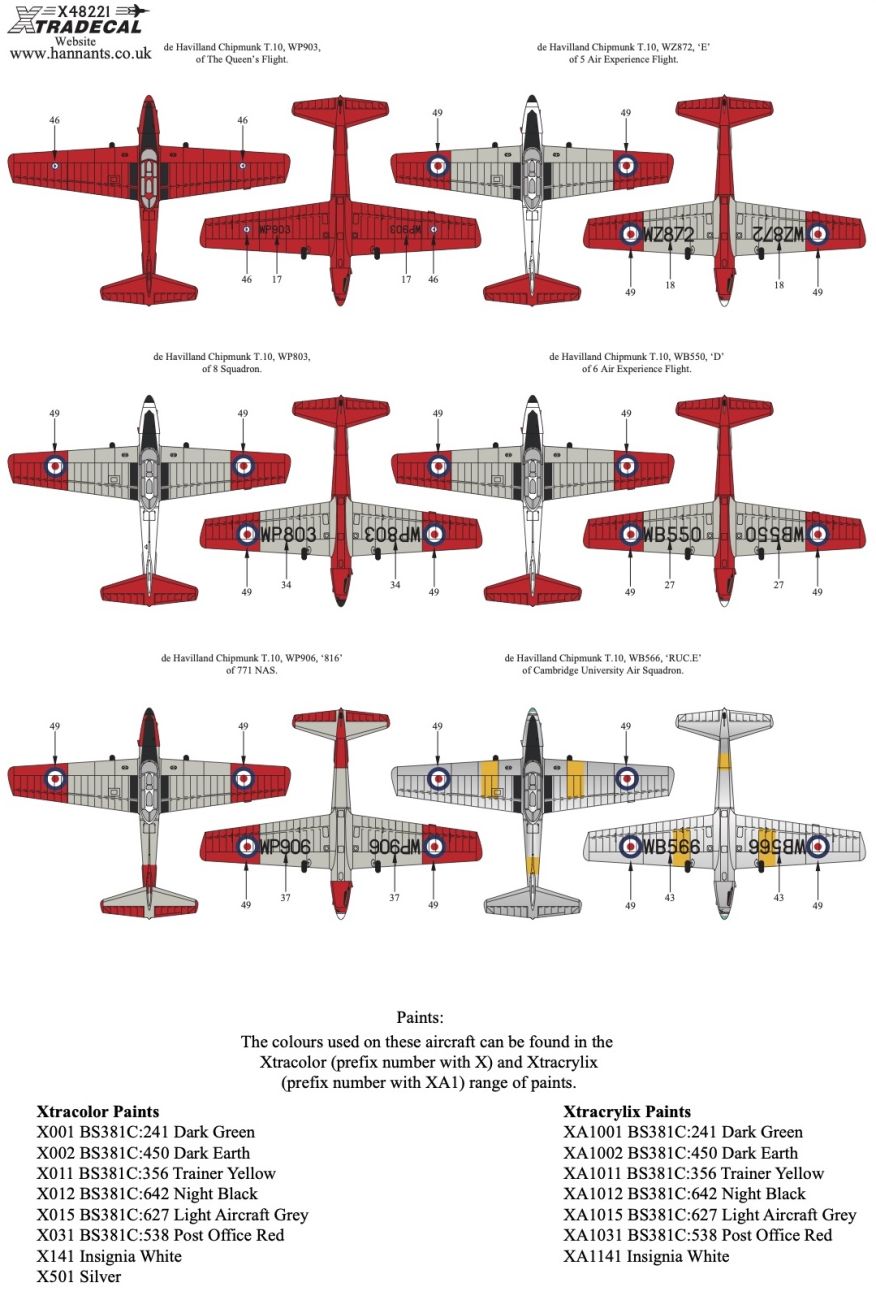
The first installment of a collector selection of markings for military Chipmunks in 1:48 size, including the conspicuous training stripes and codes.
Responsibility details are not available.
The Canadian DHC-1 Chipmunk first flew in 1946 as the very first design of its own by the Canadian branch of de Havilland. Behind the design stood a designer of Polish origin who had come to Canada during the war. The result was a low-wing machine with tandem seats under a glazed canopy, a classic tailwheel landing gear and a dependable Gipsy Major inline engine.
In the Royal Air Force it replaced the Tiger Moth biplanes in the role of the basic trainer as the T.10 and became the machine on which an enormous number of military pilots and air training corps cadets first left the ground. It served with army and naval aviation as well and many airframes went for export. Military airframes wore conspicuous training markings: high-visibility stripes, unit codes and the colorful badges of the schools, which today are among the most interesting things that can be stuck onto a small model.
The canopy runs over both seats, so the small stencils around it are unusually well seen on a finished model and deserve careful settling. The slender rounded fuselage calls for patience: on the curved sections a solution for softening the film helps, applied drop by drop and with pauses until the edge sucks itself down to the surface. Fit the stripes across the wing from the leading edge backward, because in the opposite order a few tenths of a millimeter are usually missing at the end.
Naši poradci a znalci sortimentu jsou připraveni odpovídat na Vaše dotazy (Po–Pá, 8–18 hod).
Zeptejte se na co potřebujete, odpovíme co nejdříve.
Texts from customers in the advice section reflect solely the opinions and views of the customers. MNF trade s.r.o. does not approve or verify customer texts in advance.
There are no questions here yet. Be the first to ask!