The Yakovlev Yak-130 in 1:48 scale — a plastic kit of the Russian jet trainer and light combat aircraft, which is used today to prepare pilots for modern fighters.
Responsibility details are not available.
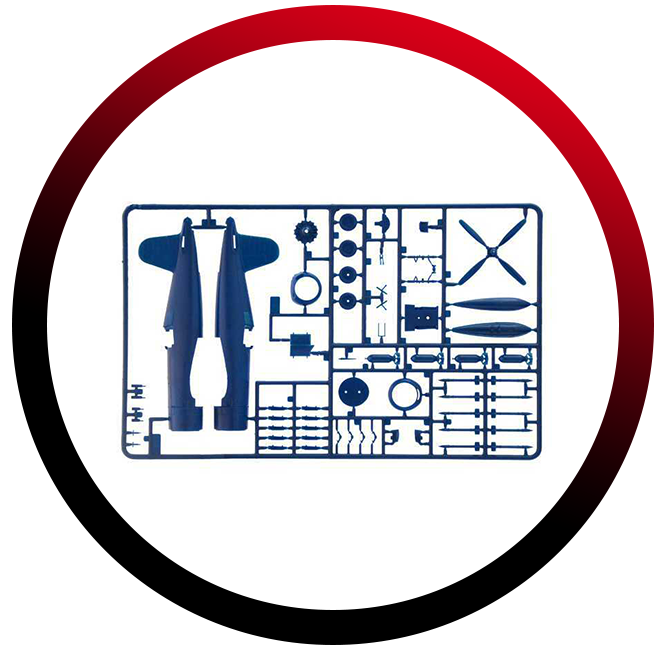
A plastic kit of the Yakovlev Yak-130 in 1:48 scale, a model of the Russian jet trainer and light combat aircraft. The real machine is among the most interesting modern trainers there are, because it is not a simplified school airplane but a fully combat-capable type with external stores. The model faithfully captures the characteristic silhouette: the two-seat cockpit with the seats stepped one above the other, the wing roots with pronounced leading-edge extensions and the side air intakes feeding the pair of engines.
The Yak-130 is a Russian twin-engine subsonic trainer which at the same time serves as a light combat machine: it can carry external stores and be used for light attack, reconnaissance and combat training tasks. It has served with the Russian Air Force since the end of the first decade of this century. Its key property is digital flight control that can be reprogrammed so that the aircraft imitates the behavior of heavier combat machines. On the Yak-130 a pilot therefore learns to handle a machine that behaves in flight much like a modern fighter, and moves on to one with markedly less of a shock. That is exactly why it is meant for training pilots of fourth and fifth generation aircraft.
The origin of the type is remarkable as well: it was created in international cooperation between the Russian Yakovlev and the Italian company Aermacchi, which began in the first half of the 1990s. The joint prototype first flew in 1996, but in 2000 the paths of the two partners parted because of differing priorities and funding. Each side then developed the aircraft on its own: the Russian branch produced the Yak-130 and the Italian one the M-346 Master. They are therefore technical twins that went their separate ways and today compete on the world market for trainers.
Use thin cement for plastic applied by capillary action with a brush, and the engraved lines will stay sharp. Finish and paint both cockpits, front and rear, before you close the fuselage; on a two-seater they are clearly visible under the large canopy. Do not forget to check whether nose weight is needed so that the model does not sit back on its tail. Apply a primer before painting and spray the camouflage with an airbrush in thin coats. Overcoat with gloss varnish before the decals and, once dry, flatten it with matte varnish according to the finish you want.
The model is supplied unassembled and unpainted. Glue, paints and accessories are not included in the package, unless stated otherwise.
Naši poradci a znalci sortimentu jsou připraveni odpovídat na Vaše dotazy (Po–Pá, 8–18 hod).
Zeptejte se na co potřebujete, odpovíme co nejdříve.
Texts from customers in the advice section reflect solely the opinions and views of the customers. MNF trade s.r.o. does not approve or verify customer texts in advance.
There are no questions here yet. Be the first to ask!