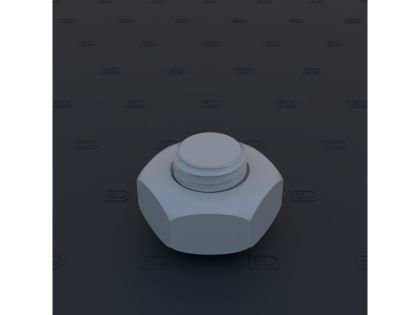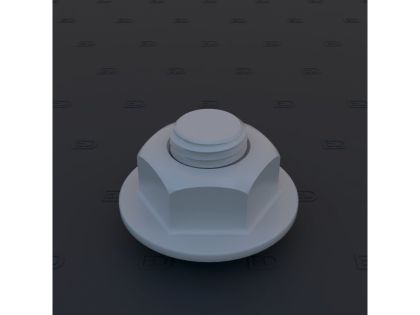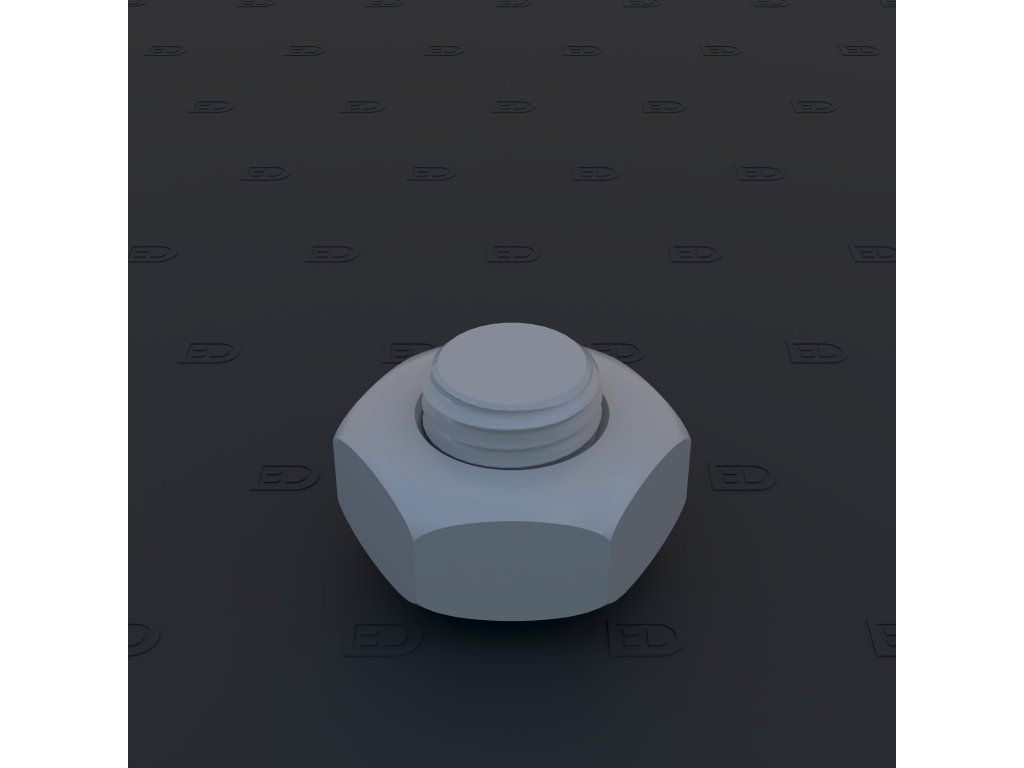
The middle dimension of the selection, one and one tenth of a millimeter across the flats. A nut with a shank and no washer, suitable where the joints form a longer regular row along a panel or a flange.
Responsibility details are not available.
Rows of joints are harder to count than it seems. Before you reach for the tweezers, trace the outline of the surface onto paper, mark the points and count them; only then do you know whether the selection will suffice and how many pieces to pour aside. It pays to reckon with a reserve of about a tenth extra, because one or two castings always end up in the carpet or stuck to a finger.
In 1:35 the stated value gives a joint just under thirty-nine millimeters across, the kind that belongs to heavy flanges and the anchoring of hangers. In 1:24 it is twenty-six millimeters and in 1:16 about eighteen, that is the sizes that occur most often on a real vehicle. Within the selection it is the middle grade, more universal than the extreme dimensions.
Check the gap on the first three pieces glued on. Joints placed too densely merge into a single band and the surface loses its articulation; too sparse ones, on the other hand, look as though something were missing from the model. A gap of roughly two to three head widths works well, but what decides is the look of the real machine, if you have a photograph of it. When the first three come out right, the rest of the row can be finished in one sitting without measuring.
Naši poradci a znalci sortimentu jsou připraveni odpovídat na Vaše dotazy (Po–Pá, 8–18 hod).
Zeptejte se na co potřebujete, odpovíme co nejdříve.
Texts from customers in the advice section reflect solely the opinions and views of the customers. MNF trade s.r.o. does not approve or verify customer texts in advance.
There are no questions here yet. Be the first to ask!