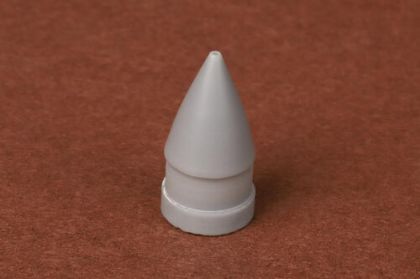
A cast resin part for the B-58 Hustler bomber model in 1:72 scale. It replaces the end of the fuselage with the version without the tail cannon barbette.
Responsibility details are not available.
The Convair B-58 Hustler was the first production bomber to fly steadily at twice the speed of sound. A delta wing, four engines in separate nacelles and a droppable underslung pod made it a machine nothing could match in the 1950s. The defense of the tail was handled by a remotely operated barbette with a 20 mm rotary cannon, aimed by its own radar. Only combat-equipped airframes carried it, though; test aircraft and some modified examples had the end of the fuselage closed off smoothly.
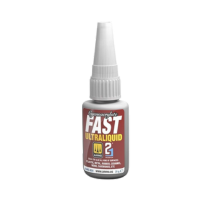
An injection mold needs draft angles and cannot take undercuts, so the fine transitions at the tail come out of it soft. Cast resin is not limited in that way: the edge stays sharp and the surface keeps a fine texture. You pay for it with extra work. The part is separated from the casting gate with a saw, the cut face is leveled with sandpaper laid on glass, and before gluing the surface is degreased, because mold release agent clings to it. The joint is held by cyanoacrylate glue or by a two-part epoxy; solvent glue for polystyrene does not work on resin.
The swap only makes sense on a particular machine for which the smooth tail is documented in a photograph. On an ordinary operational bomber with the cannon barbette it would be a factual error that a knowledgeable viewer spots at once. The difference between the two tail ends is a single, fundamental one: the presence or absence of a barrel at the very end of the fuselage.
Naši poradci a znalci sortimentu jsou připraveni odpovídat na Vaše dotazy (Po–Pá, 8–18 hod).
Zeptejte se na co potřebujete, odpovíme co nejdříve.
Texts from customers in the advice section reflect solely the opinions and views of the customers. MNF trade s.r.o. does not approve or verify customer texts in advance.
There are no questions here yet. Be the first to ask!