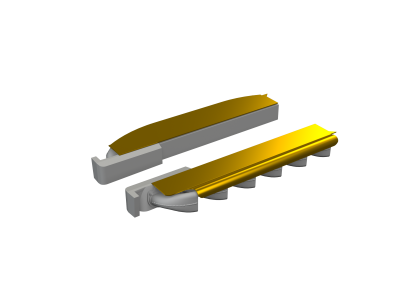
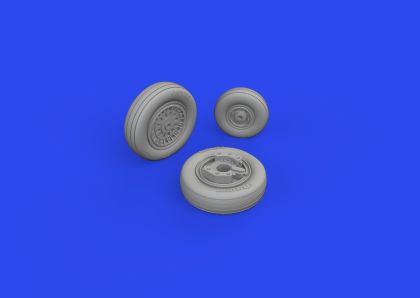
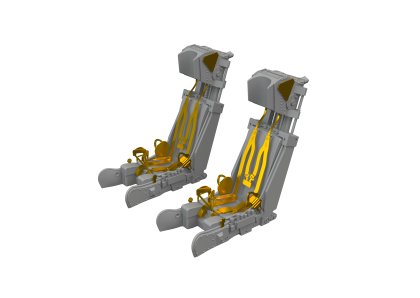
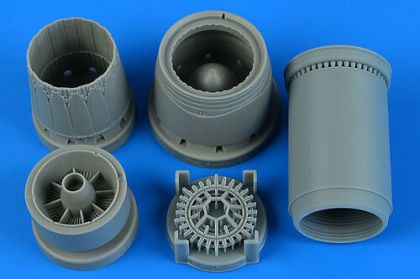
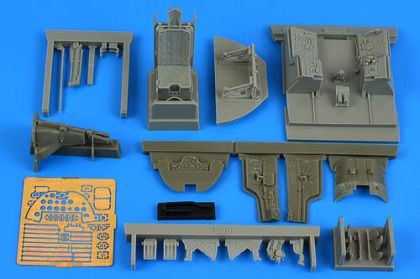
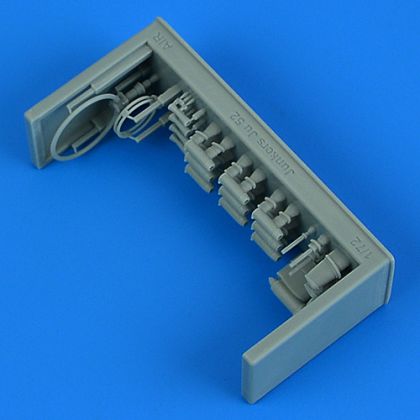
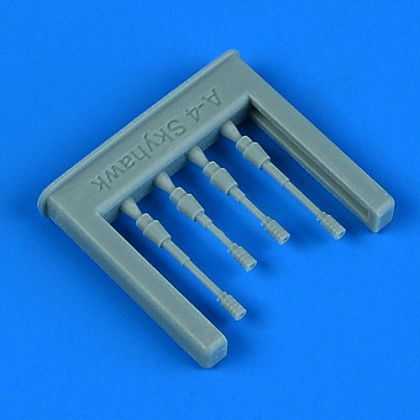
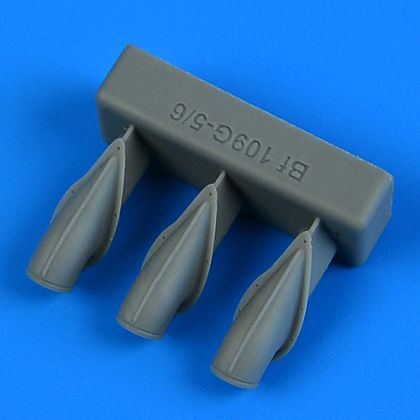
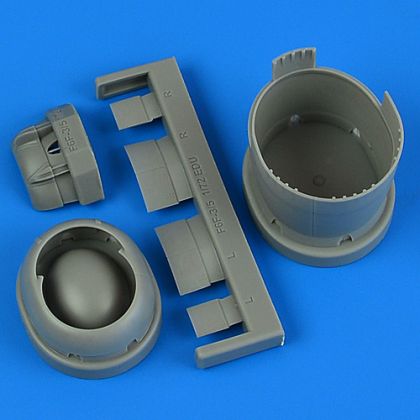
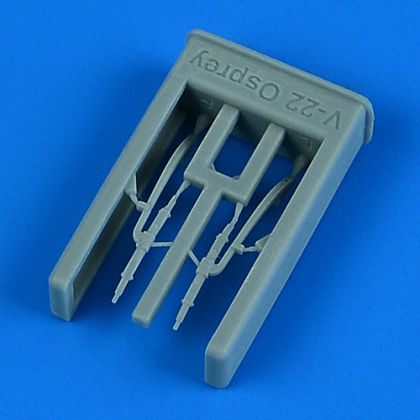
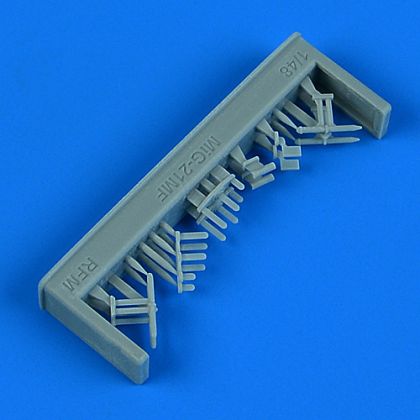
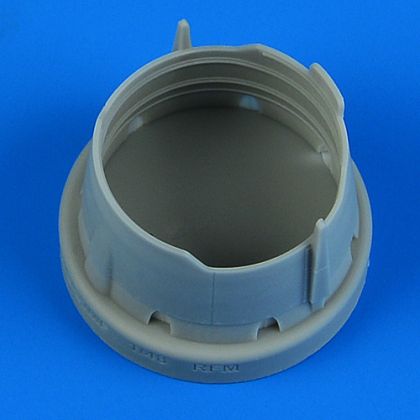
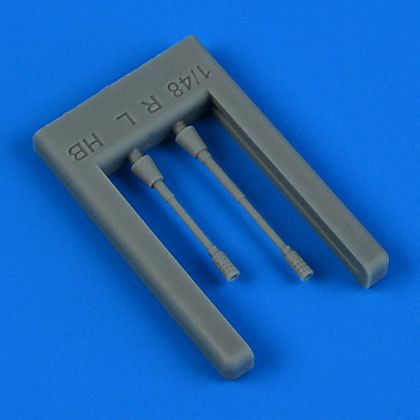
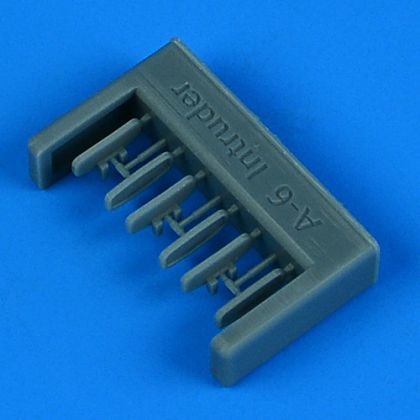
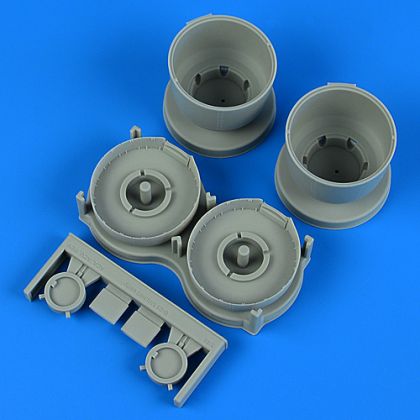
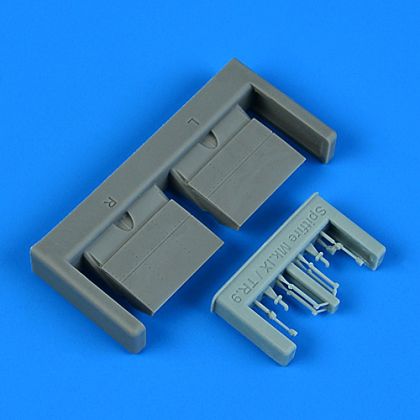
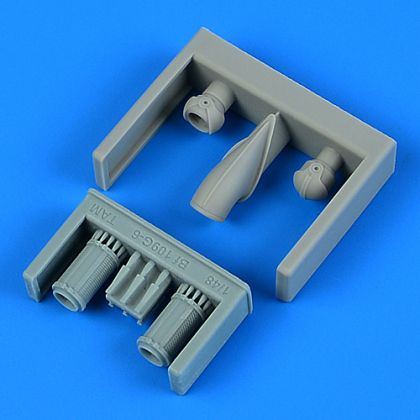
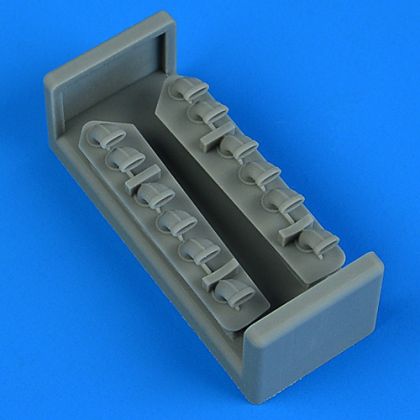
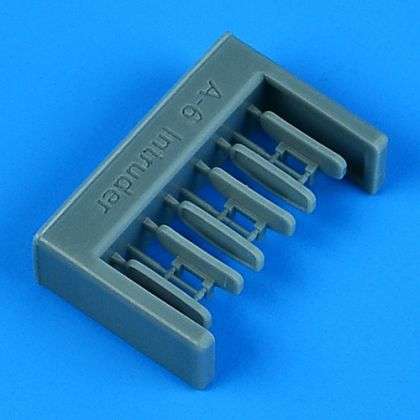
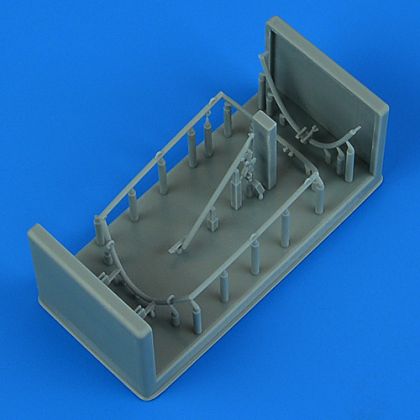
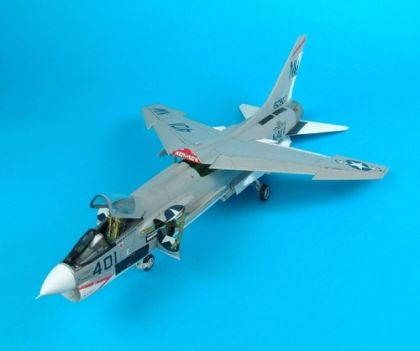
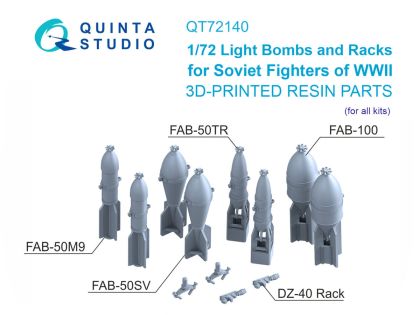
Resin detail sets for aircraft models restore the detail injection moulding cannot hold: finely cast wheels with tread, seats with belts, complete engines, aerials and gear bay liners. The choice runs from classic castings taken from silicone moulds to increasingly accurate 3D printed parts. Below we explain how resin behaves, what to glue it with, and how to pick a set for a particular kit and scale so that the casting drops into place instead of fighting the fuselage.
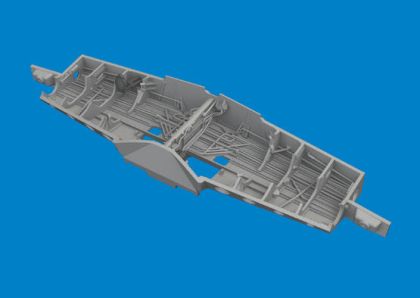
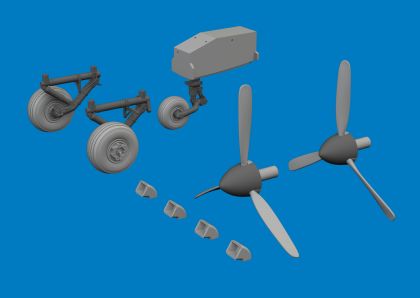
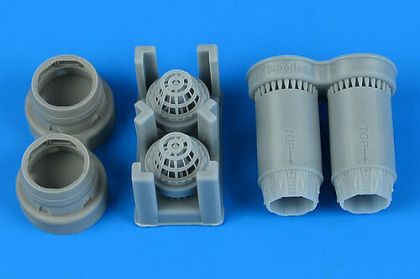
Castings in polyurethane resin are made in silicone moulds that carry over even the finest relief, which is why resin holds a crisper edge than injected styrene. The range covers wheels, seats, cockpit tubs, engines, aerials and complete detail sets for named machines, and classic castings are steadily being joined by accurate 3D printing. The result is a model that holds its own on a competition table.
Begin with straightforward swaps: wheels or a seat go in without touching the fuselage. A complete engine or a cockpit tub usually means cutting and filling, but it repays you with open cowlings and a view into the machine.
A casting has to match the size of the model, so the range splits into 1:72 resin, 1:48 resin, 1:32 resin, 1:24 resin, 1:16 resin, 1:144 and 1:200 resin and 1:35 resin for kits sharing their scale with military vehicles.
The compatible kit is named in the set title. Fuselage shapes differ between manufacturers, so a casting made for another kit may need reworking, and it is worth checking that note before ordering.
Resin dust does not belong in your lungs, so sand wet and wash the parts free of release agent before painting. Choose the machine to receive the upgrade in the aircraft model kits.