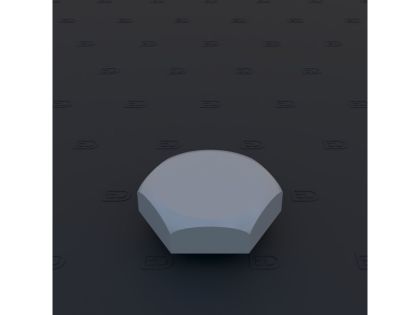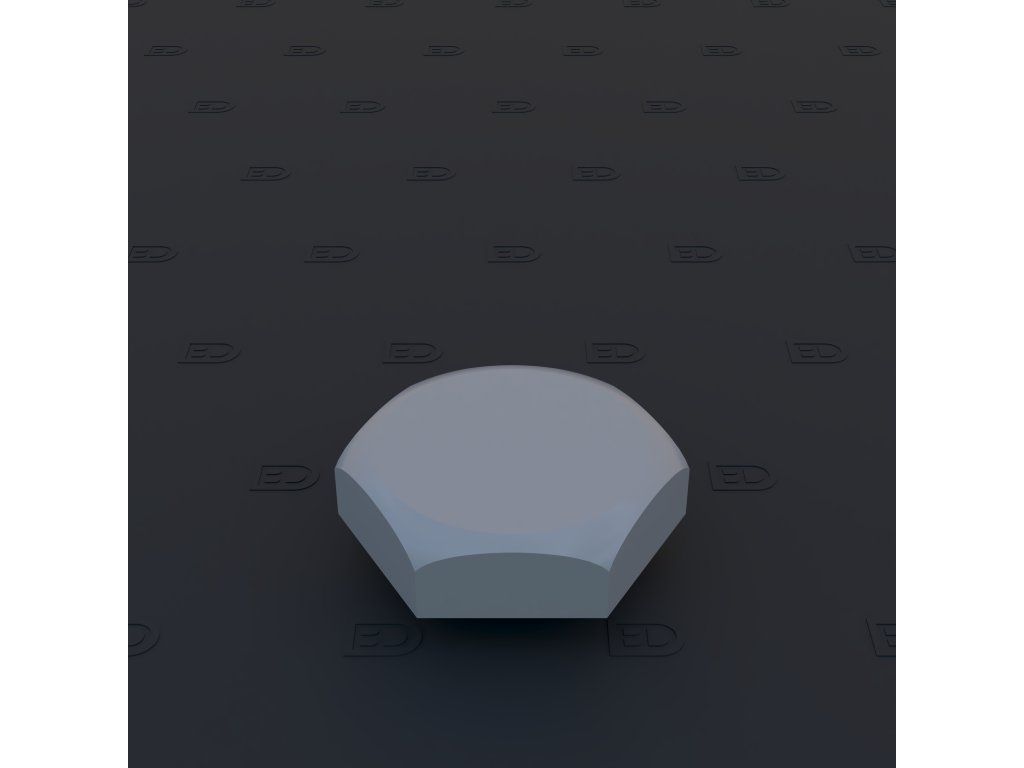
The upper limit of the whole dimensional band. A 2.0 mm hex with a flat top belongs on large flanges, rims and the load-bearing joints of models in large scales.
Responsibility details are not available.
Two whole millimeters form the ceiling above which the manufacturer does not go in this head shape. A part of this size is no longer a small ornament: it becomes a full shape element that helps determine how the reader of a model perceives the scale of the whole build. That is precisely why it is handled with care: one needlessly large hex on a small part can spoil the impression of otherwise accurate work.
The choice between the two kinds of joint has a historical dimension too. Structures from the first half of the last century rest largely on riveting, because welding was not yet reliable enough and demountable joints were used sparingly. As time went on the rivets grew fewer: they were replaced by a weld where the joint was to hold for good, and by a bolt wherever maintenance was expected. On a machine from the 1920s, therefore, expect dense rows of smooth heads, whereas on later machinery rather isolated hexes around openings and lids.
This rule has a practical consequence for the builder as well. When you are not sure what belongs on the subject, the date decides, not what looks more striking. The machine's documentation tends to be a more rewarding source in this respect than a gallery of finished builds, because the latter often repeats the same inaccuracy.
Naši poradci a znalci sortimentu jsou připraveni odpovídat na Vaše dotazy (Po–Pá, 8–18 hod).
Zeptejte se na co potřebujete, odpovíme co nejdříve.
Texts from customers in the advice section reflect solely the opinions and views of the customers. MNF trade s.r.o. does not approve or verify customer texts in advance.
There are no questions here yet. Be the first to ask!