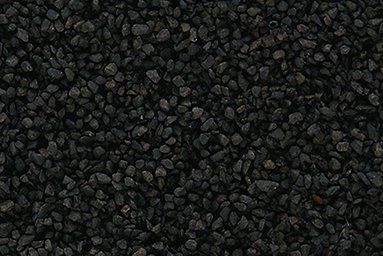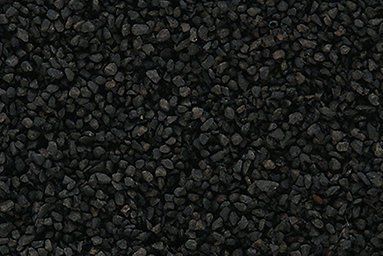
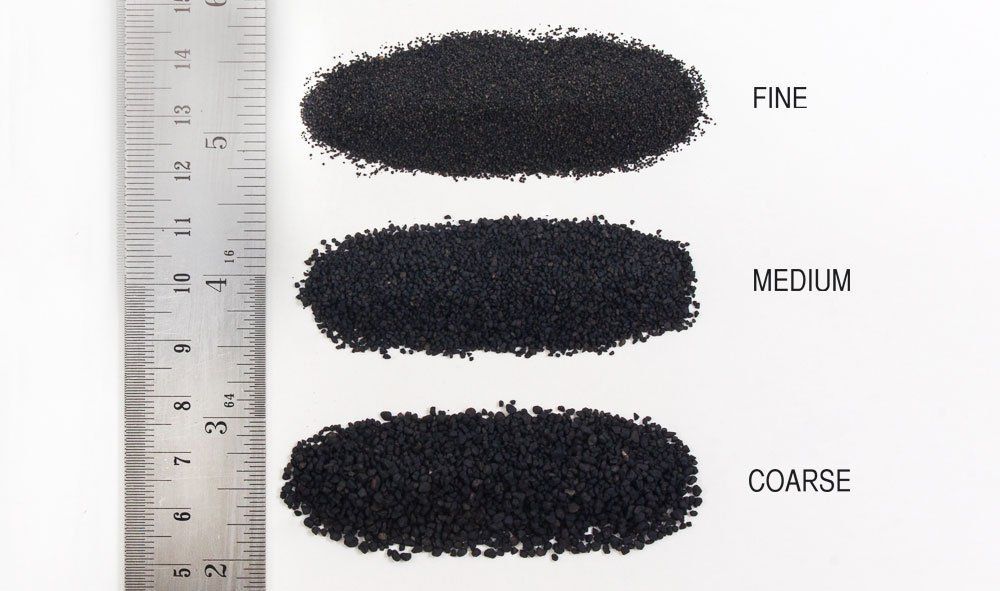
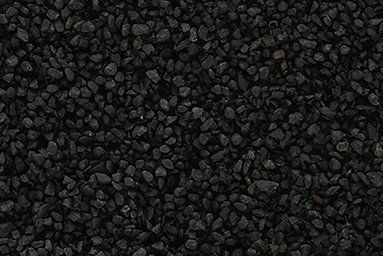
A dark scatter in the shade of cooled cinders, a medium grain, a 945 cm³ shaker. The material of depots and storage tracks of the steam era.
Responsibility details are not available.
Ash raked out of grates was not spread just anywhere at depots. It was used to firm up the tracks in a turning area, the paths between a coaling crane and a water tower and the areas where engines stood and waited. The dark grayed shade of this stone aims at exactly such places and gives a scene the dirt that clean stone will never make.
It works most strongly where people moved about on foot: along the wall of an engine house, around an ash pit, between the tracks in a storage yard. The layer tends to be thin and uneven, worn smooth in one place, heaped up in another into a little pile that nobody carted away.
Do not run the transition to the surrounding grass in a straight line. Let the ash be grown through by tufts of weeds, which always take to such a base first, and you will have a place the viewer believes has been in use for decades.
Because the material is dark, it takes a stronger lift with light. A dry brush with a pinch of light paint drawn only across the tops of the grains pulls out a texture that would otherwise merge into one uniform surface.
For fixing, the same holds as with the stone scatters, with one reservation: dark stone shows every dried drop of glue, so it pays off to thin it more and to work in smaller stretches.
Naši poradci a znalci sortimentu jsou připraveni odpovídat na Vaše dotazy (Po–Pá, 8–18 hod).
Zeptejte se na co potřebujete, odpovíme co nejdříve.
Texts from customers in the advice section reflect solely the opinions and views of the customers. MNF trade s.r.o. does not approve or verify customer texts in advance.
There are no questions here yet. Be the first to ask!