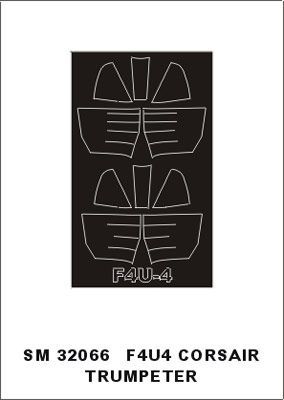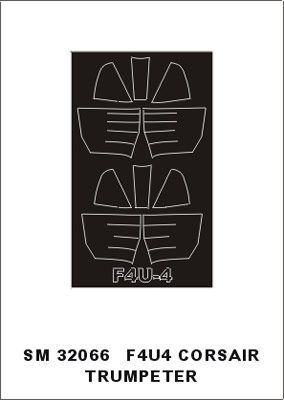
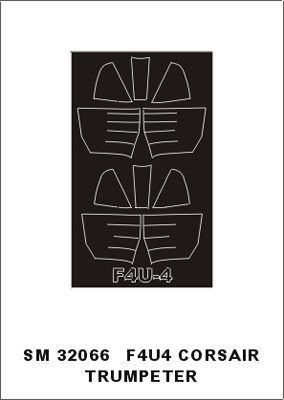
A set of masks for the glazing of the Vought Corsair fighter and attack aircraft in its late version with the four-blade propeller, 1:32 scale.
Responsibility details are not available.
This version received a stronger two-row radial engine and a four-blade propeller, which turned the original carrier fighter into a machine with a considerably better rate of climb. It got into the Second World War only marginally, but in Korea it became the workhorse of the Navy and the Marine Corps. From decks off the west coast of the peninsula and from land airfields it flew mainly in direct support of ground units, among other occasions during the withdrawal from the Chosin Reservoir in the winter of 1950.
The Korean machines carried a uniform glossy dark blue finish on which white lettering and fuselage numbers were the only contrasting element. The squadron was told by a letter marking on the vertical tail and by a colored band on the propeller cap. Wartime examples from 1945 were more matte than that and still carried US Navy recognition bands; aircraft handed over to other countries then received their own roundels and numbers according to home regulations.
The Corsair has a canopy with large rounded areas and a narrow frame that is especially badly served by tape, because it bunches up on a curve. The cut parts follow the curve exactly and do not ripple. The set thinks of the inner side of the frame as well, so the cockpit stands a close look even with the canopy slid open.
After spraying, let the paint set for a while and only then pull the parts off. A wet film drags after the film and leaves a thread on the glass that you then have to scrape away.
Naši poradci a znalci sortimentu jsou připraveni odpovídat na Vaše dotazy (Po–Pá, 8–18 hod).
Zeptejte se na co potřebujete, odpovíme co nejdříve.
Texts from customers in the advice section reflect solely the opinions and views of the customers. MNF trade s.r.o. does not approve or verify customer texts in advance.
There are no questions here yet. Be the first to ask!