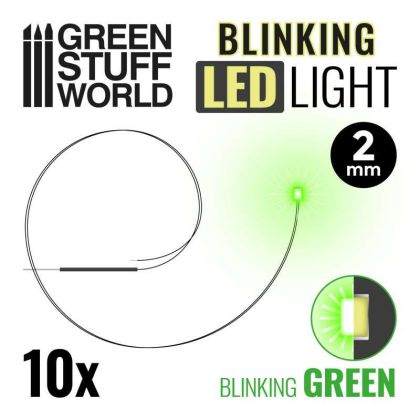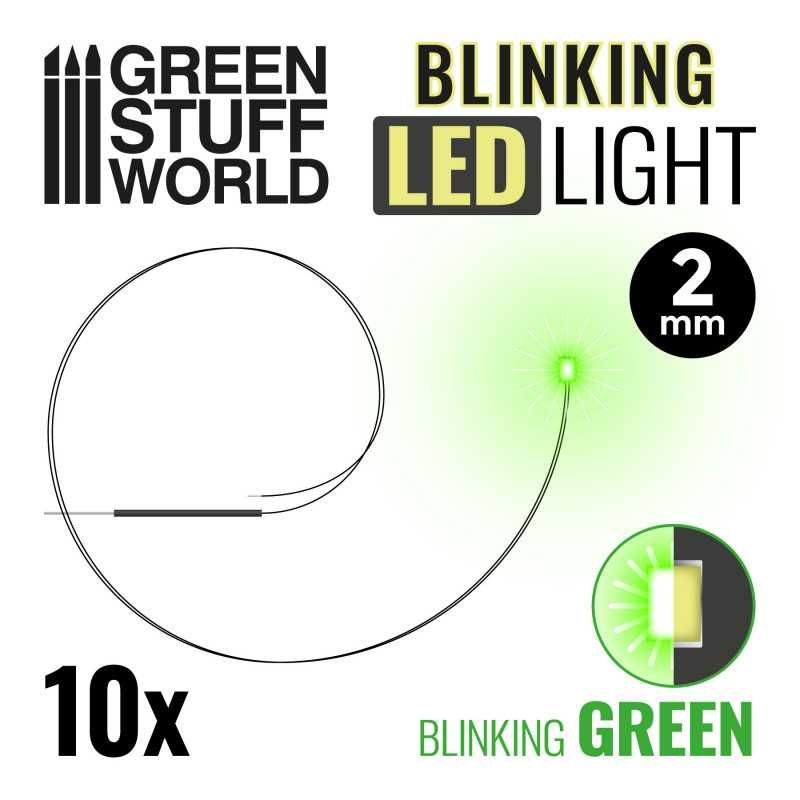
Blinking light-emitting diodes 2 mm in diameter with a green light. The blinking is given by the design of the diode, and no separate circuit is needed for it.
Responsibility details are not available.
Blinking diodes are used where an intermittent light is meant to be visible on a model: position lights and beacons on vehicles, indicator lights of instrument panels, warning lights on construction and rescue vehicles, or signals on space and sci-fi builds. The green color suits indicator lights, starting and clearance lights, and also serves as a supplementary point in a scene where you already have red and blue light. The diode has the blinking built in, so you do not have to deal with it through electronics of your own.
A diameter of 2 mm belongs among the small sizes, so the diode hides even in smaller models and in tiny holes in panels. To mount it, first drill a hole matching the diameter, try dry how the diode seats and only then secure it. The light usually has to be directed, so that it does not shine through the walls of the model; it helps to blacken the inside around the diode and to seal the transitions. The power supply, the operating voltage and whether a series resistor is needed are governed by the maker's instructions, which it is advisable to observe.
For modelers who light their models, and for builders of scenes where a piece of machinery or a building is meant to be running. The use is not tied to one scale; it is limited only by the room for leading the wires and for a power source.
A model and a power source are not part of the supply. The number of pieces in the package and whether the diodes come fitted with wires are given on the maker's packaging.
Naši poradci a znalci sortimentu jsou připraveni odpovídat na Vaše dotazy (Po–Pá, 8–18 hod).
Zeptejte se na co potřebujete, odpovíme co nejdříve.
Texts from customers in the advice section reflect solely the opinions and views of the customers. MNF trade s.r.o. does not approve or verify customer texts in advance.
There are no questions here yet. Be the first to ask!