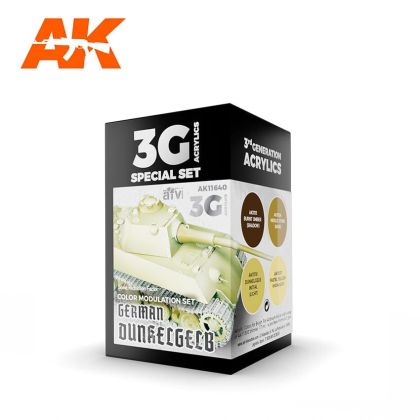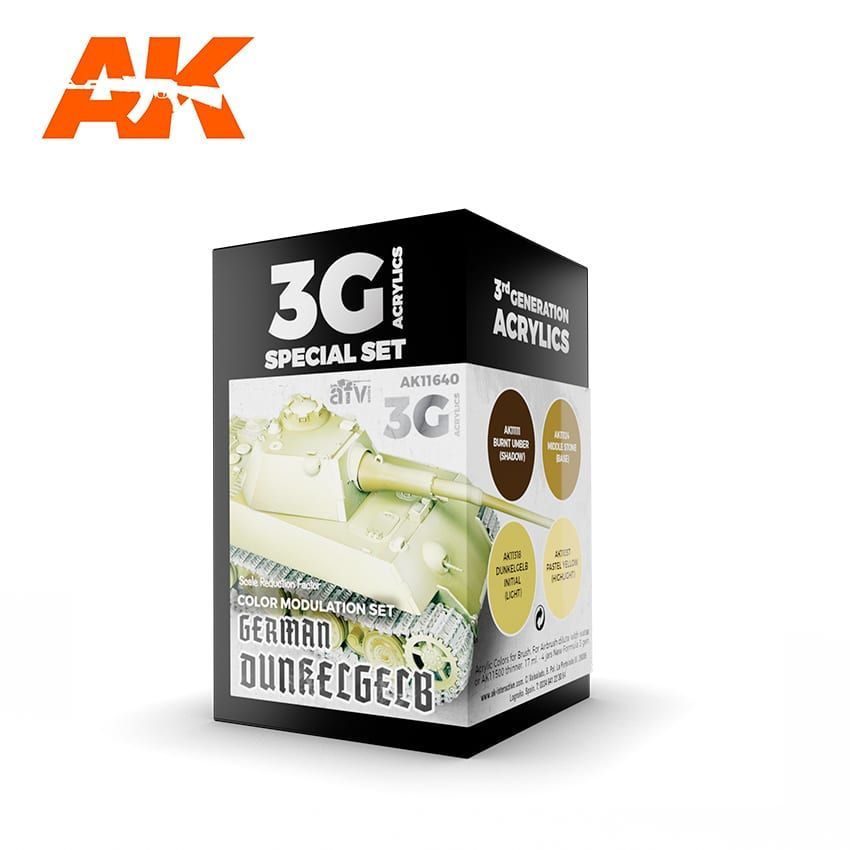
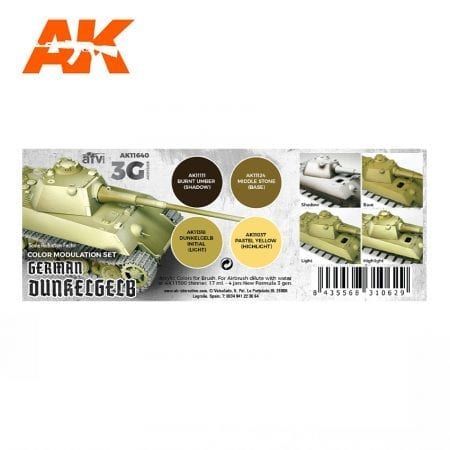
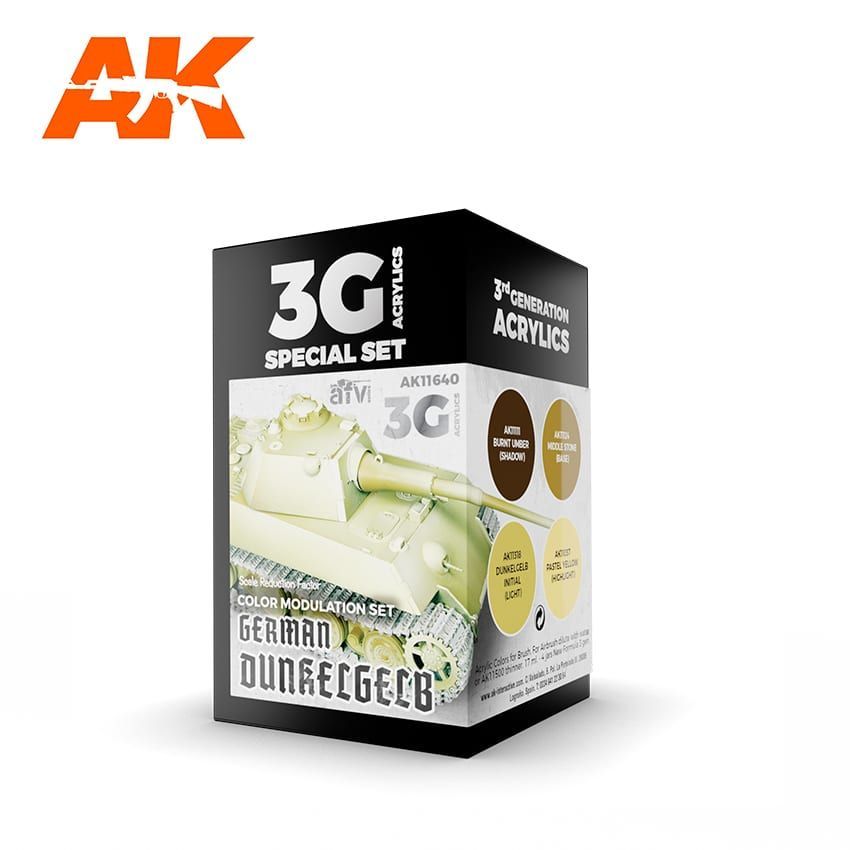
A graded dark yellow for German vehicles: burnt umber, a middle stone, the early Dunkelgelb and a pastel yellow.
Responsibility details are not available.
Dark yellow became the base finish of German vehicles in February 1943, when it replaced the gray used until then. Its shade differed from maker to maker and from batch to batch and it also faded quickly in the sun, so a modeler has plenty of freedom when building. It is exactly through a spread of tones that an otherwise dull surface can be brought to life.
The four in the package run from burnt umber, which stays in the shadows and under overhangs, through a middle stone as the overall base and a lighter early dark yellow to a pastel yellow on the most exposed edges. The gradual lightening is applied in ever narrower bands, so that the eye reads a panel as convex even though it is in fact flat.
The set also makes sense under a camouflage pattern in green and brown. If the base is modulated, the grading shows through the later spots and the whole finish keeps its depth.
Contents: four jars of 17 ml each, a water-based acrylic with a flat surface, applied with a brush and with an airbrush. Before spraying it is a good idea to thin the paint more than seems necessary and to build the coverage by repeating thin passes.
Expect fading in the sun. Vehicles that spent a summer on the Eastern Front had their horizontal surfaces lightened considerably more than their sides, so the difference between the upper panel and a vertical wall is greater than any color chart would suggest. It is exactly this mismatch that makes finished work credible, and it costs nothing but a moment more at the airbrush.
Naši poradci a znalci sortimentu jsou připraveni odpovídat na Vaše dotazy (Po–Pá, 8–18 hod).
Zeptejte se na co potřebujete, odpovíme co nejdříve.
Texts from customers in the advice section reflect solely the opinions and views of the customers. MNF trade s.r.o. does not approve or verify customer texts in advance.
There are no questions here yet. Be the first to ask!