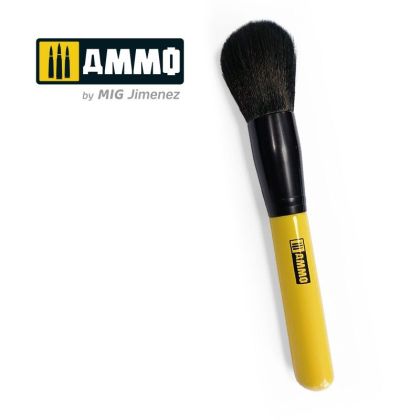
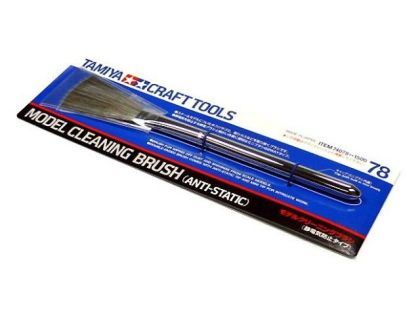
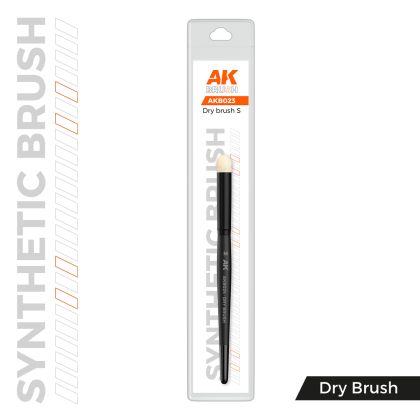
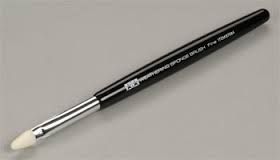
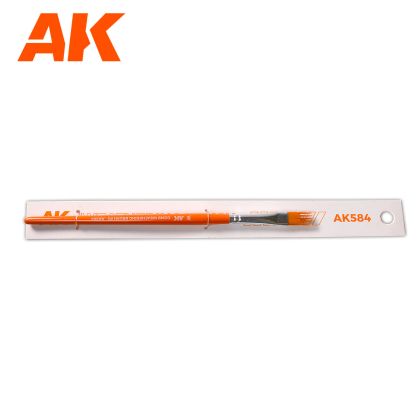
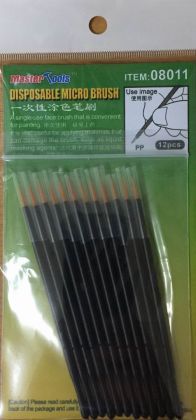
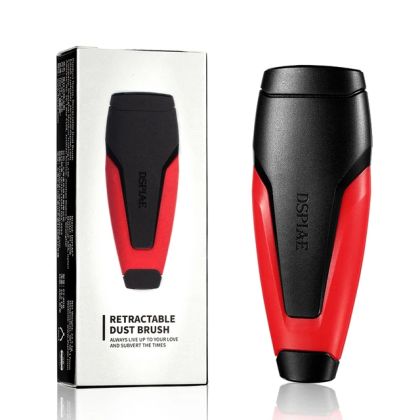
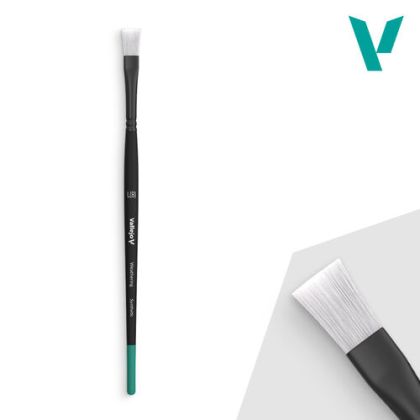
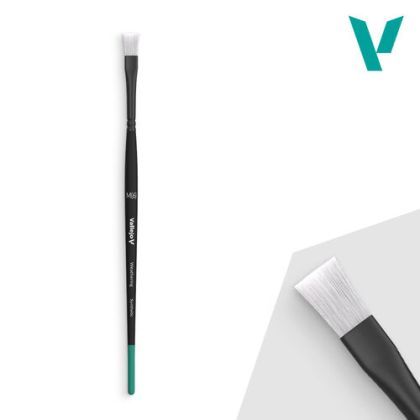
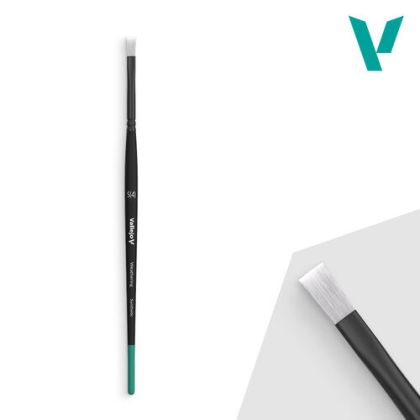
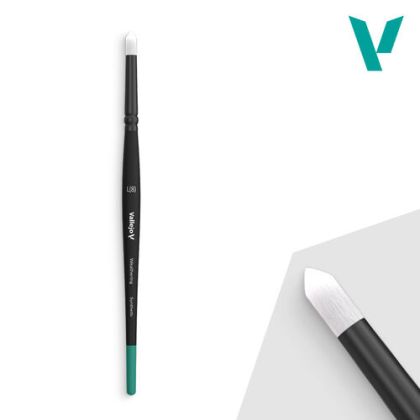
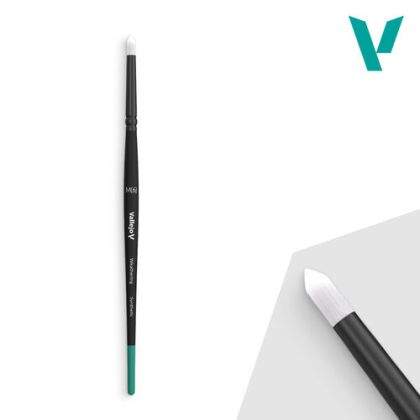
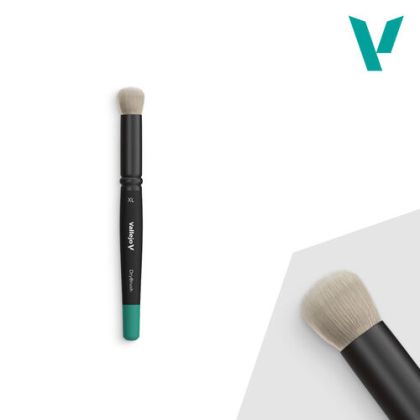
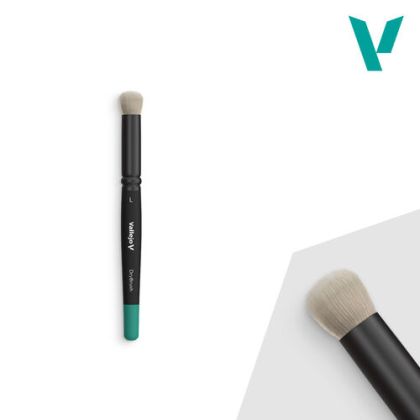
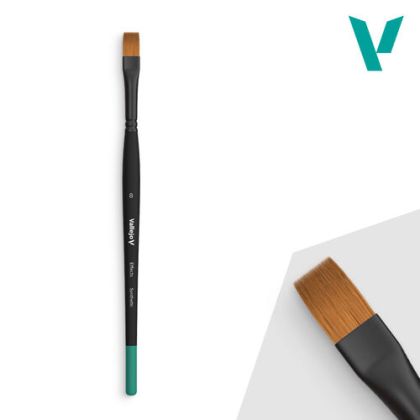
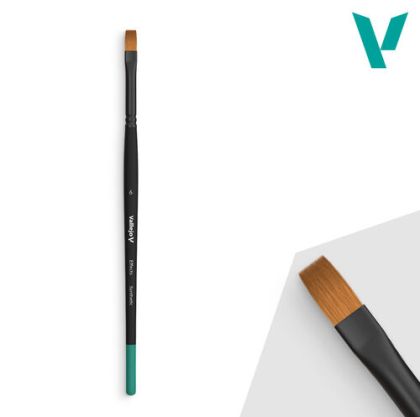
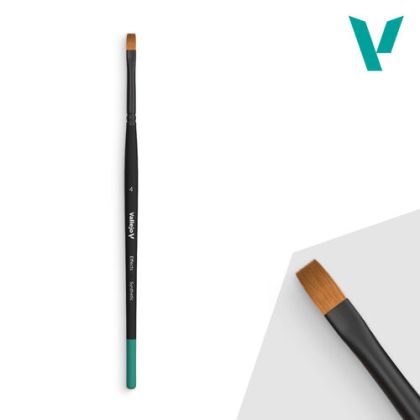
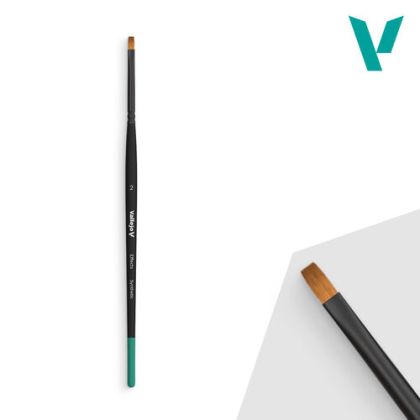
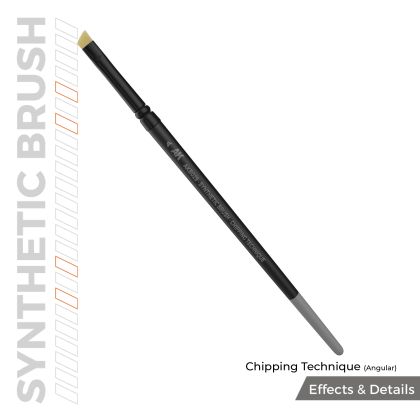
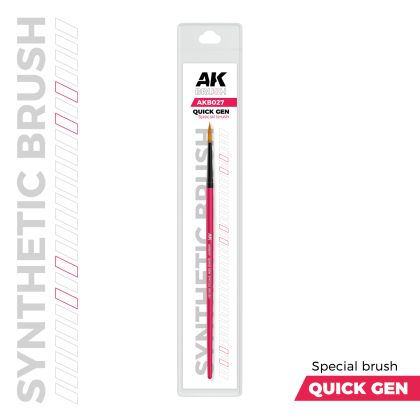
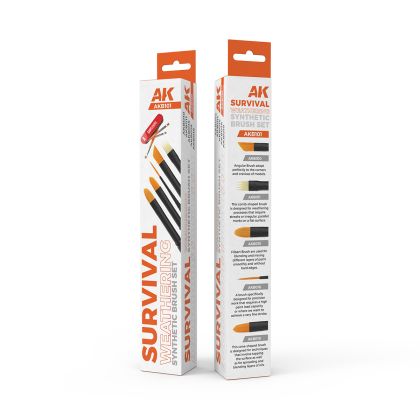
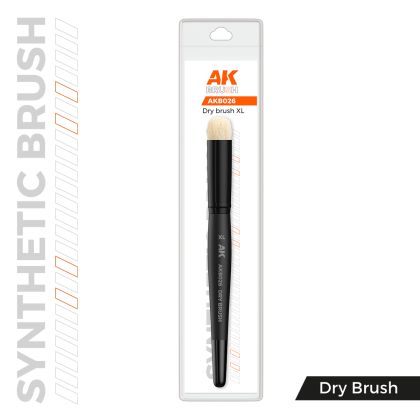
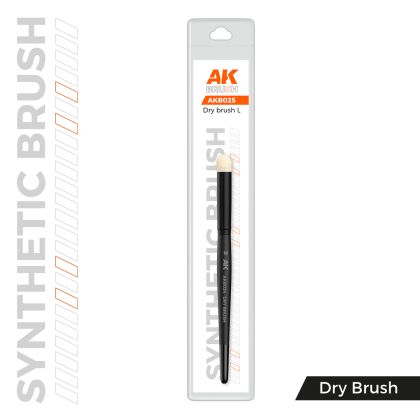
Special modelling brushes exist for the jobs an ordinary round point cannot do: dragging a highlight along a rivet line, working pigment into a corner, stippling chipped paint and sweeping dust off a finished cabinet piece. Stiffness of hair, the shape of the ferrule and the length of the trim are all subordinated here to one operation rather than to laying colour on a surface.
The heading also takes in rubber shapers and retractable dust brushes, which never touch paint at all. Below, the shapes are matched to the techniques that use them and to the products they apply.
An ordinary brush has springy hair kept as long as possible so that it holds paint and lays it smoothly. Special brushes go the other way. The hair is short, stiff and trimmed flat or into a wedge, so it removes and spreads colour rather than depositing it. With a tool like that you can bring up a rivet and an edge by dry-brushing, push pigment into the corner of a wheel well, suggest worn paint on a walkway or work texture paste into a mud trail.
Name the operation first. Dry-brushing wants a blunt, densely packed head that distributes colour over the high points instead of leaving it standing in beads. Chipping wants a narrow wedge you can stipple with. Pigments and texture pastes tolerate a coarser tool, because they are pushed about with real pressure.
Stiff synthetic hair keeps its shape after hundreds of strokes and is untroubled by thinner. Softer natural hair blends powder into a finer gradient but splays sooner. If you are weighing the two up, compare synthetic brushes against natural hair brushes.
Size the head to the area, not to the scale of the model. A size 8 flat is quick and gentle over a bomber wing, while a panel in a small scale wants a head under a millimetre. Two sizes on the bench is usually the working minimum.
A weathering brush wears out faster than a painting brush, so treat it as a consumable and keep a spare in the jar. The full picture of shapes and sizes is in modelling brushes.