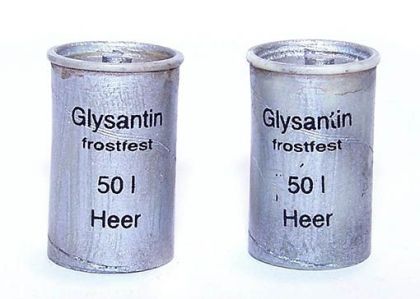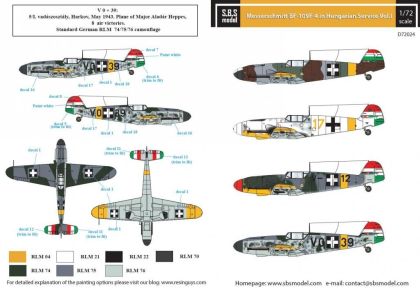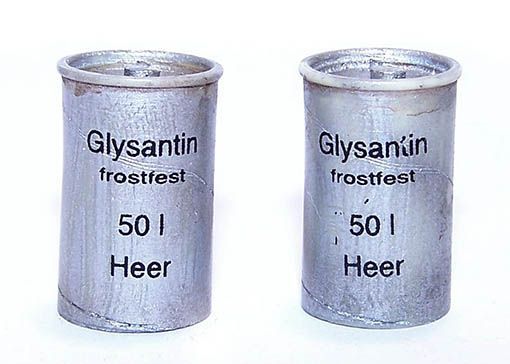
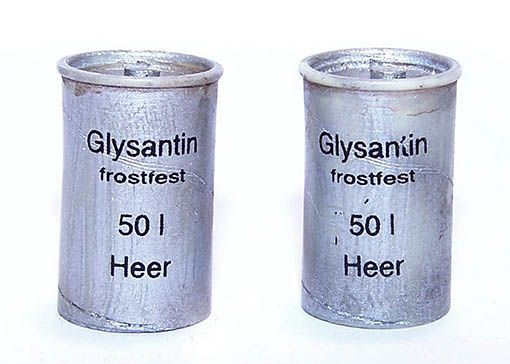
German containers for Glysantin antifreeze in 1:35: five cans and decals to go with them.
Responsibility details are not available.
The cooling system of an engine was as vulnerable in frost as the running gear was in mud. German vehicles therefore carried a supply of antifreeze liquid with them, and the trade name Glysantin, which caught on in Germany as early as the turn of the 1920s and 1930s, appeared on cans at workshop trucks, with repair squads and in spare parts stores. The winter campaign in the east turned it into a material on which the mobility of a whole unit depended. Without a liquid resistant to frost, engine blocks cracked and a vehicle was left standing before an enemy round managed to hit it.
The set for 1:35 scale holds five cans and a sheet of decals with which the factory lettering is completed. Five pieces are enough for some to be set out over a cargo area, some leaned against a crate in a workshop and one piece left lying aside. A slightly different degree of wear on each of them will keep the group from looking mechanical.
The lettering holds best on a smooth glossy base; a matte surface under it will create a white veil around the edges. The method is therefore simple: the base shade, polishing over with gloss varnish, the decals and finally a matte overspray that unifies everything.
Sheet metal containers corroded quickly around the cap and on the bottom edge, where they stood in the damp. Apply the rusty patches in spots, not over whole areas, and complete them with traces of spilled liquid running down the side of the container. The cap with its chain at the same time takes the darkest shade of all the places.
Naši poradci a znalci sortimentu jsou připraveni odpovídat na Vaše dotazy (Po–Pá, 8–18 hod).
Zeptejte se na co potřebujete, odpovíme co nejdříve.
Texts from customers in the advice section reflect solely the opinions and views of the customers. MNF trade s.r.o. does not approve or verify customer texts in advance.
There are no questions here yet. Be the first to ask!