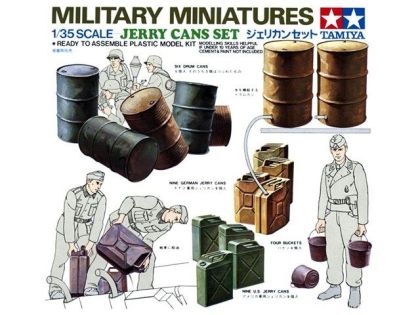
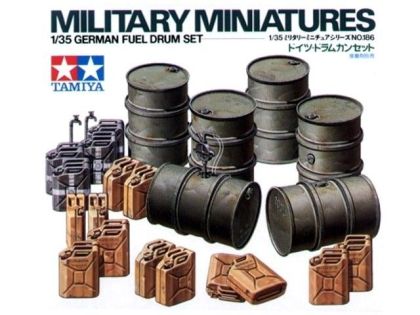
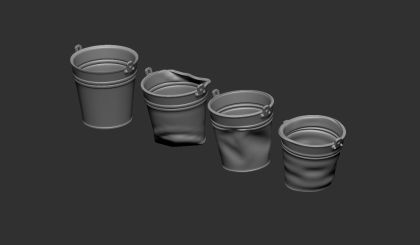
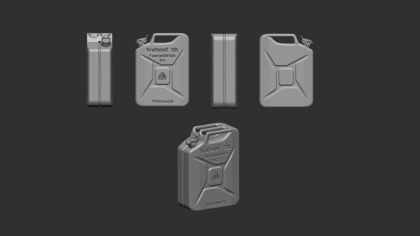
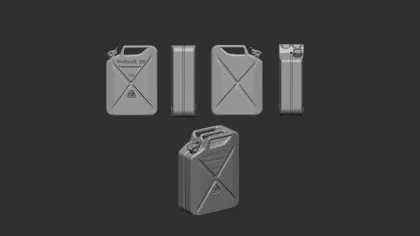
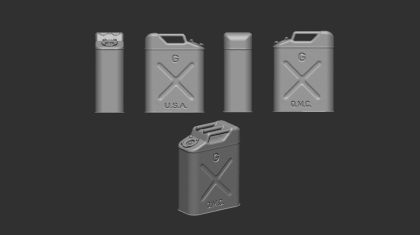
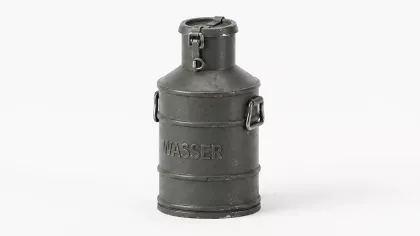
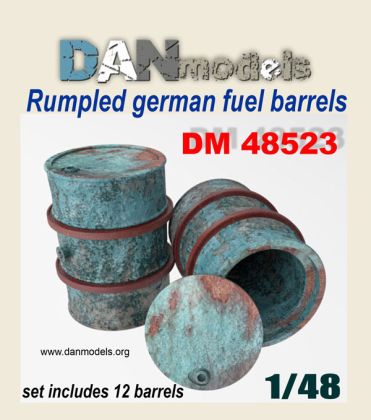
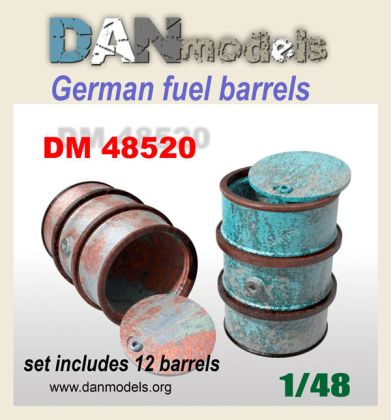
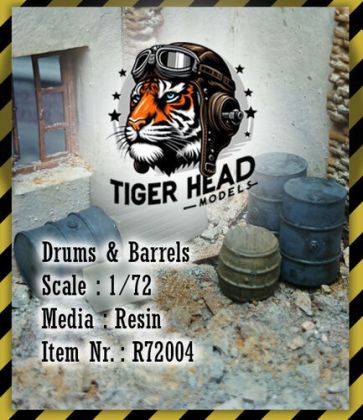
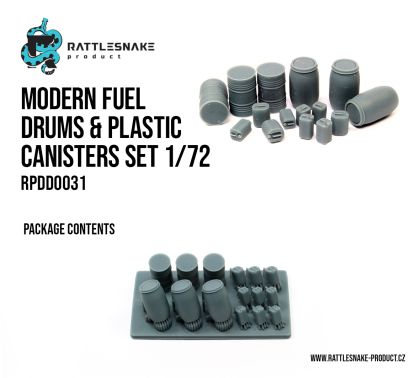
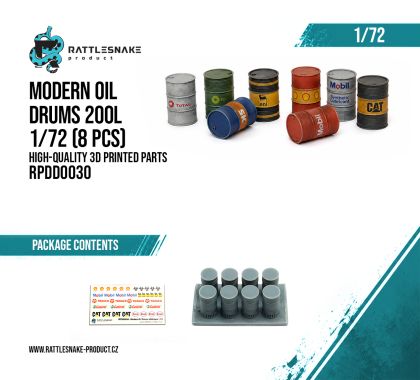
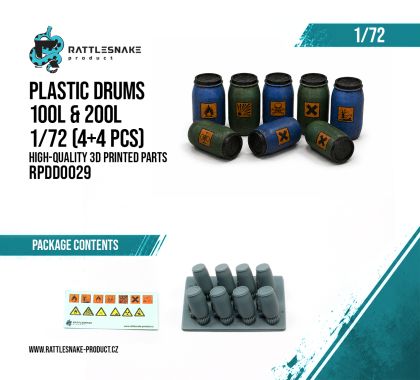
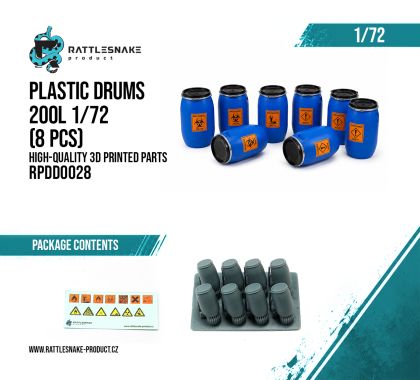
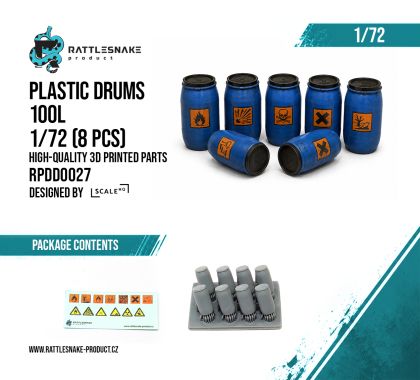
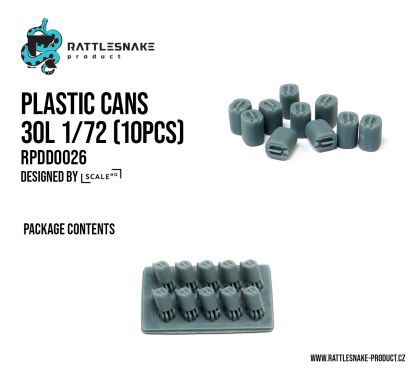
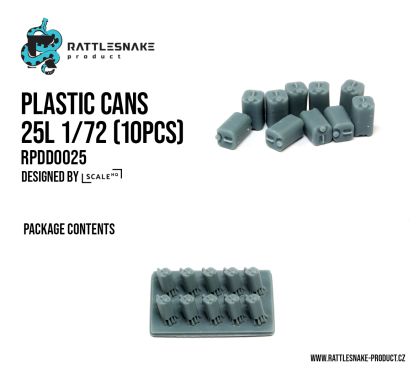
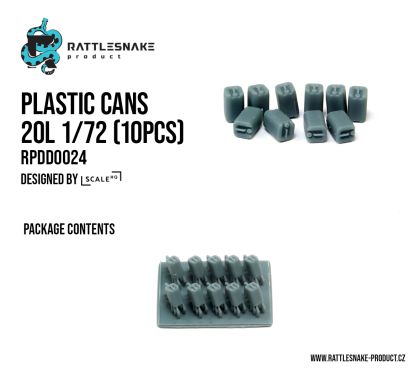
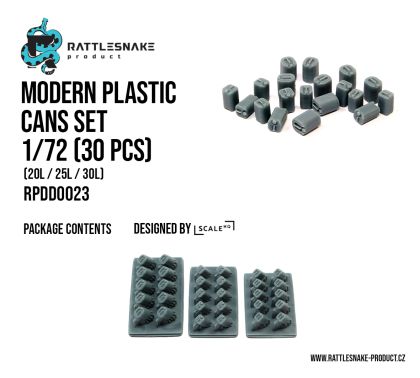
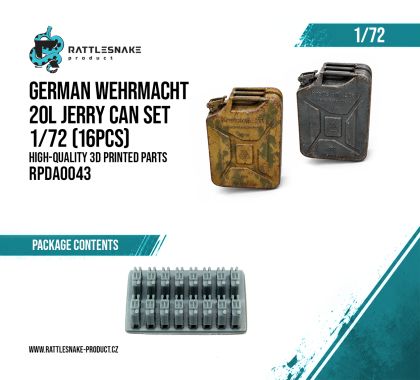
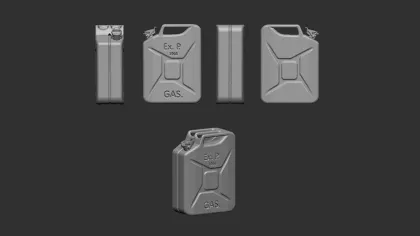
Jerrycans, fuel drums and containers for military vehicle models belong on any supply diorama and on the mudguards of the machines themselves. The choice runs through German, American and British wartime jerrycans, 200-litre drums in pristine and crushed condition, field watering cans, oilers and modern plastic cans. Sizes cover 1:144 right up to 1:16. Below: what belongs to which era, and how to paint sheet metal so that it does not look like a toy.
No machine moves without fuel, which is why cans and drums are among the most photographed equipment on real vehicles. This listing holds the classic twenty-litre pressed steel can, its British and American counterparts, flat petrol tins, drums for fuel and oil, watering cans for topping up radiators, and for modern armies brightly coloured plastic cans and crates. Damaged versions are here too; a crushed drum gives a scene a past.
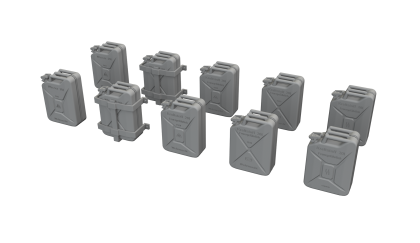
The rule holds across the whole branch: buy containers in the size of the model. Choice is deepest for 1:35 military model kits, with generous multi-piece sets for 1:72 military model kits, where one pack will equip an entire refuelling point. In between sits 1:48 military model kits, and builders of giants will find containers for 1:16 and 1:18 military model kits too.
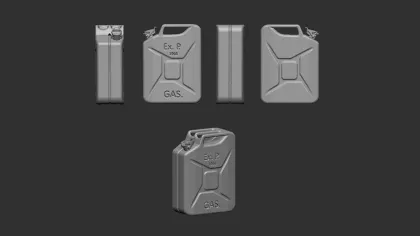
The pressed can with its pronounced cross-ribbing belongs to German equipment, flat four-gallon tins to the British desert, and moulded plastic drums to present-day subjects. Set titles state country and period, so following the theme of your diorama is enough.
Tidy rows of drums suit a depot; dented and rusted pieces suit the front line. The best effect comes from mixing them: most containers sound, one tipped over, one holed. Small accidents are what make a scene live.
Drums and cans are excellent practice for weathering: small surfaces, pronounced edges and streaks that behave predictably. Try rust and chipping on them before taking either to a whole tank, and the results will never be wasted on a base.