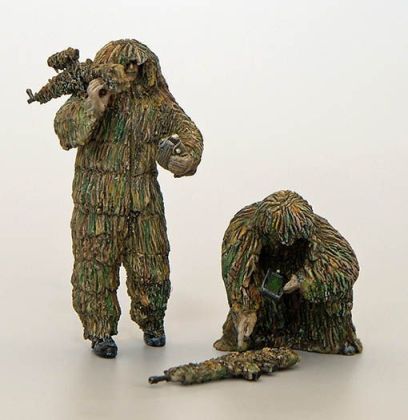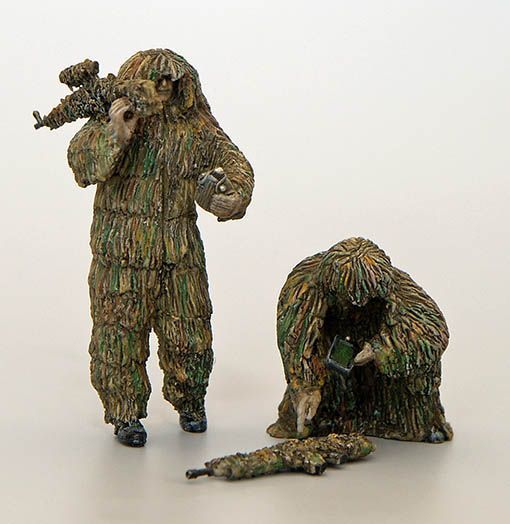
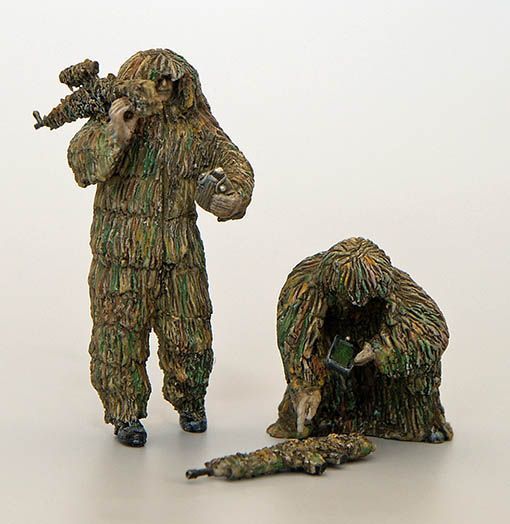
A pair of American snipers in ghillie suits, 1:35. Cast figures for scenes from the later conflicts.
Responsibility details are not available.
The shaggy suit covered with strips of fabric came about with Scottish gamekeepers long before the world wars, and it was the British Lovat Scouts who brought it into military service. The American army came to it considerably later. In the Second World War it was a rarity with units of the United States, and systematic sniper training including the building of one's own suit only took hold with them in the second half of the century, when permanent marksmanship schools were set up.
The suit itself looks similar across the decades, but everything else changes: the shape of the helmet, the cut of the field blouse, the type of magazine pouch, the rifle in the hands. Anyone building a scene should first choose the conflict and only then choose the accessories accordingly. Figures in a ghillie suit will not fit a scene from 1944, but they will fit later battlefields.
The tufts of fabric are painted from the darkest shade upward. Lay the base in deep shadow, then dry-brush lighter grass and brown tones onto the tips of the fringes only. That creates the depth an even coat never achieves. The bottom of the suit tends to be muddy, because a marksman crawls, whereas the shoulders and the back stay bleached by the sun.
Separate the castings with a saw, sand away the parting seams and wash the surface before painting. The rifles and the small equipment will take a painting sequence of their own so that they are set apart from the fabric by their sheen.
Naši poradci a znalci sortimentu jsou připraveni odpovídat na Vaše dotazy (Po–Pá, 8–18 hod).
Zeptejte se na co potřebujete, odpovíme co nejdříve.
Texts from customers in the advice section reflect solely the opinions and views of the customers. MNF trade s.r.o. does not approve or verify customer texts in advance.
There are no questions here yet. Be the first to ask!