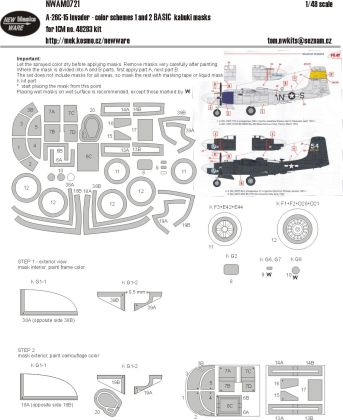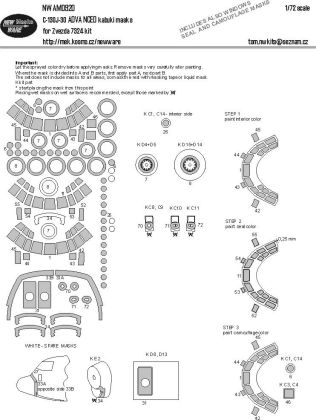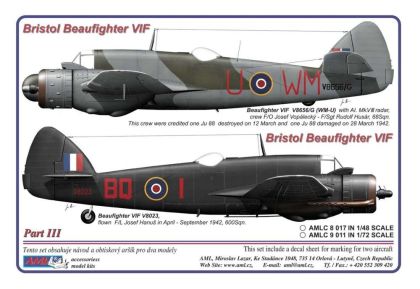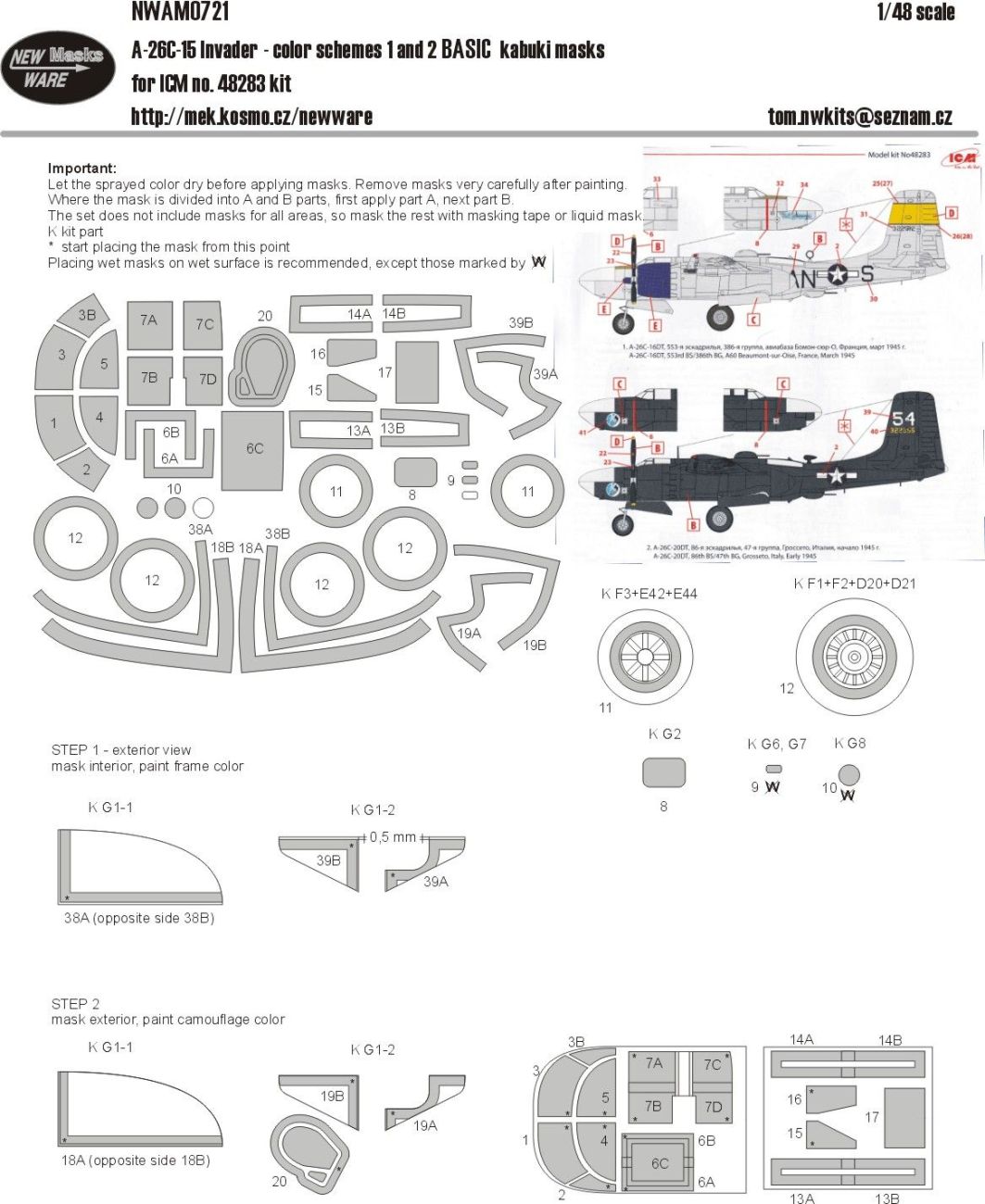


A set of masks in 1:48 for the twin-engine attack bomber with a glazed nose, cut to the ICM kit and to the first two camouflage schemes from the instructions.
Responsibility details are not available.
The Douglas A-26 was among the fastest twin-engine attack aircraft of the Second World War. The C form carried a glazed bombardier's station with a sight in the nose, while the related B had a nose full of machine guns. The block number in the designation refers to a particular production batch, which differed in details of armament and equipment.
The machine caught the end of the fighting over Europe, then went into action in Korea and in a rebuilt form still flew over Southeast Asia. Few aircraft from the early 1940s lasted that long in the front line.
The cutouts correspond to the first and second color schemes from the instructions; for the third variant the brand released a separate package, so the sets do not overlap. The extent covers the glazed areas of the cockpit and the nose, plus the wheels.
The aircraft had an unusually clean surface for its time and a wing with a laminar flow profile, thanks to which it could outrun even some fighters. The defensive armament was provided by remotely controlled turrets above and below the fuselage, which on an attack machine of that size was a rather rare solution.
The glazed nose has a great many small panes, so lay the cutouts from the center toward the edges and keep checking that no gap has been left anywhere.
Naši poradci a znalci sortimentu jsou připraveni odpovídat na Vaše dotazy (Po–Pá, 8–18 hod).
Zeptejte se na co potřebujete, odpovíme co nejdříve.
Texts from customers in the advice section reflect solely the opinions and views of the customers. MNF trade s.r.o. does not approve or verify customer texts in advance.
There are no questions here yet. Be the first to ask!