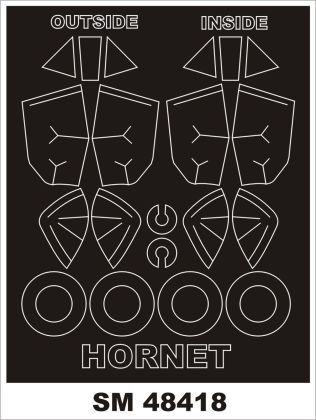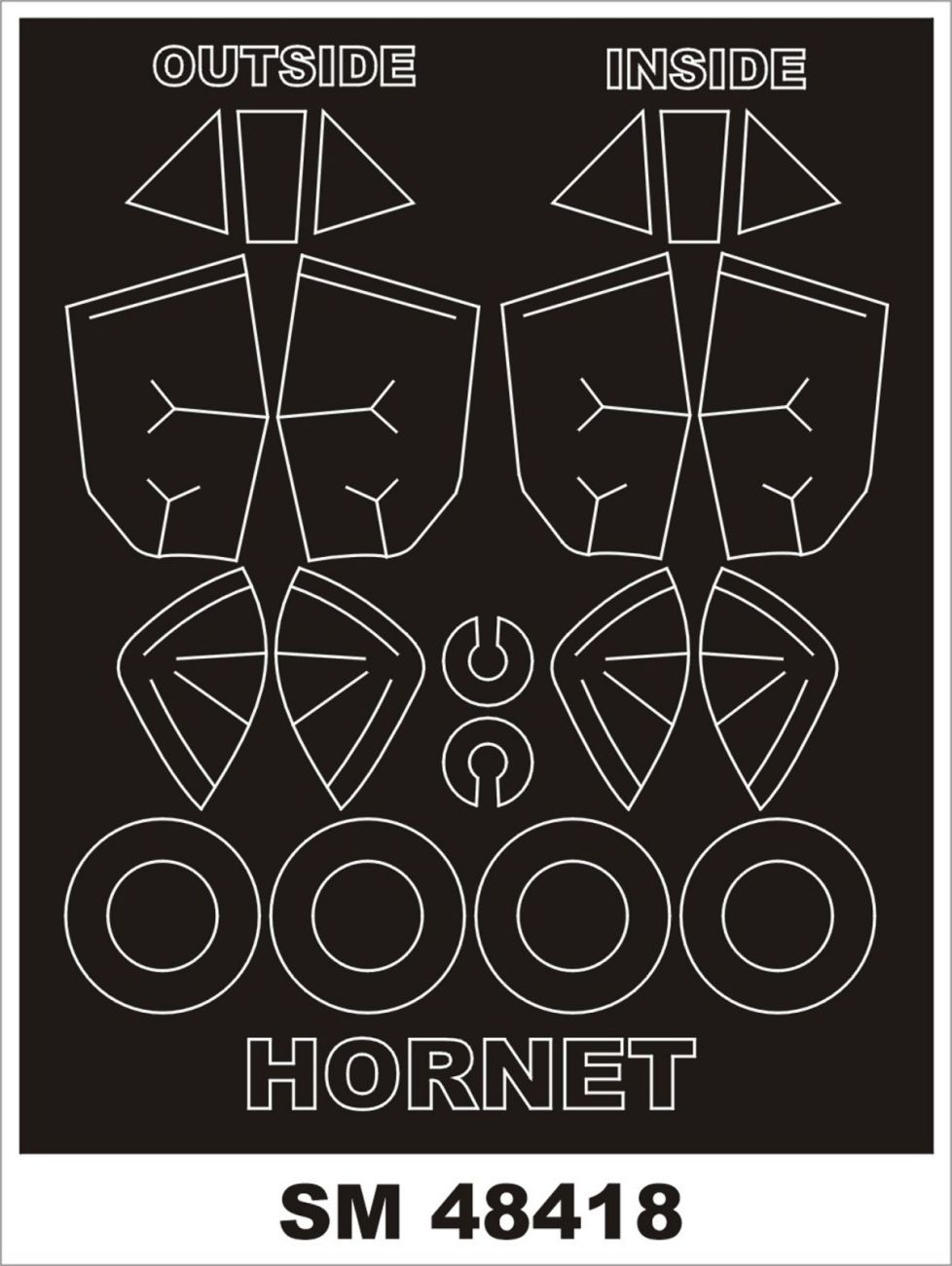
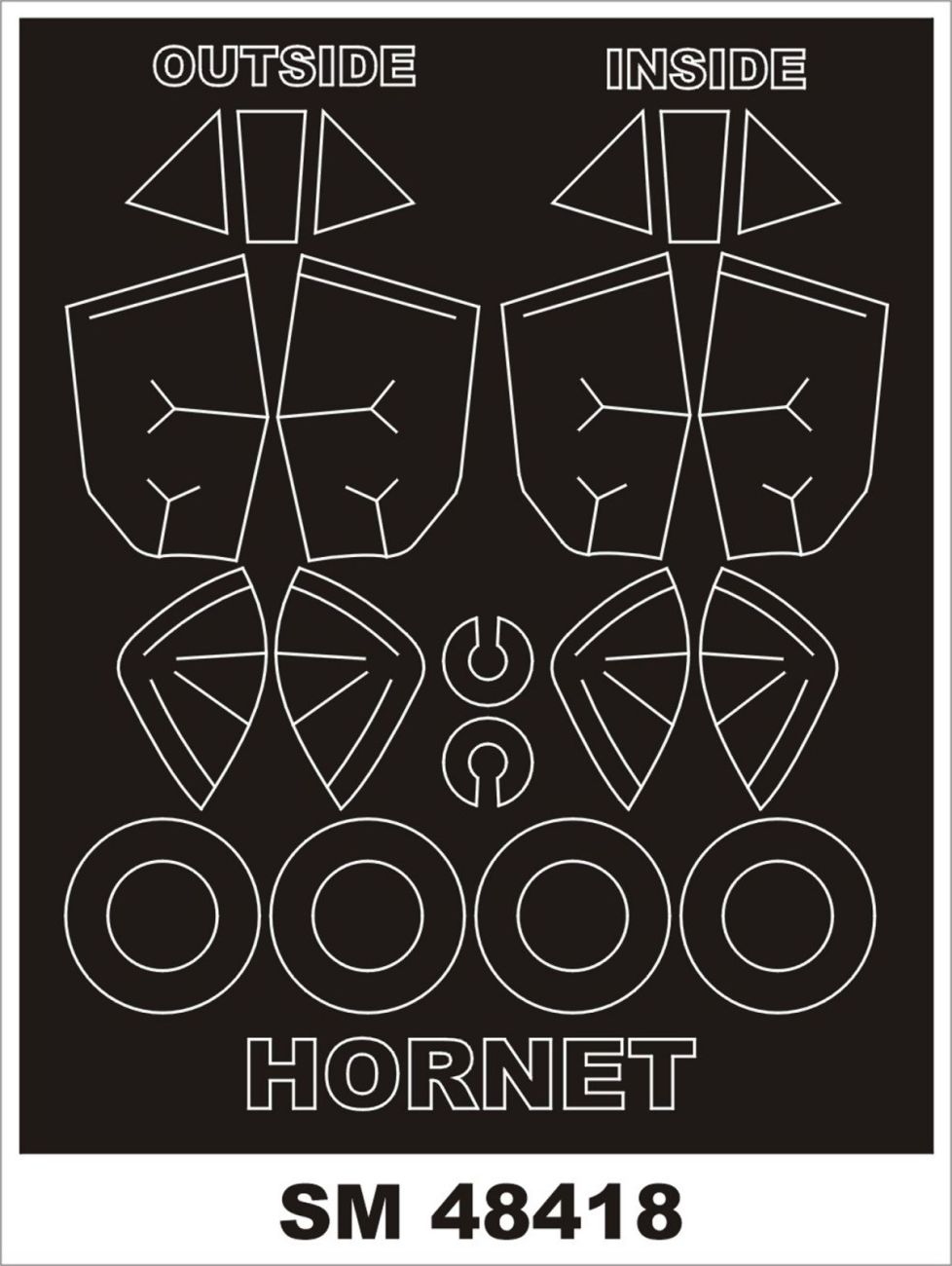
Templates for spraying the glazing of the long-range de Havilland Hornet fighter in 1:48. The package holds two pre-cut films, one following the canopy frames from outside, the other covering the panes from the inner side. The cut is derived from the mold by the brand Trumpeter.
Responsibility details are not available.
The Hornet came about as a private initiative by the de Havilland firm and was to be what the Mosquito was among bombers: a light twin-engine machine with a shell of wooden materials, but this time in the role of a single-seat fighter with enormous range for use over the Pacific. The Merlin engines ran in opposite directions, that is with the propellers turning opposite ways, which removed the swing on the takeoff run and made the machine exceptionally obedient. In speed it ranked among the fastest production piston aircraft of all. It did not get into the fighting of the Second World War, but in the 1950s it operated over the Malay Peninsula, where its range and weapon load found good use. A carrier variant for the navy existed as well.
The cockpit of the Hornet is tight, sits high on the spine between the engine nacelles and its frames are narrow. A modeler usually builds it as the dominant feature around which there is a lot of smooth finish, so any ripple on the edge of a frame leaps to the eye. Pre-cut film keeps the edge in place. Before it is applied, polishing the glazing is recommended, because after spraying the modeler can no longer reach it and any scratch will stay under the finish for good.
Naši poradci a znalci sortimentu jsou připraveni odpovídat na Vaše dotazy (Po–Pá, 8–18 hod).
Zeptejte se na co potřebujete, odpovíme co nejdříve.
Texts from customers in the advice section reflect solely the opinions and views of the customers. MNF trade s.r.o. does not approve or verify customer texts in advance.
There are no questions here yet. Be the first to ask!