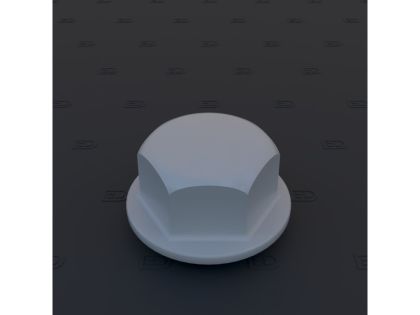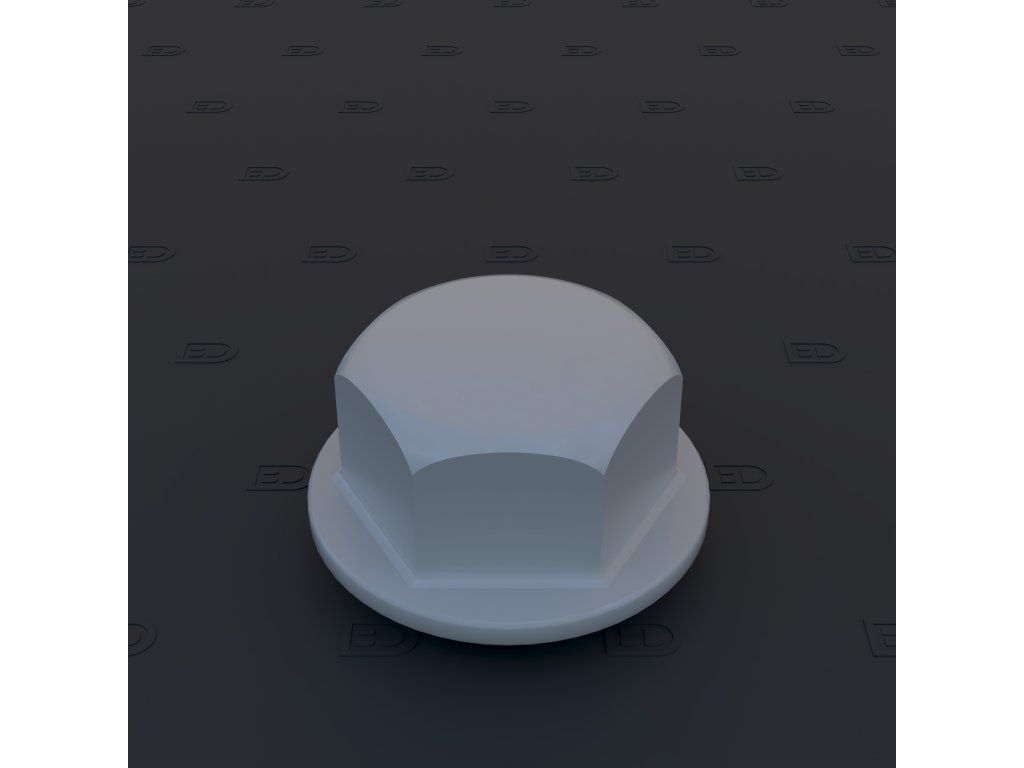
A hex 1.1 mm across with a washer of larger diameter. Compared with the neighboring grade it is heavier by a mere tenth of a millimeter, but once converted that is a difference which changes the whole class of the joint.
Responsibility details are not available.
A tenth of a millimeter can hardly be measured on a model, but in a 1:12 reduction it means 1.2 mm of real width. That is a whole step in the series of wrenches: between a twelve and a thirteen it is no longer a shade of the same joint but a different thread and a different load capacity. This is the core of why dimensions matter more in the large scales than in the small ones.
In a scale of one to seventy-two the same tenth would hide in the thickness of the paint and nobody would find it. The larger the model, the smaller the share of reality that falls on one millimeter of the build, and the more it pays off not to combine the sizes at random. The difference between the neighboring grades of this family is therefore deliberate, not cosmetic.
The practical consequence is simple: choose the grade by one particular joint, not by the overall impression. An estimate by eye deceives in a large scale, because the eye compares the head with the neighboring part, not with the real machine. A gauge or a printed photograph with a scale will reliably get round this trap.
The opposite direction is worth mentioning too. If you are not sure, it is safer to reach for the lighter grade. An undersized head looks unobtrusive, whereas an oversized one draws attention to itself and disturbs the proportions of the whole joint group. The more modest choice therefore risks less.
Naši poradci a znalci sortimentu jsou připraveni odpovídat na Vaše dotazy (Po–Pá, 8–18 hod).
Zeptejte se na co potřebujete, odpovíme co nejdříve.
Texts from customers in the advice section reflect solely the opinions and views of the customers. MNF trade s.r.o. does not approve or verify customer texts in advance.
There are no questions here yet. Be the first to ask!