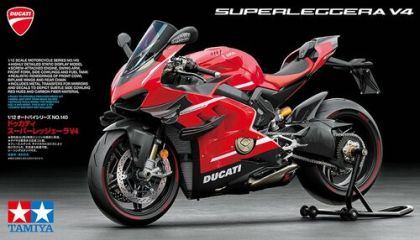
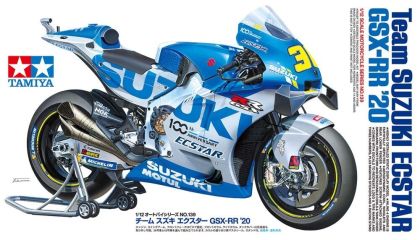
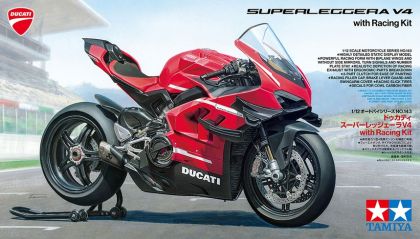
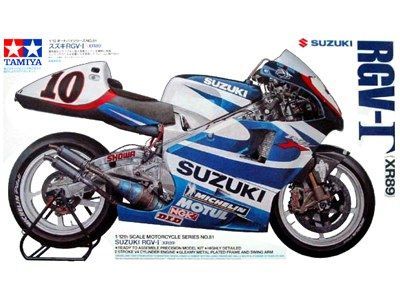
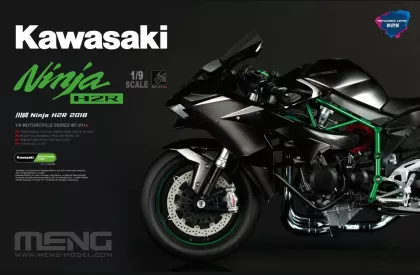
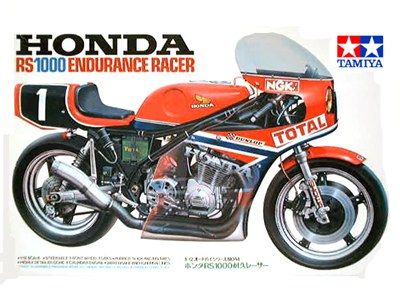
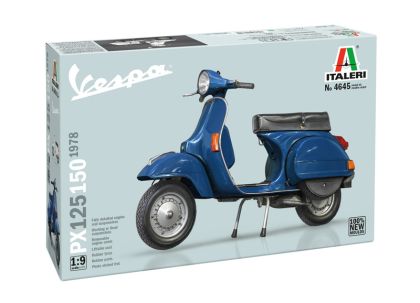
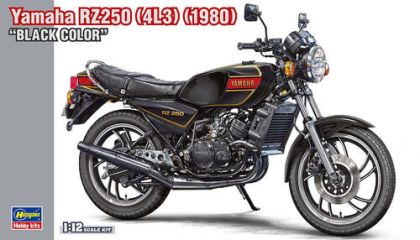
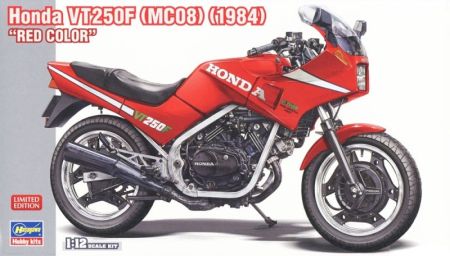
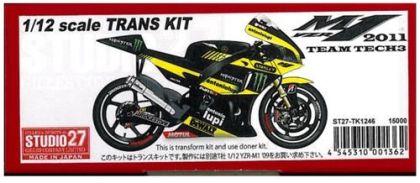
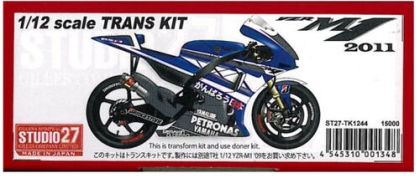
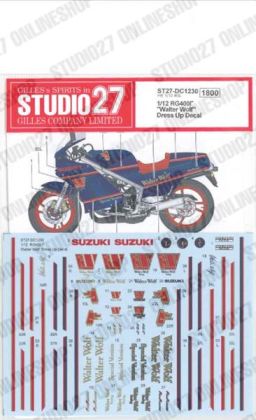
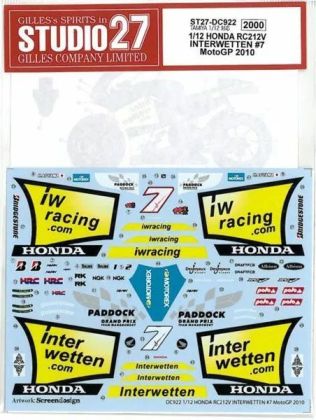
A motorcycle hides nothing. There is no bodyshell to cover a rough joint, so the frame, engine, exhaust and suspension are visible from every angle, and the finish on the fuel tank and fairing is what people notice first. In return there are far fewer parts than in a car kit, which makes a motorcycle one of the quickest routes to a model that genuinely looks finished.
This section holds racing machines, road bikes, trials and touring subjects and small diorama pieces, across scales from 1:87 up to 1:6, together with the metal, etched and printed accessories that go with them. Below you will find how the scales differ and which one suits the build you have in mind.
Eight scales are stocked, and they divide into three jobs. Large scales, 1:6, 1:8 and 1:9, are display builds: one machine, properly done, with rubber tyres and an engine broken down into dozens of parts. The middle of the range is 1:12, the scale most of the hobby works in and the one with by far the widest choice of machines and upgrades, with 1:10 appearing occasionally alongside it. Small scales exist for scenes rather than shelves: 1:32 and 1:35 sets usually include a rider and suit military or aviation groundwork, 1:48 matches aircraft dioramas, and 1:87 goes with H0 railway layouts.
A 1:6 machine is over thirty centimetres long and needs a shelf of its own. A 1:12 bike is fifteen to eighteen, so a collection stays on one shelf. Below that, 1:32 and 1:35, 1:48 and 1:87 are measured in a few centimetres and belong in a scene.
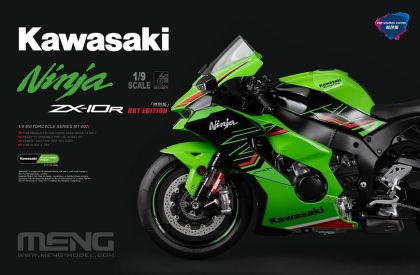
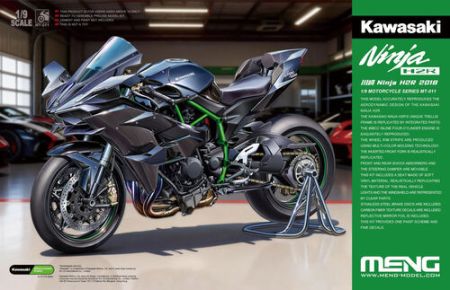
Large scales reward patient painting of big smooth panels. 1:9 is the easiest place to start because many kits come with the bodywork already finished from the factory, so you assemble rather than spray. 1:8 and 1:10 turn up occasionally with subjects that appear nowhere else.
If it is going in a display case on its own, go large. If it is going into a diorama beside an aircraft or an armoured vehicle, the scale is decided for you by whatever it stands next to.
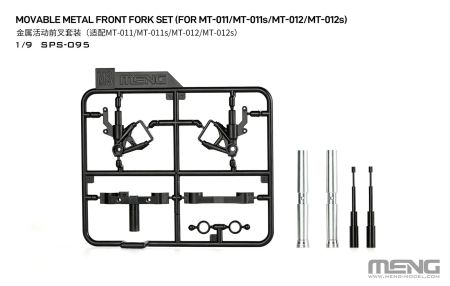
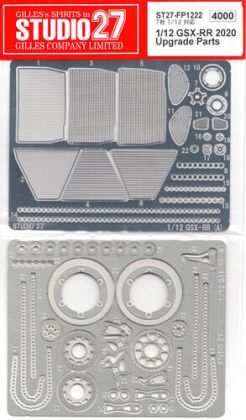
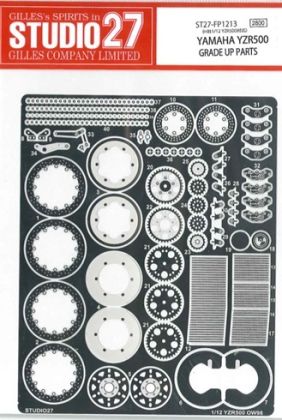
Two things decide how a motorcycle model turns out. The first is the paint on the tank and fairing: these are large, smooth, undivided surfaces, so every speck of dust and every heavy coat shows. Spray thin, let each layer flash off, and finish with a clear coat from the varnishes section. The second is the mechanical detail that sits in plain view, which is where motorcycle accessories earn their keep: a metal chain with real links, turned screws, brake discs with sharp drilling and brake hoses that moulded plastic simply cannot provide.
Gloss and metallic shades for tanks and engines are in model paints, and the whole plastic kit catalogue sits under plastic model kits.