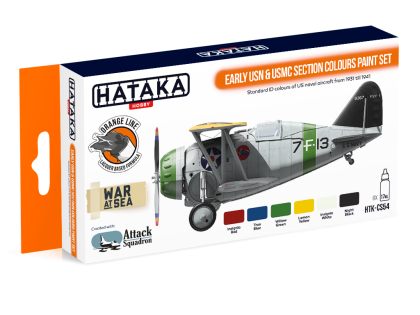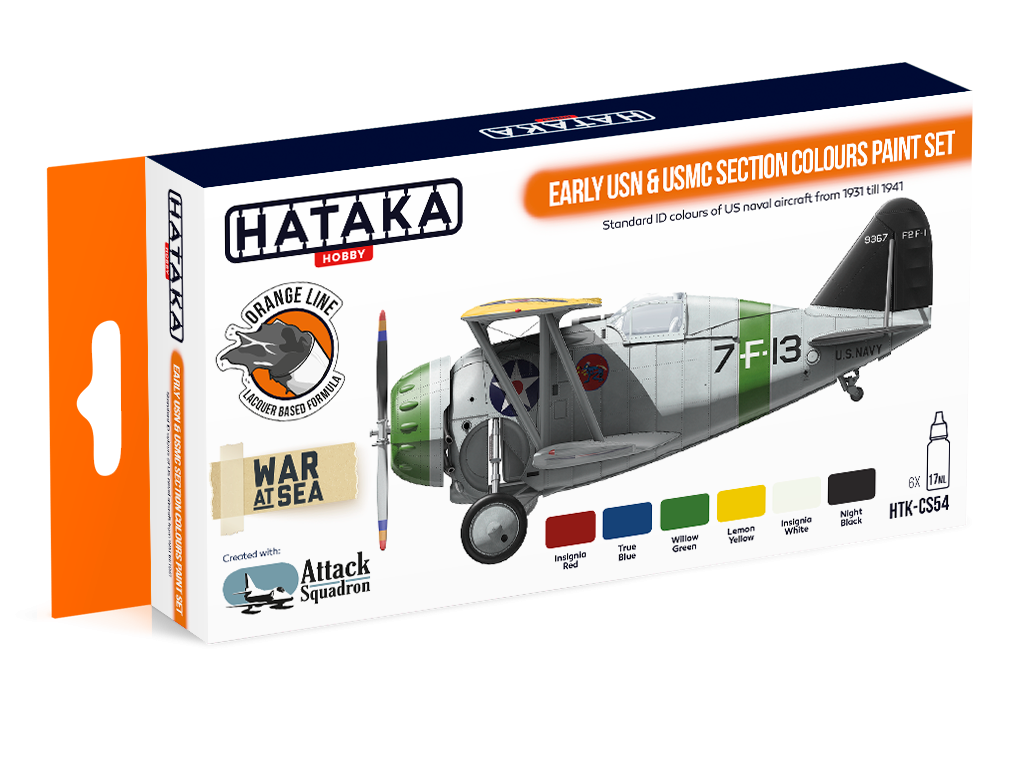
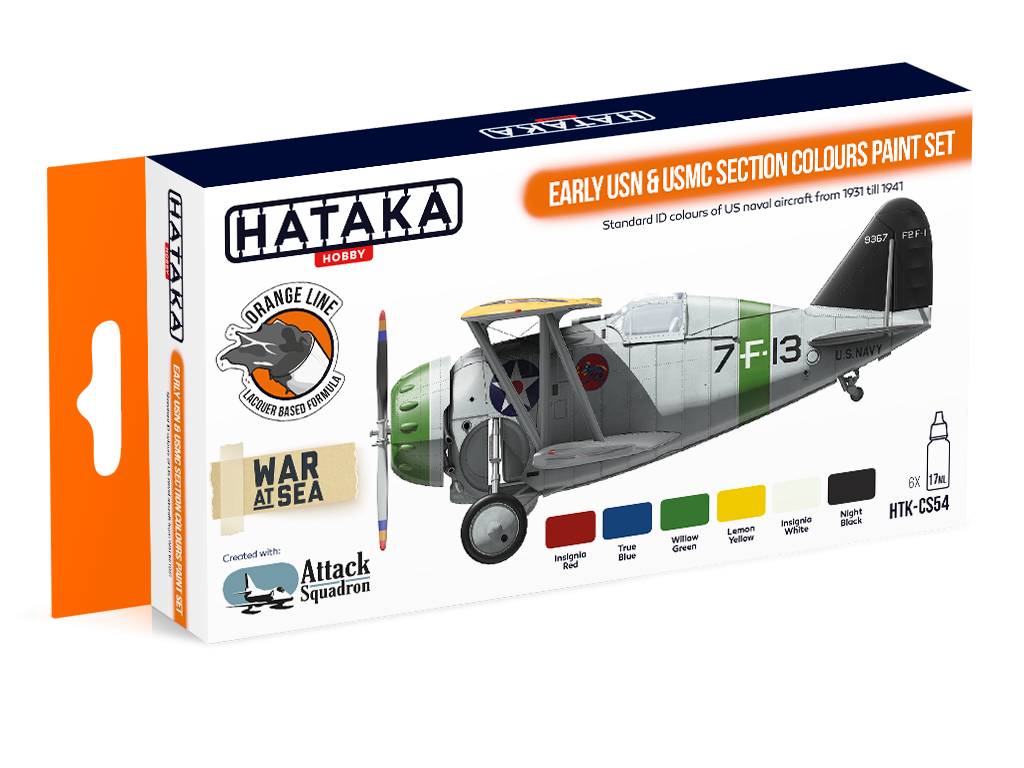
Six lacquer paints for the section identification shades of US naval aviation from the 1930s and the early 1940s.
Responsibility details are not available.
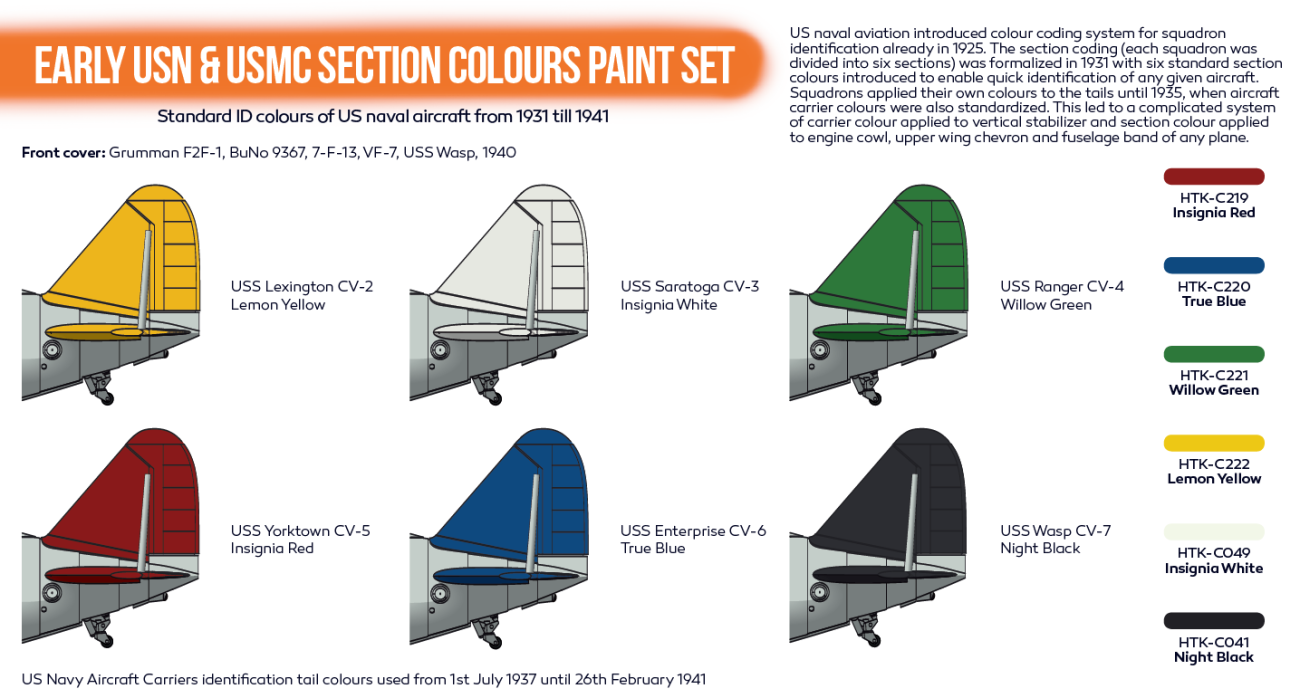
Before the war in the Pacific came, and gray with it, the decks of American aircraft carriers were the most colorful place in aviation of all. The individual sections within a squadron were told apart by the color of the ring on the engine cowling, of the band on the fuselage and of the upper surface of the wing. The six shades in this box are exactly that register.
Every color is given both a shade to the federal standard and the period designation of the ANA series, so it can be matched to a specific machine according to the profile in the assembly instructions.
The system was simple and readable at a distance: the section leader had his color, his wingmen carried it in a different place on the airframe, and the machine's allegiance could thus be recognized even from the deck. Today only museum replicas and carefully built models recall this spectacle.
They find use outside identification markings too: the white and the black serve on national insignia, and the yellow belongs on the upper surfaces of the wings of biplanes from the era nicknamed the golden years of naval aviation.
Watch the chemistry. This particular range is lacquer paints on a solvent base, not water-based acrylic. They are thinned exclusively with the same manufacturer's lacquer thinner; water will ruin them. The reward is an exceptionally hard and smooth film that takes masking tape and subsequent shading without rubbing off, which with saturated colors such as red or yellow shows immediately.
Naši poradci a znalci sortimentu jsou připraveni odpovídat na Vaše dotazy (Po–Pá, 8–18 hod).
Zeptejte se na co potřebujete, odpovíme co nejdříve.
Texts from customers in the advice section reflect solely the opinions and views of the customers. MNF trade s.r.o. does not approve or verify customer texts in advance.
There are no questions here yet. Be the first to ask!