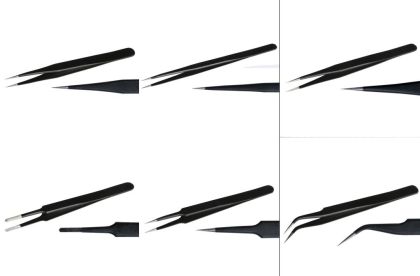
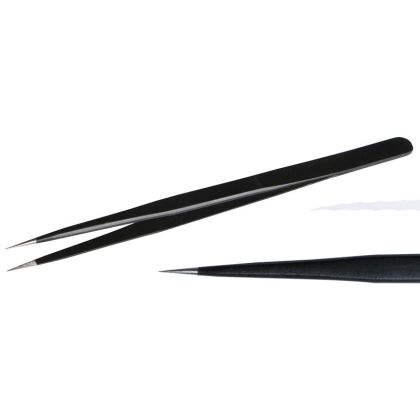
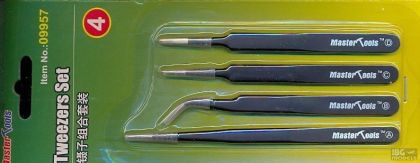
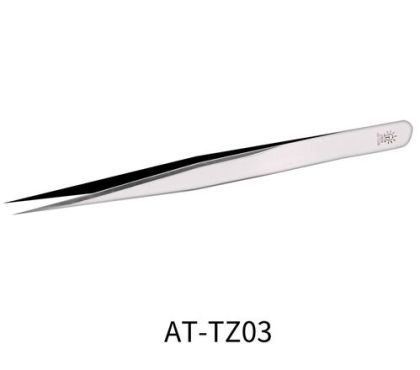
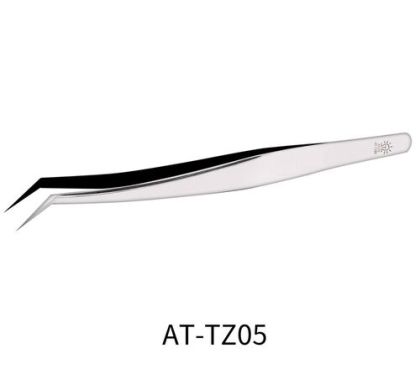
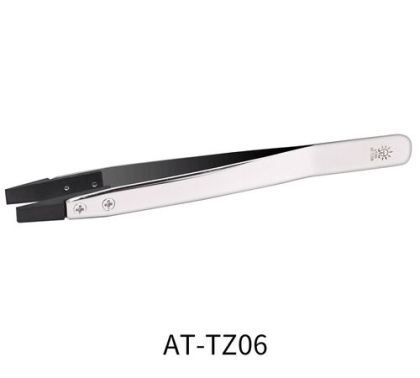
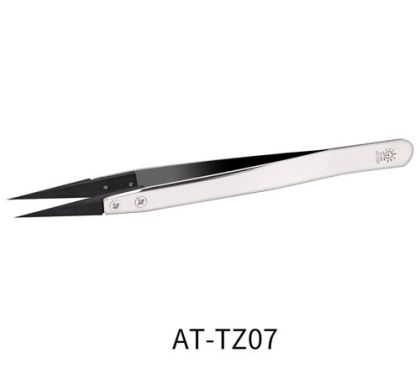
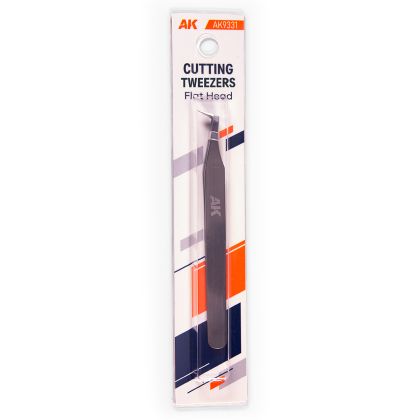
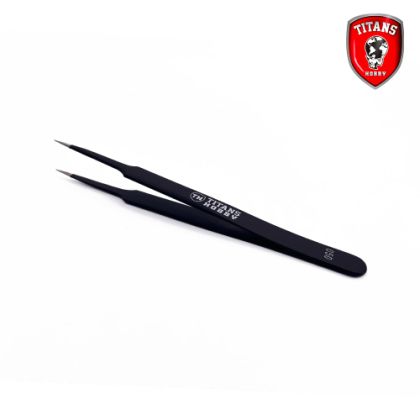
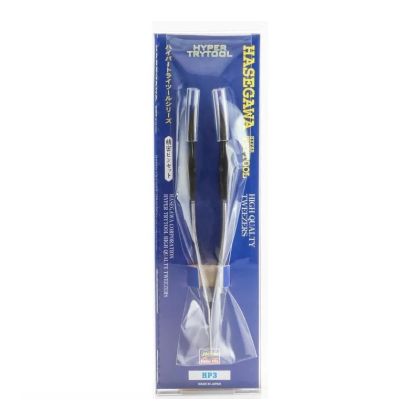
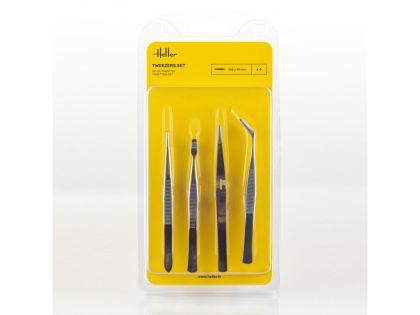
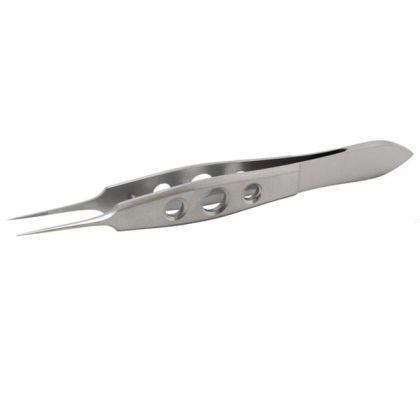
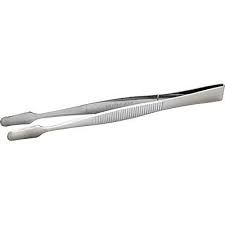
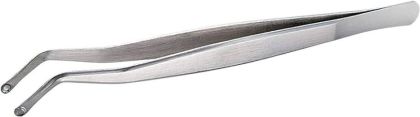
Tweezers extend your fingers into places fingers cannot go, and they are the only way to pick up a part the size of a poppy seed. Modelling tweezers differ in tip shape and in mechanism: straight tips are the all-rounders, curved ones let you see the point of contact, flat jaws hold brass without denting it, and reverse-action models grip on their own until the spring is opened. Anti-static versions and scissor-tipped tweezers are here too. Tip alignment is the single specification worth checking, because everything else about a pair of tweezers is comfort.
Because the entire value of the tool sits in its last half millimetre. Poorly finished tweezers have tips that do not meet, so instead of being gripped the part is launched — and you find it under the cupboard, or never. Good tweezers have tips ground to meet across their whole face and will hold a brass fret a tenth of a millimetre thick.
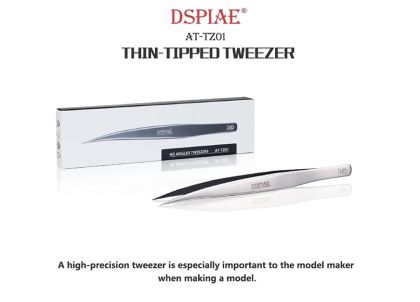
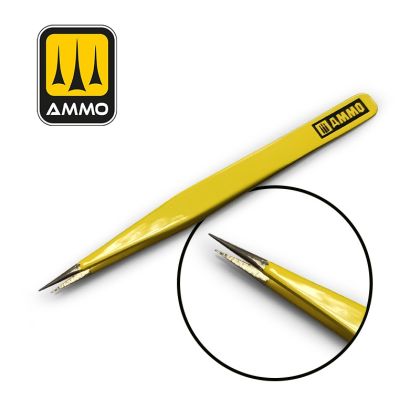
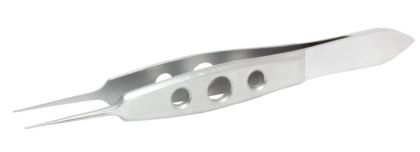
The baseline that covers most work: carrying parts, placing them, handling a decal. Choose the finest point you can still close confidently.
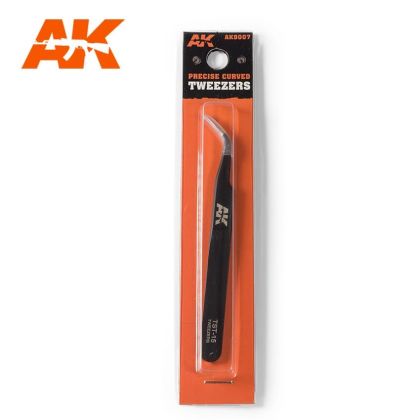
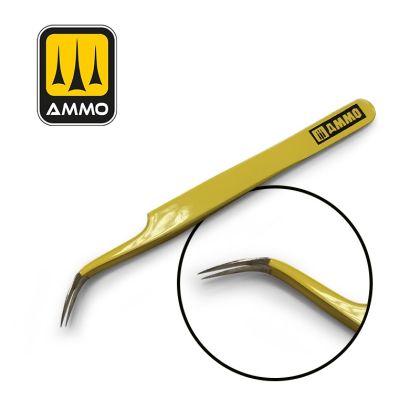
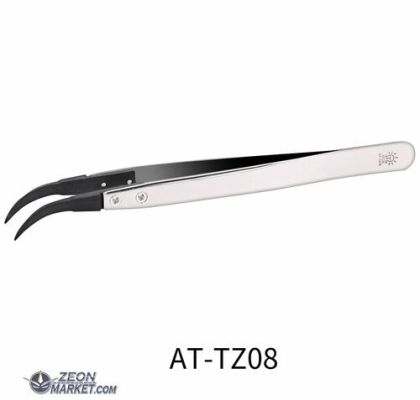
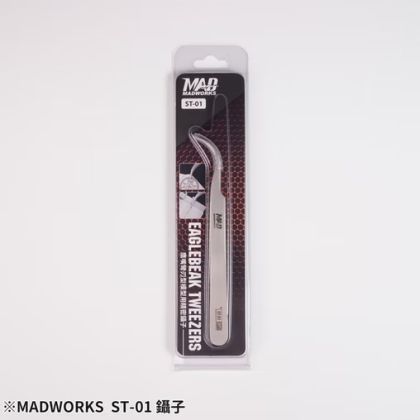
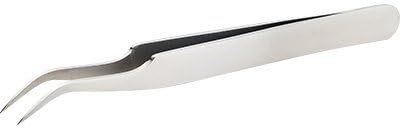
A bent point frees the view of the spot you are working on and lets you work at an angle — placing a part inside a cockpit, for instance. For photo-etch and small detail parts it is often more comfortable than a straight pair.
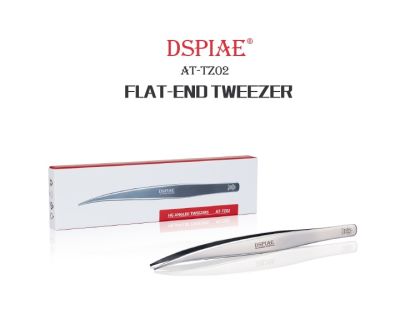
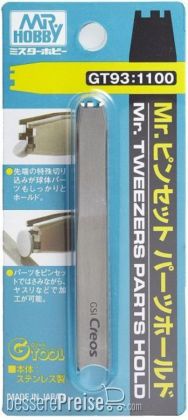
A wider contact face, so they neither dent thin brass nor tear a wet decal. They are used when working with photo-etch, the thin metal fret carrying very fine detail, and when carrying decals out of the water.
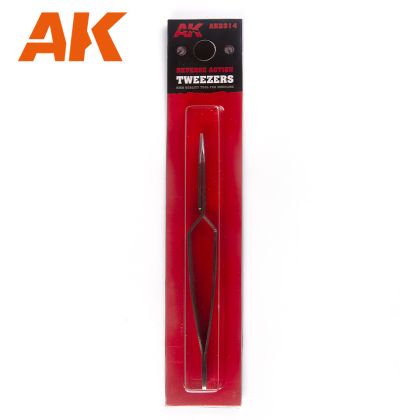
These work the other way round: they grip by themselves and open when squeezed. They suit a part that has to be held for a long time, while glue sets, without you keeping pressure on.
An anti-static finish stops a feather-light part clinging to the tip through static charge. Scissor-tipped tweezers combine grip and cut, so a small part is snipped exactly where it is held.
Never lever with them and never use them as a screwdriver — once the tips part company the tool is finished. Put them down so the points cannot strike the bench. After working with adhesive, clean the tips with a product from thinners and cleaners, because a dried drop on a contact face is every bit as annoying as a bent point.
For cutting brass and tiny parts, tweezers pair well with tools from nippers and cutters.