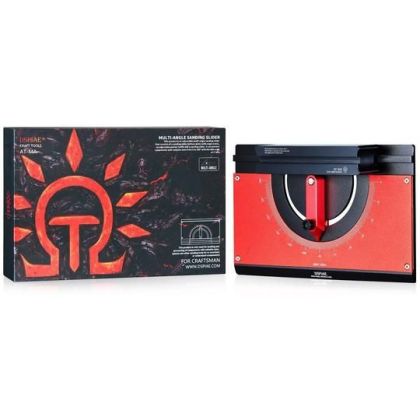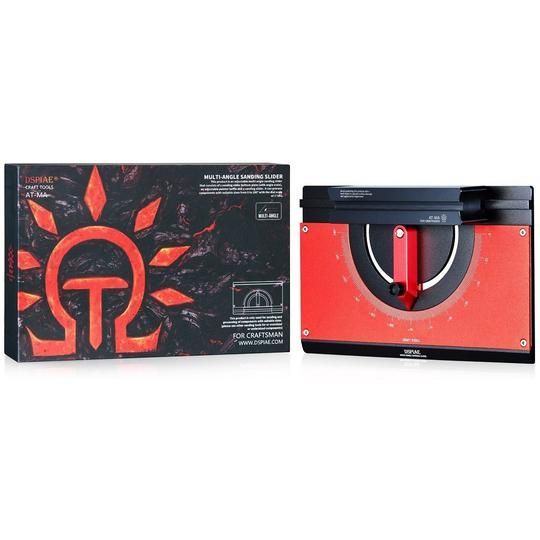
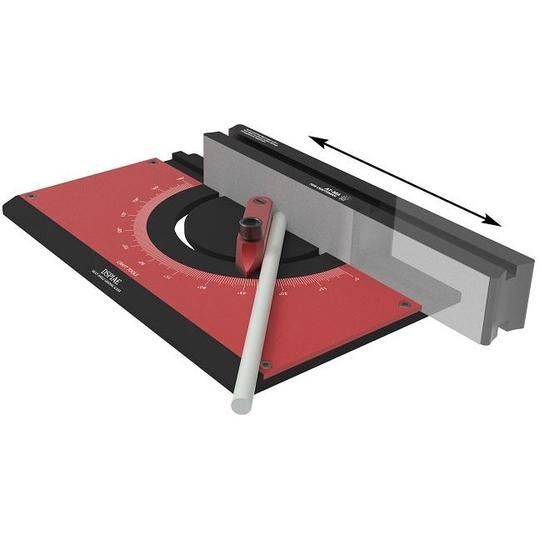
A sanding jig for plastic kits that guides the abrasive surface at a constant angle. You work it by sliding, not by pressing.
Responsibility details are not available.
It is a modeling tool for sanding work. According to the name it is a sliding sanding jig that allows sanding at various angles and is intended for plastic kits. The point of such guidance is simple: the hand holds the surface only approximately, the jig holds it always the same way, so the edge stays straight and does not round off.
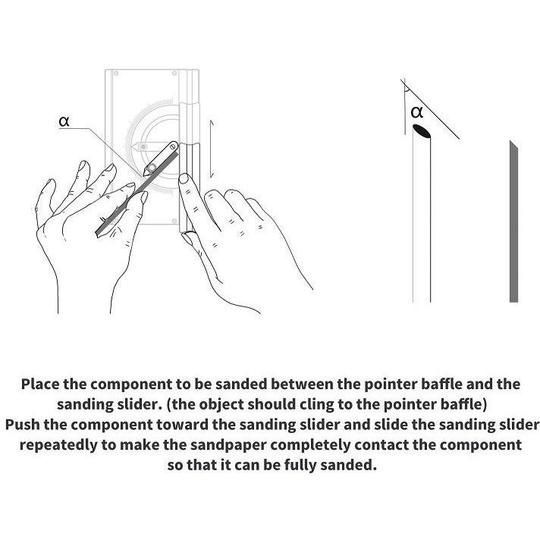
Lay the part on so that the surface being sanded rests across its full width, and guide it in a smooth back-and-forth slide. Do not help with force, it is the grit that cuts, not the pressure. Check how much you have taken off often, because removed material does not come back, and rather make several shorter strokes and look at the part against the light in between. Sweep the dust away as you go, otherwise it clogs the grit and the surface is polished instead of sanded. The particular angle settings and the recommended grit are given in the manufacturer's instructions.
It earns its place everywhere the cut has to be clean and square: leveling hull joints, truing the edges of photo-etched or resin parts, shortening profiles and rods, and preparing mating surfaces before gluing. It is not meant for cutting material apart, though, so for that reach for a saw or a blade.
After work, clear the dust off the jig, store it dry and do not leave it in contact with solvents. Change worn abrasive paper in good time, because dull grit tears the surface and heats the plastic.
Kits, paints and glue are not included in the package, unless stated otherwise.
Naši poradci a znalci sortimentu jsou připraveni odpovídat na Vaše dotazy (Po–Pá, 8–18 hod).
Zeptejte se na co potřebujete, odpovíme co nejdříve.
Texts from customers in the advice section reflect solely the opinions and views of the customers. MNF trade s.r.o. does not approve or verify customer texts in advance.
There are no questions here yet. Be the first to ask!