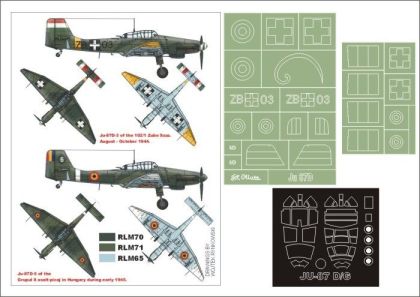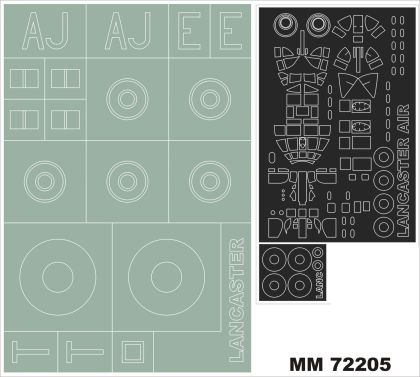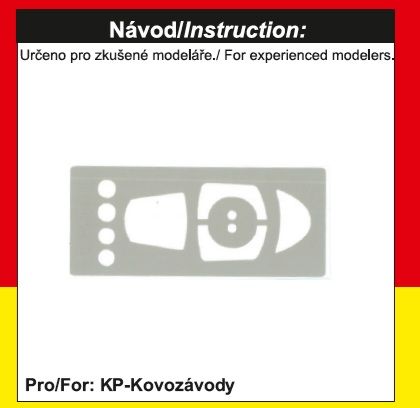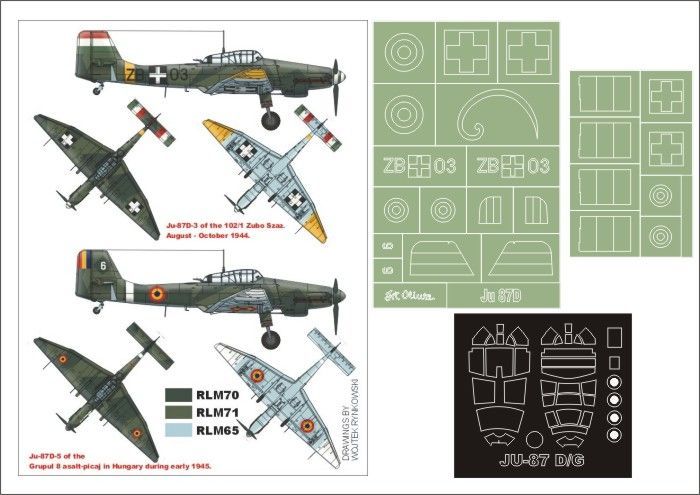
Self-adhesive masks in 1:48 scale for the cockpit glazing of the Junkers Ju 87D dive bomber. They cover the glass from both sides, and two sets of national insignia masks are enclosed.
Responsibility details are not available.
The dive bomber with the cranked wing and fixed landing gear became a symbol of the first years of the war. The D series was no longer that machine of 1940, though: it was given a stronger Jumo 211J powerplant, a longer and more cleanly shaped nose and above all newly arranged cockpit glazing, which beside the angular B version looks smooth and flowing. The sirens disappeared from the leading edges, armor and bomb load grew. It was deployed mainly on the Eastern Front, where the D flew to the very end of the war, long after faster types had replaced it elsewhere.
For working with vinyl masks of this size two tools are enough. The tweezers should have smooth flat jaws, because grooved jaws bite into the soft film and ripple it when it is laid down. The second tool is a cut wooden stick or a toothpick: wood is softer than glass, it presses the mask into the corner of a frame and leaves behind neither a scratch nor a greasy print that would later show through the finish.
Decals are not enclosed with this item; the insignia are sprayed. Paint sprayed through a mask has the same surface as the surrounding camouflage, so no glossy rectangle appears on the wing of the kind that gives away a decal as a sticker. It has to be lifted off only once dry, though, otherwise the softened layer will be drawn along with the film being peeled away.
Naši poradci a znalci sortimentu jsou připraveni odpovídat na Vaše dotazy (Po–Pá, 8–18 hod).
Zeptejte se na co potřebujete, odpovíme co nejdříve.
Texts from customers in the advice section reflect solely the opinions and views of the customers. MNF trade s.r.o. does not approve or verify customer texts in advance.
There are no questions here yet. Be the first to ask!