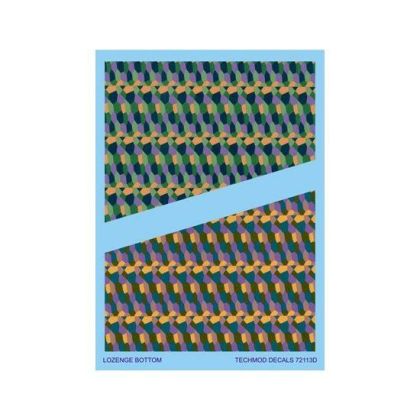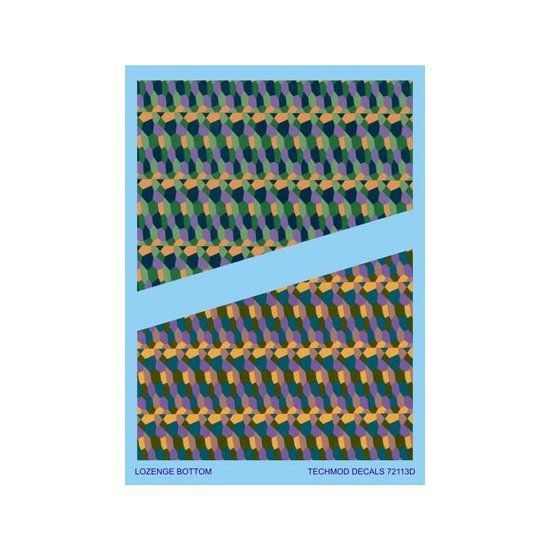
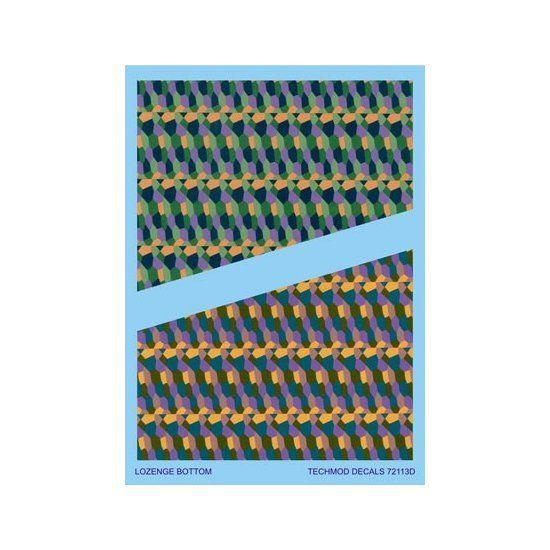
The five-color lozenge pattern for German aircraft of the First World War. Two sheets, one for the upper and one for the lower surfaces. 1:72 scale.
Responsibility details are not available.
At the end of 1916 the German air service came up with a solution that set its aircraft apart at a glance: camouflage stopped being painted and began to be printed directly onto the covering fabric. The pattern was made up of irregular polygons, which have been called lozenge ever since. It saved a layer of paint and some weight, the surface stayed smooth, and the outline of a machine broke up better at altitude than under a uniform area of color.
The shades differed according to where the fabric belonged. A darker combination with earthy tones and a deep green went on the upper surfaces, while the underside got a lighter range with bluish and greenish fields, so that the machine would stand out less against the sky. The package therefore holds two sheets, one for each side. This is the version with five colors; alongside it there was also a four-color variant, which a separate item covers.
This is no longer a matter of sticking down one roundel but of covering a whole wing, and it calls for a different method. Divide the surface into strips roughly matching the rib spacing, work with plenty of water and squeeze the artwork out from the middle toward the edges. Place the joins where a tape or a strut will cover them later. Use softener sparingly; a large area readily wrinkles after it and cannot be straightened out again. Let the finished surface dry overnight, and only then go near it with varnish. A kit is not part of the package.
Naši poradci a znalci sortimentu jsou připraveni odpovídat na Vaše dotazy (Po–Pá, 8–18 hod).
Zeptejte se na co potřebujete, odpovíme co nejdříve.
Texts from customers in the advice section reflect solely the opinions and views of the customers. MNF trade s.r.o. does not approve or verify customer texts in advance.
There are no questions here yet. Be the first to ask!