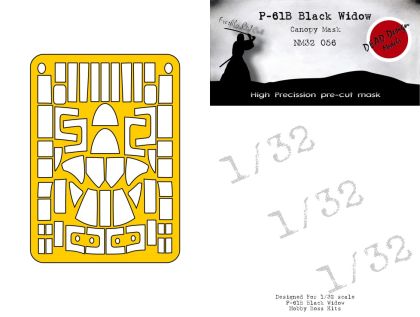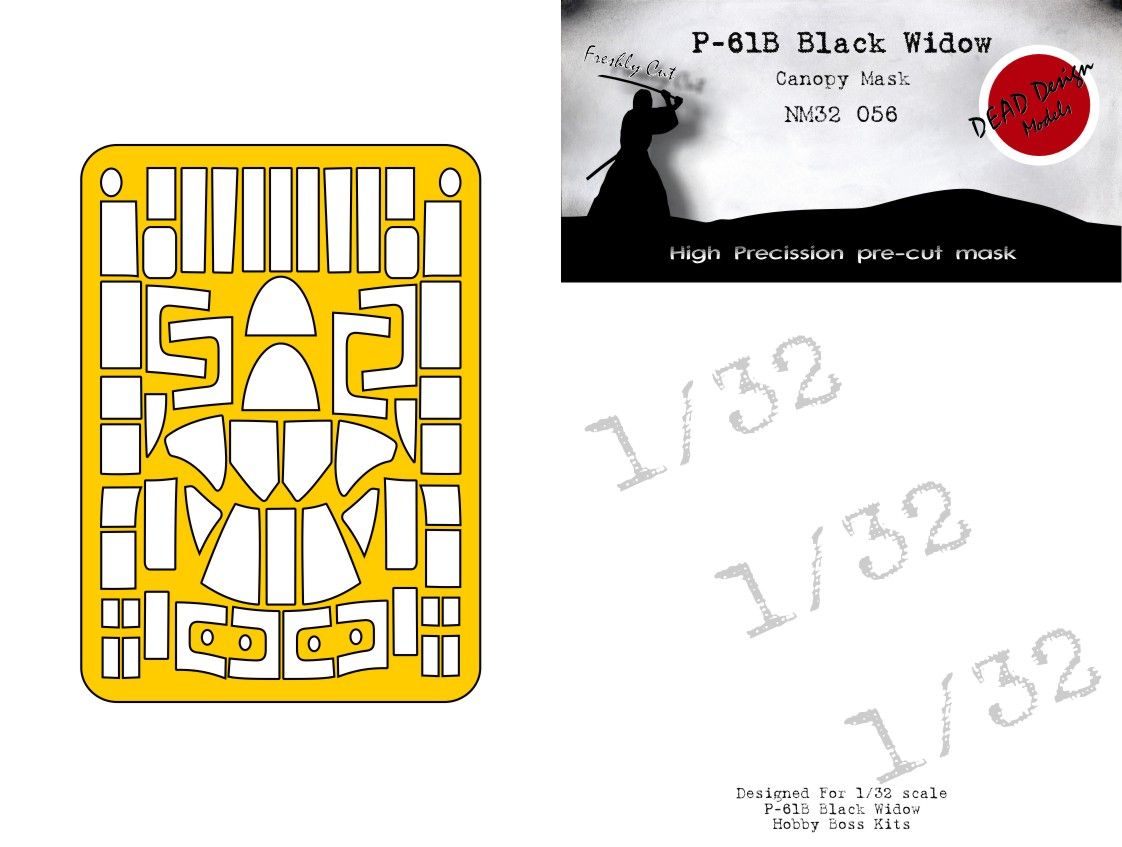
The painting mask 1:32 P-61 Black Widow covers the heavily subdivided glazing of the American night fighter, where masking by hand would take a whole evening.
Responsibility details are not available.
The glazing of the Black Widow is among the most laborious to be met on a twin-engine aircraft: a glazed nose, a long canopy over the pilot and a separate window for the observer at the rear. Precisely shaped pieces replace the slow cutting of strips and keep the width of the frames the same along the whole fuselage nacelle.
This was the first American aircraft designed from the outset as a night fighter with a radar of its own, not a converted bomber. A pair of radial engines, twin tail booms and a crew of three made it a machine of exceptional size that could nevertheless turn in a surprisingly tight circle. It was used at the end of the Second World War in the Pacific and over Europe alike.
With large clear parts it pays to work in sections: seat the pieces on one side of the nacelle, press them down and only then move to the other. Before spraying, look the glazing over against the light to see whether a gap has been left anywhere. Keep the coat of paint thin, so that the frames do not thicken and narrow the area of glass. Support the nacelle while you work so that it lies firmly; a large part slips easily and fingerprints appear on the glazing exactly where your hand can no longer reach.
Naši poradci a znalci sortimentu jsou připraveni odpovídat na Vaše dotazy (Po–Pá, 8–18 hod).
Zeptejte se na co potřebujete, odpovíme co nejdříve.
Texts from customers in the advice section reflect solely the opinions and views of the customers. MNF trade s.r.o. does not approve or verify customer texts in advance.
There are no questions here yet. Be the first to ask!