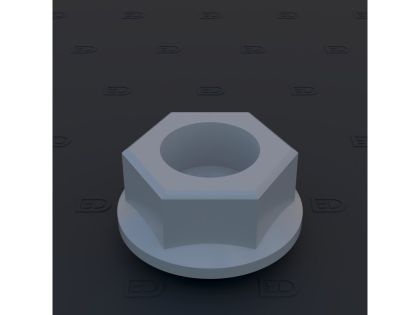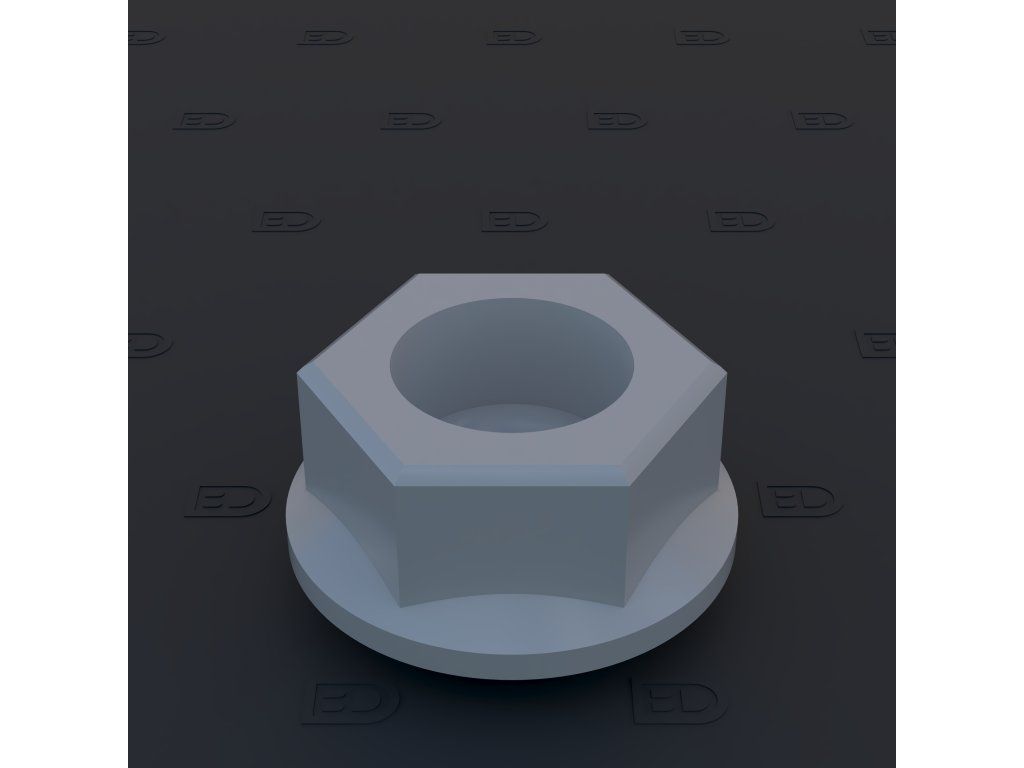
The coarsest grade of the arbor family, 1.2 mm in diameter. It belongs on dominant joints such as the swingarm pivot or the exhaust bracket.
Responsibility details are not available.
With the largest grade of the family the size tempts you to treat it like real hardware. That is exactly where the typical failure comes from: the modeler presses the head a little harder than necessary and the thin plastic wall underneath bends or cracks. The crack only shows up after the paint has dried, when nothing can be done about it.
What decides is the thickness of the material the part is seated in. A solid section of the engine block takes more, a thin cover practically nothing. Keep to the rule that the head touching the surface is the end of the movement, not halfway through it. Where the wall is weak, back it from the inside with a piece of plastic: the resulting backing plate spreads the pressure over a wider area.
A diameter of 1.2 mm closes the range of the family and suits places where the joint is dominant on the subject as well: the main swingarm pivot, the mounting of the exhaust bracket, the lower engine foot. The lowered build of the head with its shoulder keeps such a detail from looking oversized on the model.
Drilling, a dry fit, painting the part and only then the permanent seating. Anyone who reverses the order usually finds that fresh paint flakes off around the hole when the part is pressed in and the joint is ringed by a light circle. That can only be put right with a brush, and a good order of steps saves that work.
A finished joint will finally benefit from a dark wash, which visually settles it into the surface of the part.
Naši poradci a znalci sortimentu jsou připraveni odpovídat na Vaše dotazy (Po–Pá, 8–18 hod).
Zeptejte se na co potřebujete, odpovíme co nejdříve.
Texts from customers in the advice section reflect solely the opinions and views of the customers. MNF trade s.r.o. does not approve or verify customer texts in advance.
There are no questions here yet. Be the first to ask!