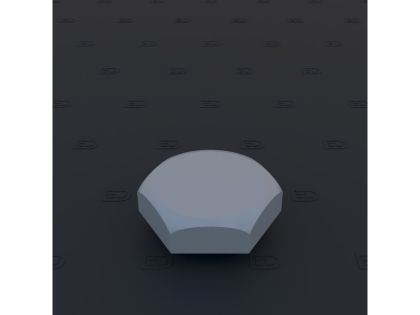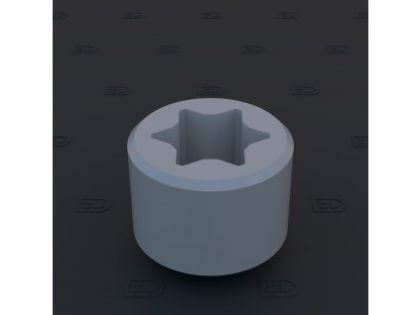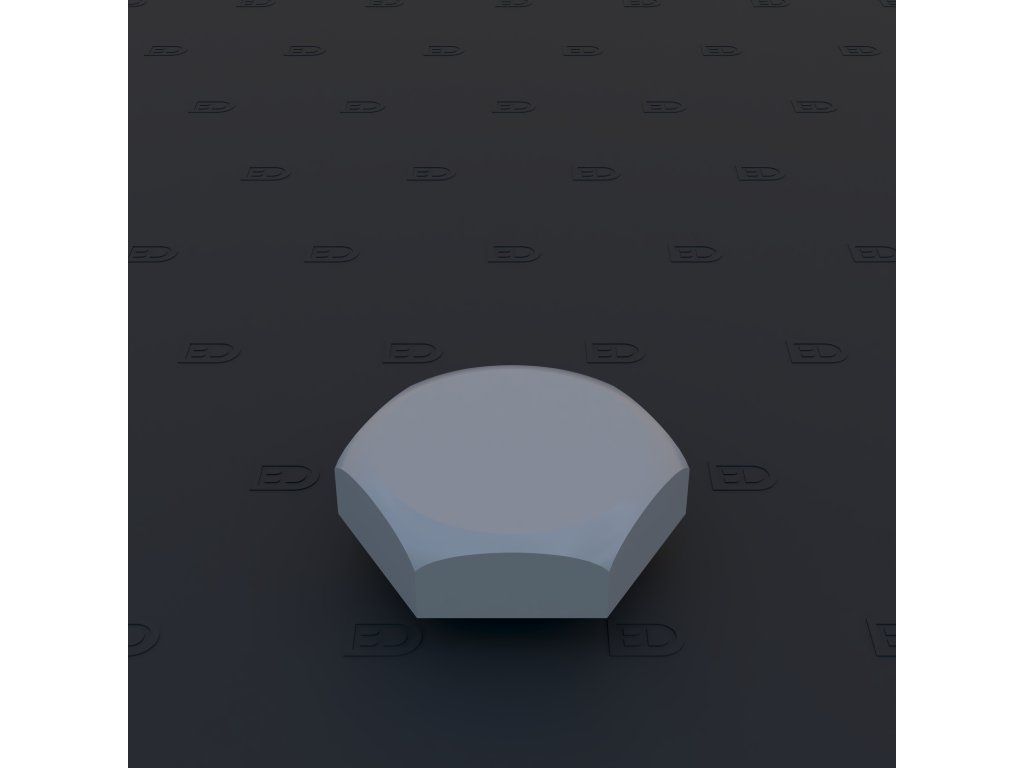
A lowered hex 1.7 mm in diameter, that is one of the coarser grades of the family. With a face this large the final impression is decided by the way the surface works with light.
Responsibility details are not available.
The larger the area the head takes up, the more it matters how it reflects light. A smooth metal surface returns a sharp highlight which in a photograph overpowers its surroundings and turns a small joint into the brightest point of the shot. A head gone flat after spraying, by contrast, blends into the part and stops being readable. Between these extremes lies a narrow band in which the joint looks convincing, and it is worth looking for it consciously.
The proven procedure is to set the coats against each other. First the whole part is unified with a primer, so that the heads disappear. Then readability is restored with a very fine wash around the circumference, which draws the outline. Finally a trace of a half-tone applied with an almost dry brush is added to the upper faces. The result looks like a metal joint that has seen service, not like a part fresh out of the bag.
Anyone who underrates this step usually finds out from the photographs. A model can be built faultlessly, but a few uncontrolled highlights can push the result toward the impression of a toy. Working on the surface takes a fraction of the time the build cost. Trying the whole sequence of coats out beforehand on an offcut is therefore a sensible investment, especially with a model that has a large number of metal accessories.
Naši poradci a znalci sortimentu jsou připraveni odpovídat na Vaše dotazy (Po–Pá, 8–18 hod).
Zeptejte se na co potřebujete, odpovíme co nejdříve.
Texts from customers in the advice section reflect solely the opinions and views of the customers. MNF trade s.r.o. does not approve or verify customer texts in advance.
There are no questions here yet. Be the first to ask!