A textured sheet of white styrene with a tile pattern of 1.0 x 0.50 millimeters.
Responsibility details are not available.
The difference between the individual sheets in this group lies not in the material but in the density of the pattern. You choose according to the scale and according to what the surface is meant to represent. The spacing given works out in 1:35 scale to a tile of around seventeen millimeters in real size, in 1:48 to just under two and a half centimeters, and in railroad 1:87 to an area close to a standard ceramic tile. It therefore suits wall cladding, technical floors and the corridors of public buildings.
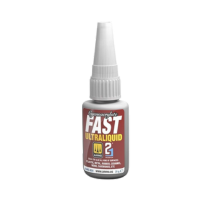
Working it is simple. You run a sharp knife along a metal ruler several times and snap the sheet; the edge is then trued up with a file. If you need to set a piece into a cut-out in another wall, you can thin the edge with abrasive paper so that the transition does not show. It is glued with the same products as plastic kits.
When painting, it helps to remember that real tiling is never uniform. The base tone goes over the whole surface and then the individual tiles are irregularly retoned with a slightly lighter and a slightly darker shade, even just a few at a time. The result looks alive without any further work.
It is worth keeping the offcuts. Strips cut from the edge will serve as plinth cladding, a stair tread or a hatch in another scene.
A dry brush speeds the work up: a lighter tone is passed lightly over the high points of the pattern, while the recesses stay darker of their own accord. Two minutes of this technique replaces a long session of dotting in the individual squares.
Naši poradci a znalci sortimentu jsou připraveni odpovídat na Vaše dotazy (Po–Pá, 8–18 hod).
Zeptejte se na co potřebujete, odpovíme co nejdříve.
Texts from customers in the advice section reflect solely the opinions and views of the customers. MNF trade s.r.o. does not approve or verify customer texts in advance.
There are no questions here yet. Be the first to ask!